When you need to run AC appliances from a DC battery, the biggest decision in inverters power conversion is whether the inverter can deliver clean, steady power without tripping on startup surges. The 6000W Pure Sine Wave Power Inverter DC12V to AC110V enters that conversation with a high wattage rating and a modest price tag. This guide explores what its specifications actually mean for an RV, off-grid shed, or emergency backup system.
Quick verdict
At $37.39, this inverter is a high-capacity pure sine wave unit for a modest outlay. It is sold in new condition and includes multiple protection features. The real question is not whether it can deliver power, but whether your battery and cabling can handle the draw if you actually approach its full rating.
Who it suits
Choose this converter if you have an existing DC battery setup and need to run tools, pumps, small appliances, or electronics. The 110V output and 60Hz frequency line up with standard North American-style equipment, so it fits RV, boat, and off-grid power projects where wall-style outlets are the goal.
What stands out from the listed details
Beyond the headline output, the inverter includes an LCD display for monitoring, three AC outlets, and USB/Type-C charging ports. Protection coverage spans high and low input voltage, over-battery-voltage, overheating, and short circuit conditions. An on/off switch makes it easy to shut down without disconnecting battery cables.
6000W Pure Sine Wave Power Inverter DC12V to AC110V
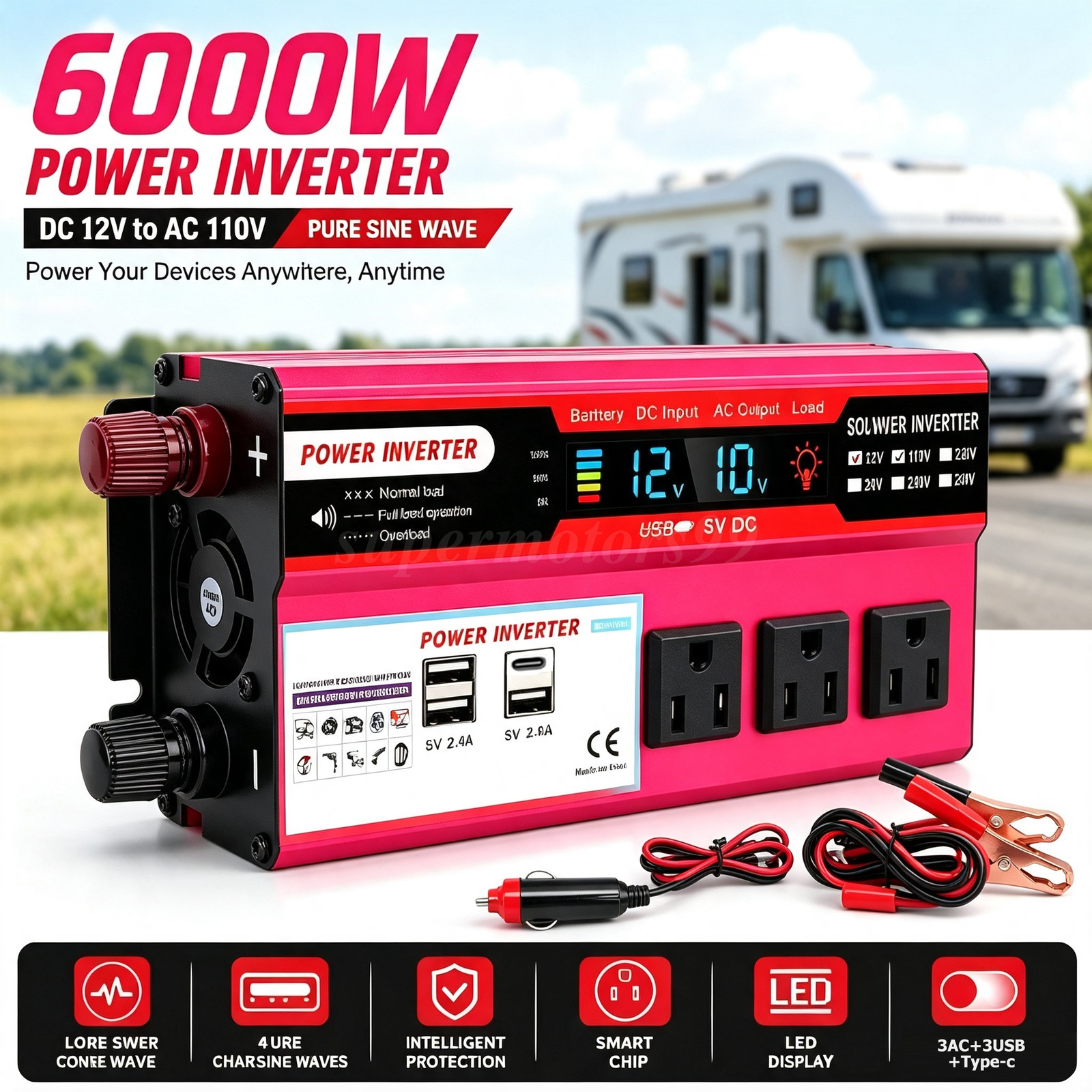
This is the main unit you will connect between a battery and your loads. Choose it for the combination of pure sine wave output and a generous 6000W rating, especially if you want one inverter that can start motor-driven equipment. The practical limitation is that full output only becomes useful if the battery bank, cabling, and fusing are sized for that kind of draw; the inverter alone cannot create the current.
Meaningful trade-offs
Clean 110V AC output is often priced at a premium, but this inverter brings a low upfront cost, so the trade-off is in system design rather than the device itself. A high-capacity inverter like this shifts the burden to the cables, fuses, and battery capacity needed to feed it. For occasional loads well below maximum, integration is simpler; for continuous near-maximum use, you will need serious DC wiring and enough reserve battery capacity. The DC12V input label pairs naturally with automotive and RV battery systems, and the 60Hz output aligns with common household equipment in 110V regions.
Bottom line
This inverter delivers a lot of capability for the money, but it is not a self-contained power station. Buy it if you already have a robust DC power source and want clean 110V AC for tools, appliances, and electronics. With the right supporting wiring and battery capacity, it can serve as a dependable part of your power conversion setup.