When the main power goes out, an automatic backup transfer switch is the component that decides how cleanly your generator or inverter takes over. Two different approaches stand out: a compact 110V/220V dual power selector for DIN-rail mounting and a three-pole wall-mounted transfer switch for heavier duty. One is easier to tune; the other is built for a more permanent installation. Both units offer automatic operation, but they target different installation realities. This head-to-head compares them so you can match the right automatic backup switch to your setup.
Quick verdict
The 110V/220V dual power selector is the lower-priced pick. The 3P wall-mount transfer switch is the higher-current, heavier-duty option. Your choice comes down to how much current you need and what you want to spend. This is a trade-off between upfront cost and raw capability. The 63A selector is enough for a typical generator inlet; the 100A three-pole switch is better when your panel needs more headroom.
Comparison table
The key differences are easy to see in a compact table:
| Feature | 110V/220V Dual Power Selector | 3P Wall-Mount Transfer Switch |
|---|---|---|
| Price | $29.99 | $53.81 |
| Rated amperage | 63A | 100A |
| Condition | New - Open box | New |
| Mounting | DIN rail with guide rail | Wall-mounted |
| Construction | PA6 with V-0 flame retardant | Cold-rolled sheet with plastic spraying |
Where each product wins
Where the 110V/220V Dual Power Selector Wins
- Adjustable L1/L2 priority, overcurrent, startup delay, and transfer delay via onboard buttons.
- PA6 material with a V-0 flame-retardant rating.
Where the 3P Wall-Mount Transfer Switch Wins
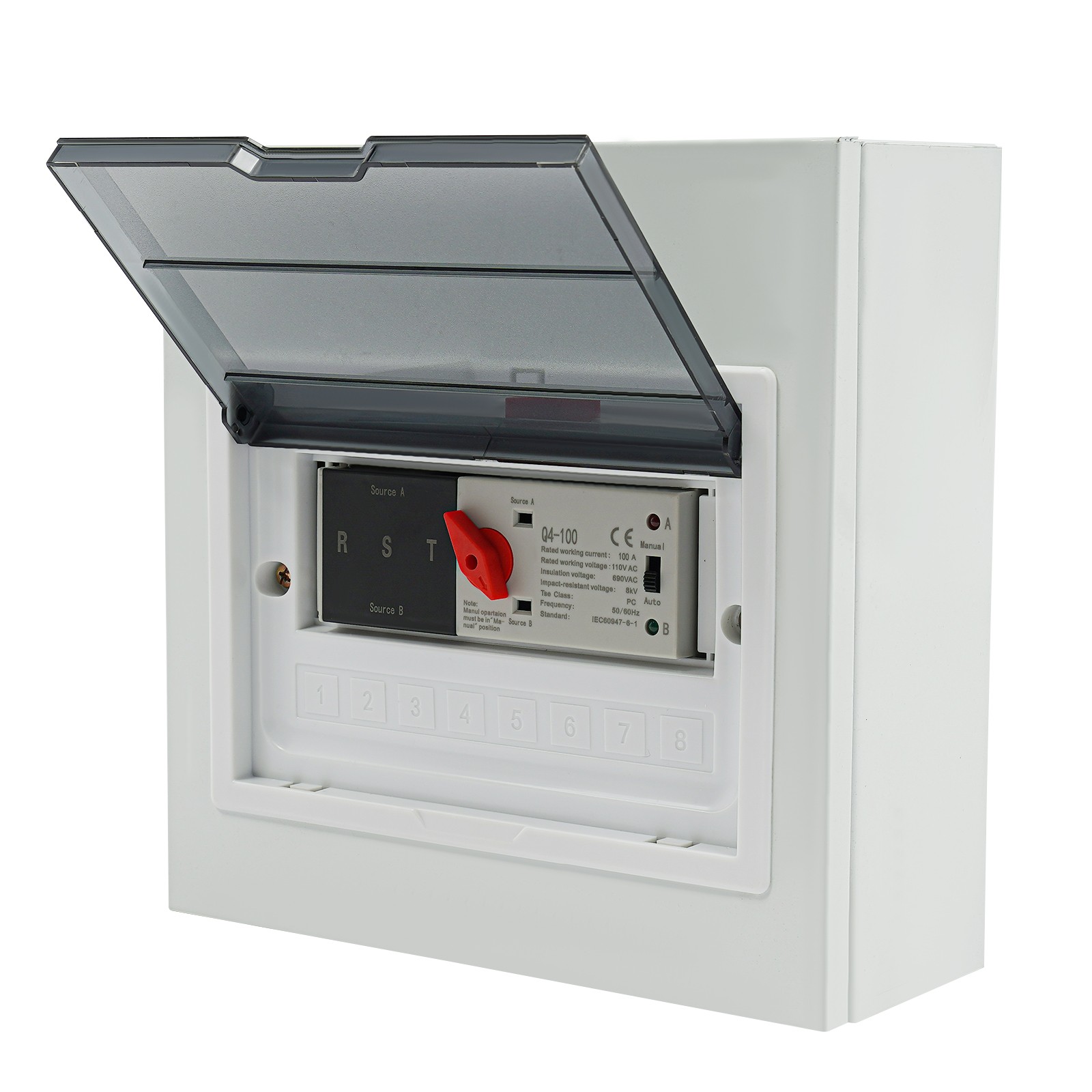
- 690V AC insulation voltage and 8KV impulse withstand voltage.
- Supports both 50Hz and 60Hz systems.
Product notes
110V/220V Dual Power Selector
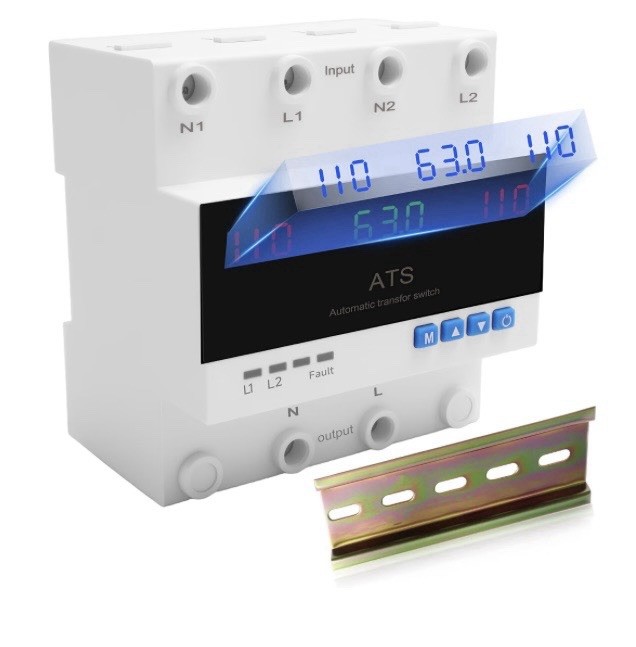
This dual power selector lets you adapt the transfer behavior to your installation. Using the onboard buttons, you can change the overcurrent value, startup delay, transfer delay, and L1/L2 priority, so it works with different generator and inverter loads. If you like being able to tune how and when the switch transfers, this selector gives you that control. The main limitation is the open-box condition: since it's listed as new but open box, give the unit and its guide rail a quick check when it arrives. It's a sensible way to add automatic backup to a modest single-phase circuit.
3P Wall-Mount Transfer Switch
This three-pole switch is built for a permanent spot. The cold-rolled sheet body with plastic spraying resists rust, and the wall-mount format keeps it fixed in place. With a conversion time under 0.1 seconds, it reacts quickly when the main supply fails. It also handles 50/60Hz systems, so it can suit different grid frequencies. The limitation is the permanent install: once you mount it, repositioning is more involved than a DIN-rail unit, so plan the location before you commit. For a fixed backup role, this is the more solid choice.
Final choice
Let the load size steer you: a smaller selector covers common home generator backups, while a larger three-pole switch suits bigger systems. Match the amp rating to your panel and choose accordingly.