Power outages don't announce themselves. When the lights go out, you need a safe way to bring in backup power. A transfer switch lets you connect a generator or alternator to your electrical system without backfeeding the grid. The bigger question is whether you want it to switch automatically or whether you're willing to throw the switch yourself. This head-to-head compares two transfer switches: an automatic model built for alternator use, and a manual model built for outdoor home backup.
The two switches approach the same task differently. The automatic unit works on its own once the alternate source is available. The manual unit requires a person to move the selector at the right time. That difference affects everything from how much wiring you need to how much attention you give the system.
Quick verdict
The automatic switch costs $32.99 and takes over without any action from you. The manual switch costs $112.09 and requires someone at the panel to change the source. Your choice comes down to voltage, outdoor needs, and how hands-off you expect the transfer to be.
At a glance
| Feature | Automatic | Manual |
|---|---|---|
| Price | USD 32.99 | USD 112.09 |
| Amperage | 100A | 100A |
| Operation | Automatic | Manual |
| Voltage | 220V AC | 120V/240V |
| Source | Alternator | Generator |
Where each product wins
- The GraceGalaxy automatic transfer switch wins on hands-free operation, so it can restore power without any action from you.
- The manual outdoor transfer switch wins on 120V/240V compatibility and its NEMA 3R outdoor rating, which suit home backup use.
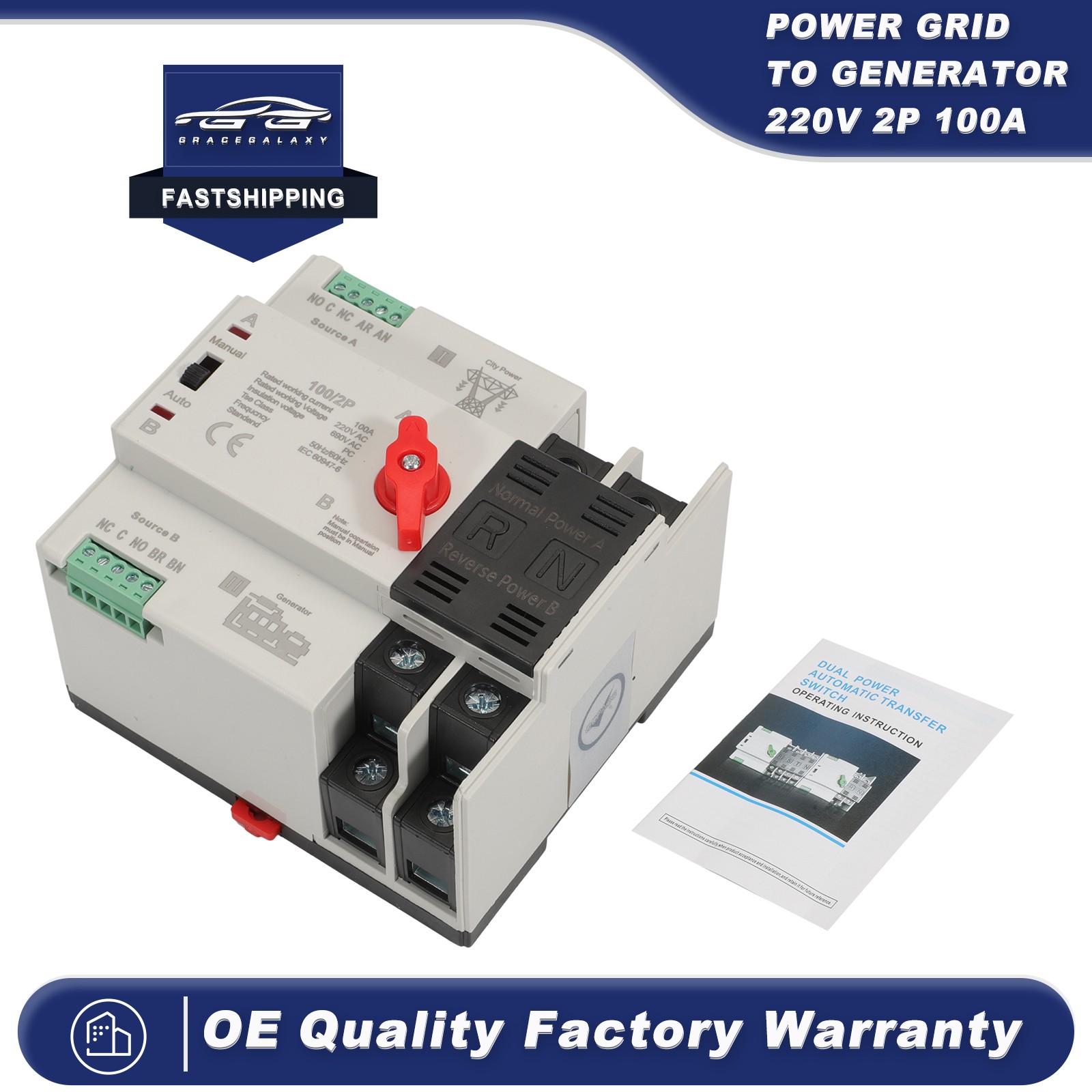
Dual Power Automatic Transfer Switch (Grid to Alternator)
The GraceGalaxy dual power switch is for installations where the alternate source is an alternator. It's a 2P unit with automatic changeover, so it can restore power without you flipping a handle. The rated insulation voltage is 690V AC, and the impulse withstand voltage is 8kV, giving some idea of the electrical specs it's built for. The reason to choose it is the automatic operation. The limitation is the voltage: at 220V AC, it's aimed at a different power layout than the 120V/240V service on the manual switch. Confirm your alternator and panel match that 220V AC requirement before relying on it.
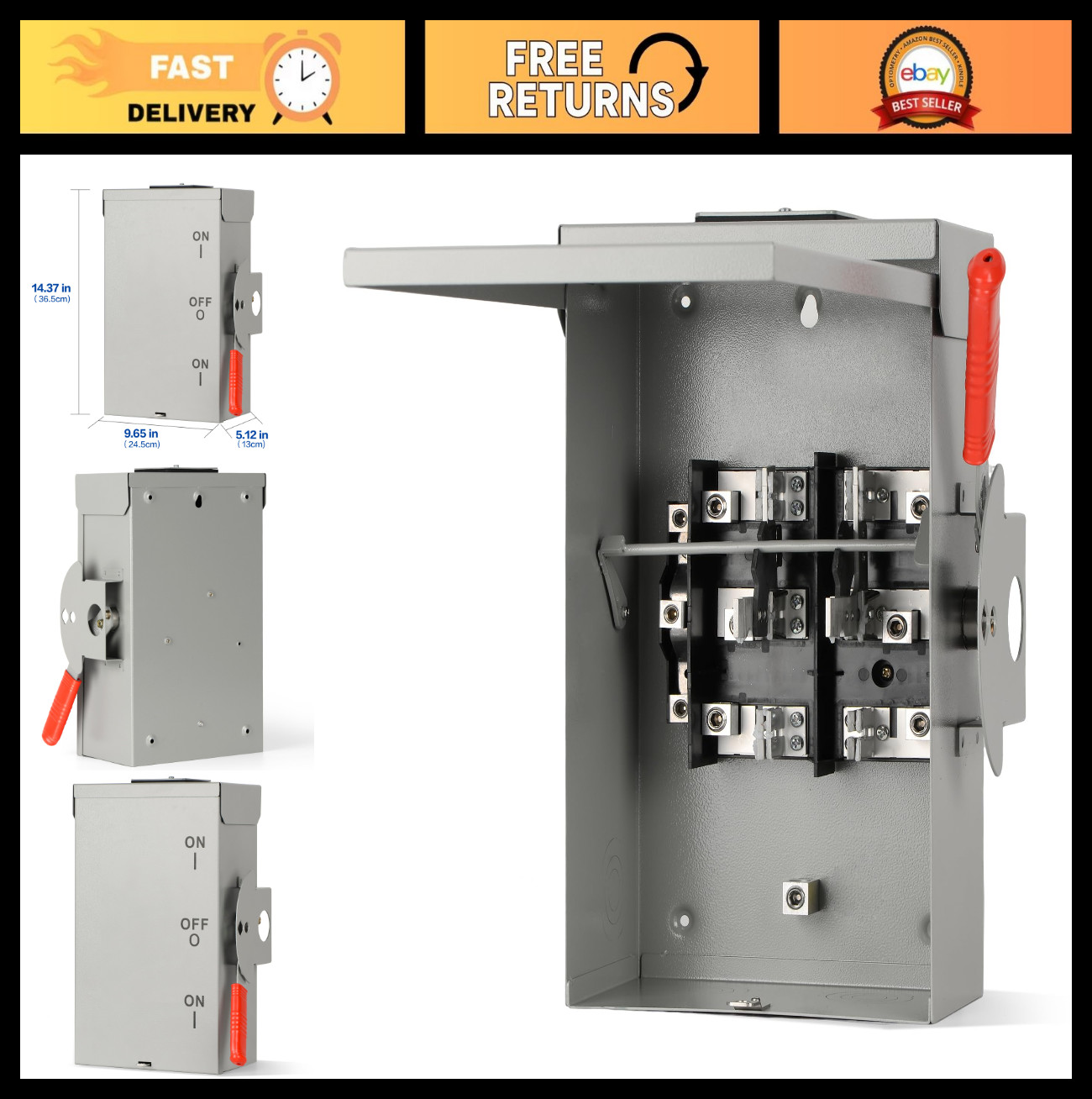
Manual Transfer Switch for Home Backup Power (120V/240V, NEMA 3R)
This manual transfer switch targets home backup from a generator, and it supports both 120V and 240V loads. It has a NEMA 3R outdoor enclosure designed to sit outside. It is built for safely transferring power from a portable generator to a home during outages. It carries a 100A rating, matching the amperage of the automatic switch. The reason to choose it is that voltage flexibility plus the outdoor rating. The trade-off is manual operation: someone has to be present to throw the switch during an outage, so it won't transfer on its own.
Final choice by use case
Choose the automatic transfer switch if your setup is a grid-to-alternator system and you want the switch to do the work. Choose the manual transfer switch if you're backing up your home with a generator and want an outdoor-rated switch with dual-voltage support. In short, the right fit depends on how much manual involvement you want during an outage.