The decision
When you're choosing an off-grid mobile power system, the trade-off usually comes down to portability versus runtime. The BLUETTI Elite 30 V2 is a 288Wh station sold as renewed, while the EcoFlow River 3 Plus with EB300 extra battery stacks a 286Wh expansion pack with the main station to reach a 572Wh capacity. Both use LiFePO4 cells with a 3000-cycle rating, both accept AC input, and both are aimed at backup power, camping, and home or garden use. So the decision is less about which one works, and more about which balance of weight, price, and capacity fits your outings.
Quick verdict
Get the BLUETTI Elite 30 V2 when you want a light station that can run everyday gadgets and still deliver a 1500W power-lifting boost for short bursts. Its 9.4 lb body and nine outlets make it easy to grab for a campsite or an emergency shelf. Get the EcoFlow River 3 Plus with EB300 when you want the larger combined capacity, a bundled extra battery, and quicker AC refills. You'll pay more up front, but you'll have more energy to draw on during longer outages or trips.
At a glance
| Feature | BLUETTI Elite 30 V2 | EcoFlow River 3 Plus + EB300 |
|---|---|---|
| Listed price | $179.00 | $298.75 |
| Total capacity | 288Wh | 572Wh (with EB300 extra battery) |
| AC input | 380W max | 380W, 0-100% in 60 min |
| Charging modes | AC wall outlet, 12V car adapter, solar panel(s) | MPPT |
| Standout extras | UPS mode in 10ms | Built-in light, EB300 140W USB-C |
Where each product wins
Choose the BLUETTI angle if your priority is a lighter unit with more plug positions and a lower upfront price. Choose the EcoFlow angle if your priority is longer runtime, an included expansion battery, and a faster path from empty to full. Neither approach is wrong; the right one depends on what you need for a weekend, a work trip, or an outage.
Product notes
BLUETTI Elite 30 V2 (288Wh, Renewed)
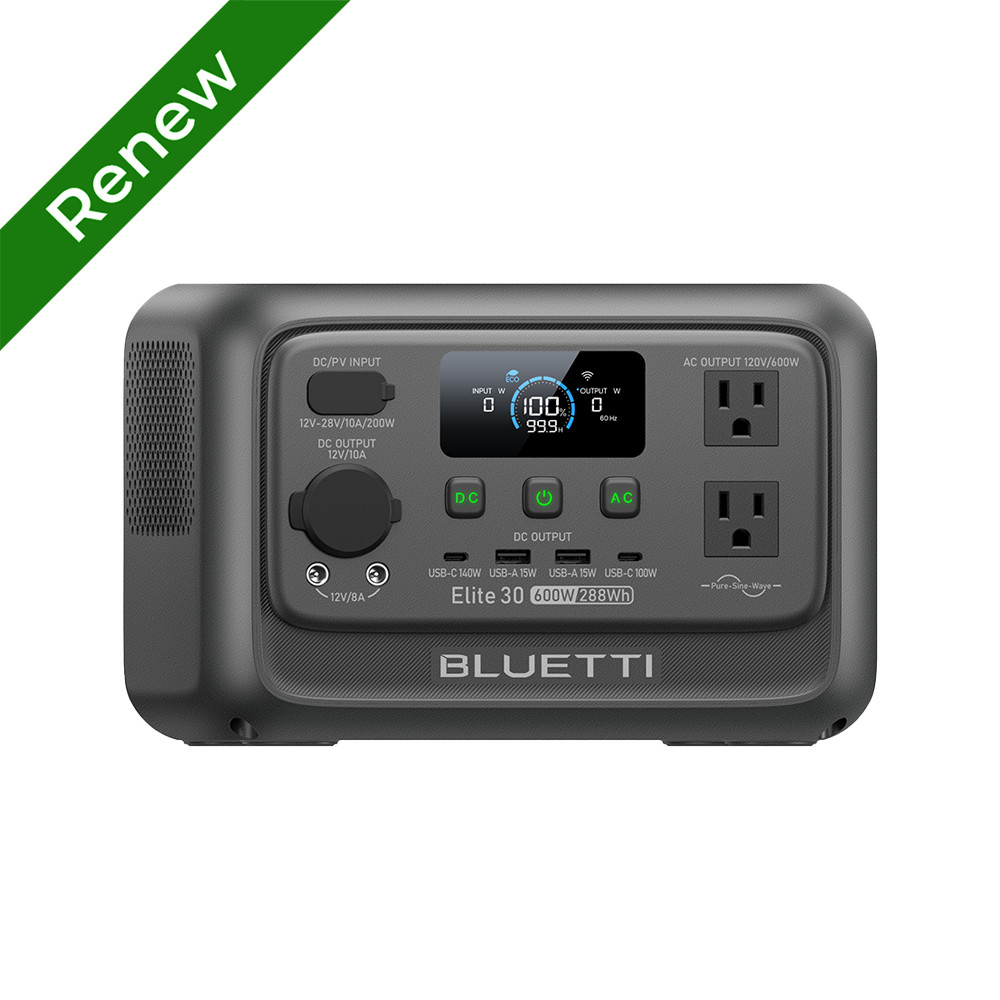
This is the station to grab when you want a single, portable box that's easy to carry. At 9.4 lbs, the Elite 30 V2 is friendly for a camp tote or an emergency kit, and the 600W AC inverter covers everyday gear like lights and small electronics. The 1500W power lifting goes further for short bursts, so a kettle or toaster can run when you need a quick hot drink or meal. Nine outlets mean you won't be juggling plugs. The UPS mode switches in about 10ms, which is a nice safety net for sensitive equipment during an outage. The trade-offs: it's a renewed unit, and the standard accessories don't include a solar charging cable. If you want to charge from a 100W or 200W panel, you'll need a separate XT60-MC4 cable.
EcoFlow River 3 Plus with EB300 Extra Battery
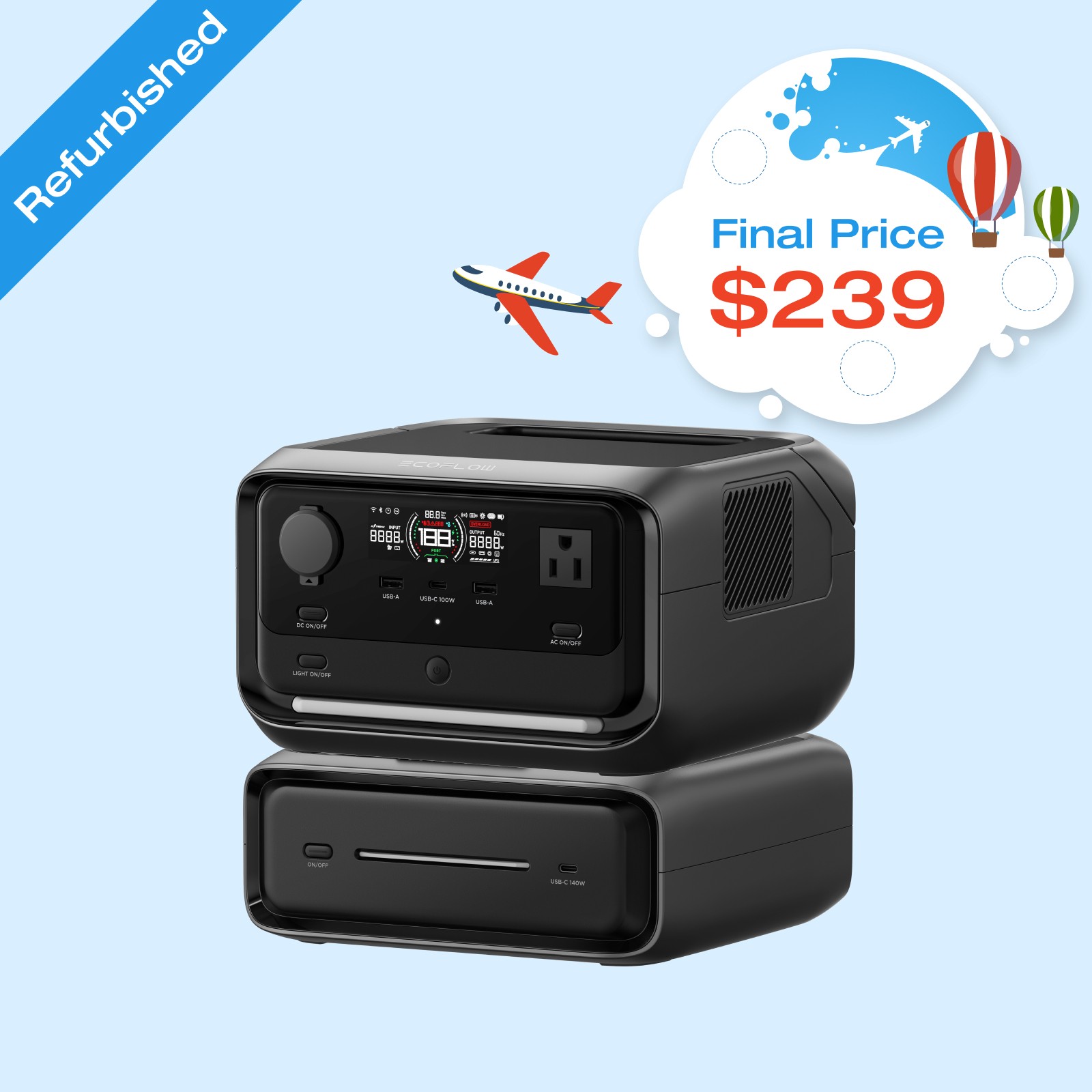
The EcoFlow setup is the larger energy system in this head-to-head. The main unit and the EB300 extra battery clip together with Pogo Pin technology, and the extra pack adds a 140W USB-C port for more input and output options. The 572Wh combined capacity is the reason to choose it if you want to keep more devices running for longer stretches, and the 0-100% AC recharge in about 60 minutes means you don't have to leave it plugged in all afternoon. The 600W output can surge or X-Boost to 1200W for appliances that need a stronger kick, and the built-in light covers you at night. The limitation here is outlet count: 7 total outlets, which is less flexible than the BLUETTI's 9 if you like to plug in multiple chargers at once.
Final choice by use case
- For shorter trips and lighter device loads: the BLUETTI Elite 30 V2 at $179 should be your first look. It covers the essentials without a heavy pack, and the price leaves room for optional accessories like a solar cable.
- For longer off-grid stays and heavier appliance use: the EcoFlow River 3 Plus with EB300 at $298.75 is the stronger fit. It pairs the main station with the extra battery and gives you surge power for longer stretches.