Power goes out, and you don't want to fumble for a manual switch in the dark. An automatic transfer switch handles the swap from main power to backup for you. In this head-to-head, the Dual Power 100A and the Double Power 63A both promise that convenience, but they take different paths: one uses a DIN-rail mount with a sub-50ms switchover, the other uses a screw mount and takes about 2 seconds to change over. With prices $38.88 and $43.96, the real difference is how much current you need and where the switch will live.
Quick Verdict
Choose the Dual Power 100A if you want higher capacity, faster transfer, and DIN-rail installation. Choose the Double Power 63A if you need a screw-mount unit for a smaller load and can wait a couple of seconds for the transfer.
Comparison Table
| Feature | Dual Power 100A | Double Power 63A |
|---|---|---|
| Price | $38.88 | $43.96 |
| Current Rating | 100A | 63A |
| Transfer Speed | ≤50ms | About 2s |
| Mounting | DIN rail | Screw |
| Material | ABS, red copper, tinned iron | Plastic, red copper |
| Operation | Automatic + manual | Automatic |
Where Each Product Wins
- Dual Power 100A wins for current capacity and switching speed, plus the manual override option.
- Double Power 63A wins for screw-mount compatibility and the 50/60Hz frequency rating that suits many setups.
Dual Power 100A Automatic Transfer Switch
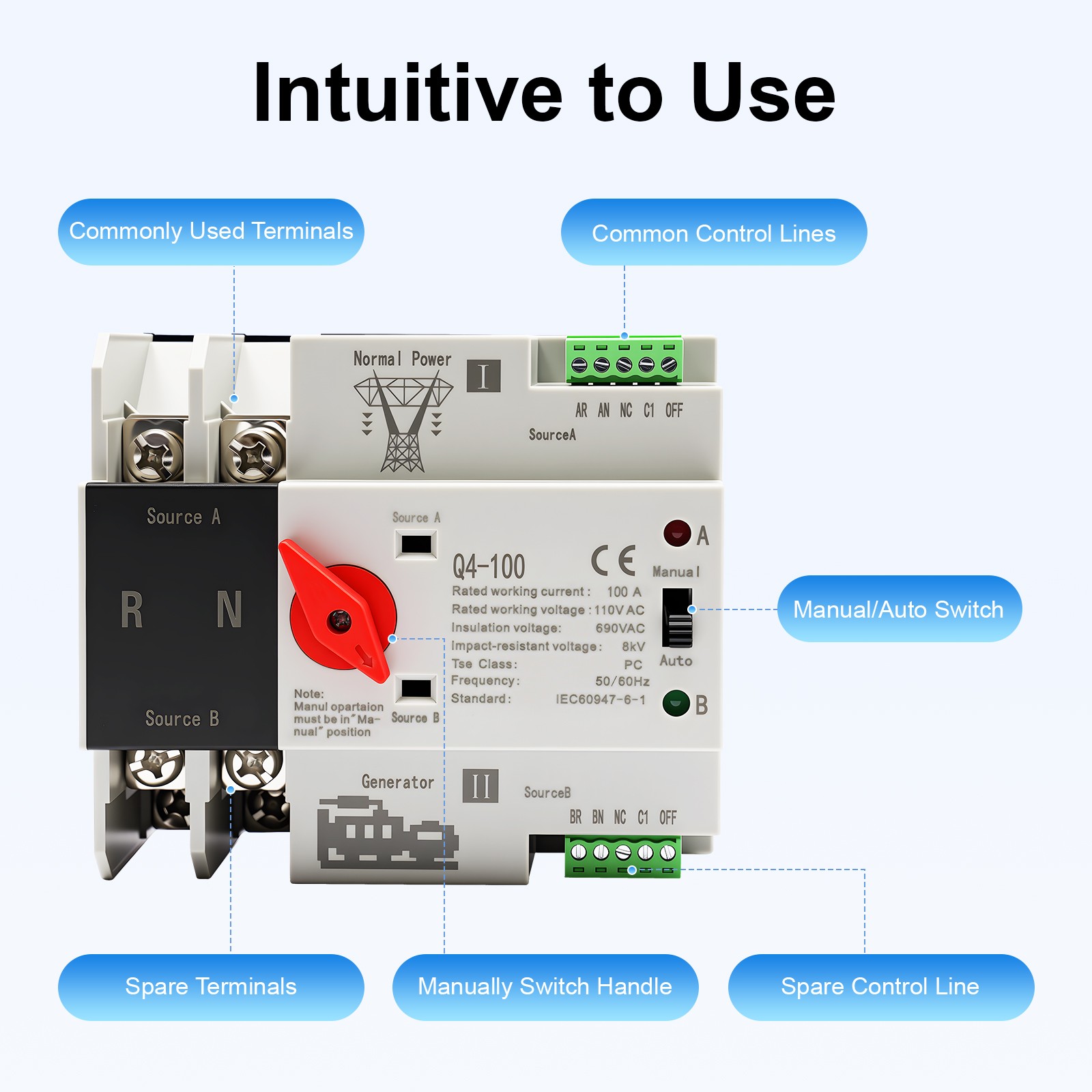
If you need fast, no-fuss power switching, this unit delivers with a ≤50ms response and a 100A current rating. The DIN-rail mount suits panel boards that accept DIN-rail components, and the automatic/manual operation gives you a fallback. It uses ABS, red copper, and tinned iron for its construction. One limitation: its DIN-rail mounting won't work in enclosures designed purely for screw-mounted switches, so consider your panel style before buying.
Double Power 63A Transfer Switch
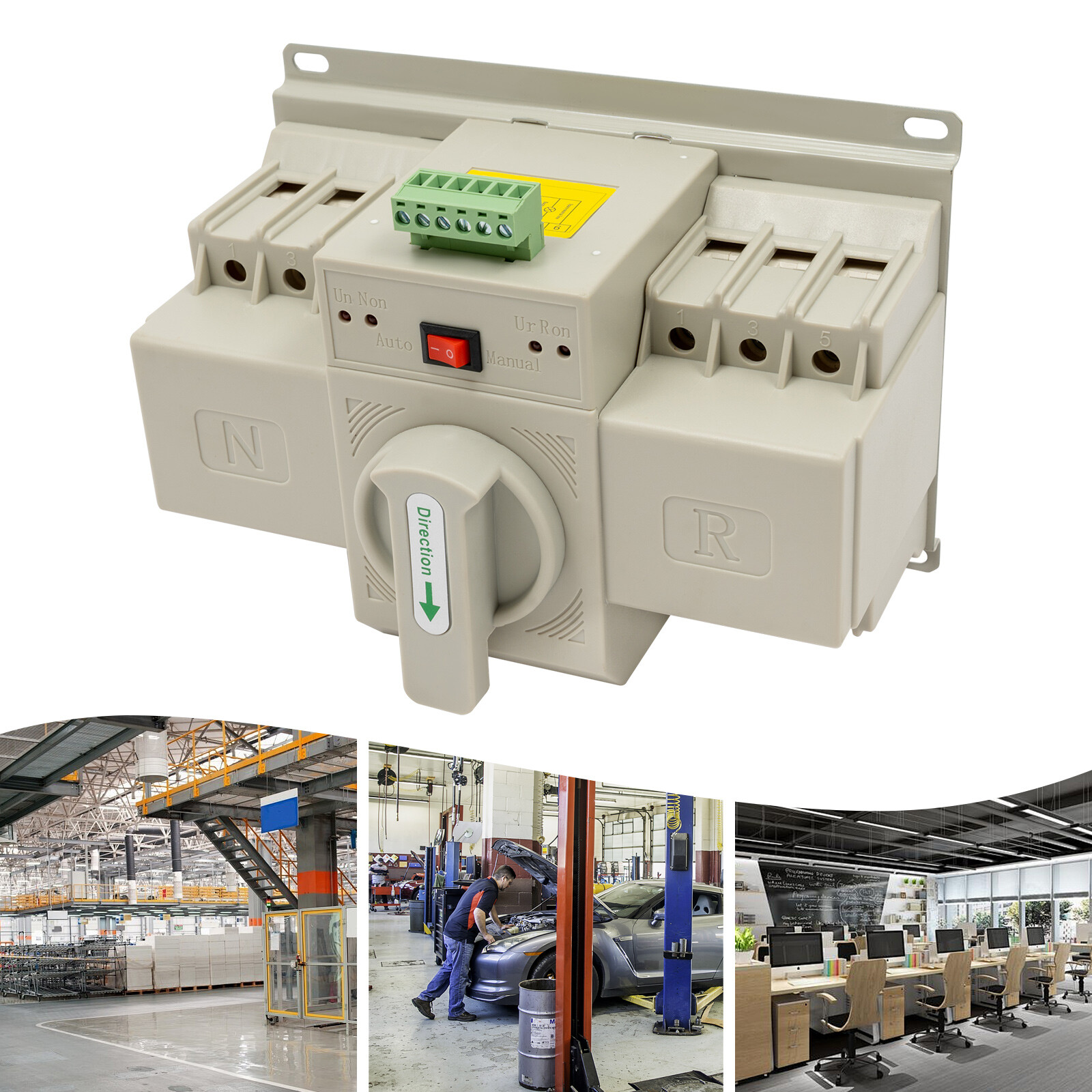
This screw-mount switch is meant for homes, offices, and areas where fire protection is needed. It's rated for 63A and 110V AC, with a conversion time of about 2 seconds-a bit slower, but acceptable for many backup loads. The 50/60Hz frequency rating and 690V insulation voltage make it broadly compatible, and the included English manual helps with setup. The trade-off is the lower current rating and slower transfer, so it's less suited to whole-panel backup of larger homes.
Final Choice by Use Case
Choose the Dual Power 100A if you need to back up a larger circuit, prefer DIN-rail mounting, or want the fastest possible switchover to protect sensitive equipment. Choose the Double Power 63A if you're installing in a screw-mount enclosure, running a modest load, and can accept a 2-second transfer window.