The decision: which 10kW off-grid kit matches your home's appetite?
Shopping for an off-grid solar system is a matching game between the power you can generate and the power you actually use. ECO-WORTHY offers two complete home kits that share the same maximum continuous output but differ sharply in battery storage, panel capacity, condition, and price. The smaller bundle is a certified-refurbished system with a compact 48V LiFePO4 battery; the larger bundle is a new system with a much bigger battery and roughly double the solar input. Your real question isn't whether the output is enough - it's how much daily energy you need to store and generate when the sun isn't cooperative.
Quick verdict
For a modest cabin, shed, or backup scenario running lights, a refrigerator, and a few electronics, the ECO-WORTHY kit at $3,999.99 keeps the upfront investment lean. For a full-time home where air conditioning, a well pump, or simultaneous high-draw appliances are non-negotiable, the new ECO-WORTHY kit at $5,699.99 is the more capable all-around system. Both share the same maximum continuous output ceiling; the difference is how much energy they can store and how long they can sustain it.
Side-by-side comparison
| Feature | 9.36kWh kit | 16.07kWh kit |
|---|---|---|
| Listed price | USD 3,999.99 | USD 5,699.99 |
| Condition | Certified - Refurbished | New |
| Solar panel capacity | 2,340W | 4,720W (8 × 590W) |
| Listed daily generation | 9.36kWh (4 full sun hours) | Up to 19.68kWh (optimal conditions) |
| Battery | 48V LiFePO4 | 48V 314Ah LiFePO4 |
Where each kit wins
- The 9.36kWh kit wins on wallet: it carries the lower listed price and covers typical essential loads without forcing you to pay for storage you may not use.
- The 16.07kWh kit wins on endurance: roughly twice the listed daily generation headroom, a larger new battery, and a panel array that collects more energy on sunny days.
Product notes
ECO-WORTHY 10KW Output 9.36KWH Off Grid Solar System Complete Kit for Home
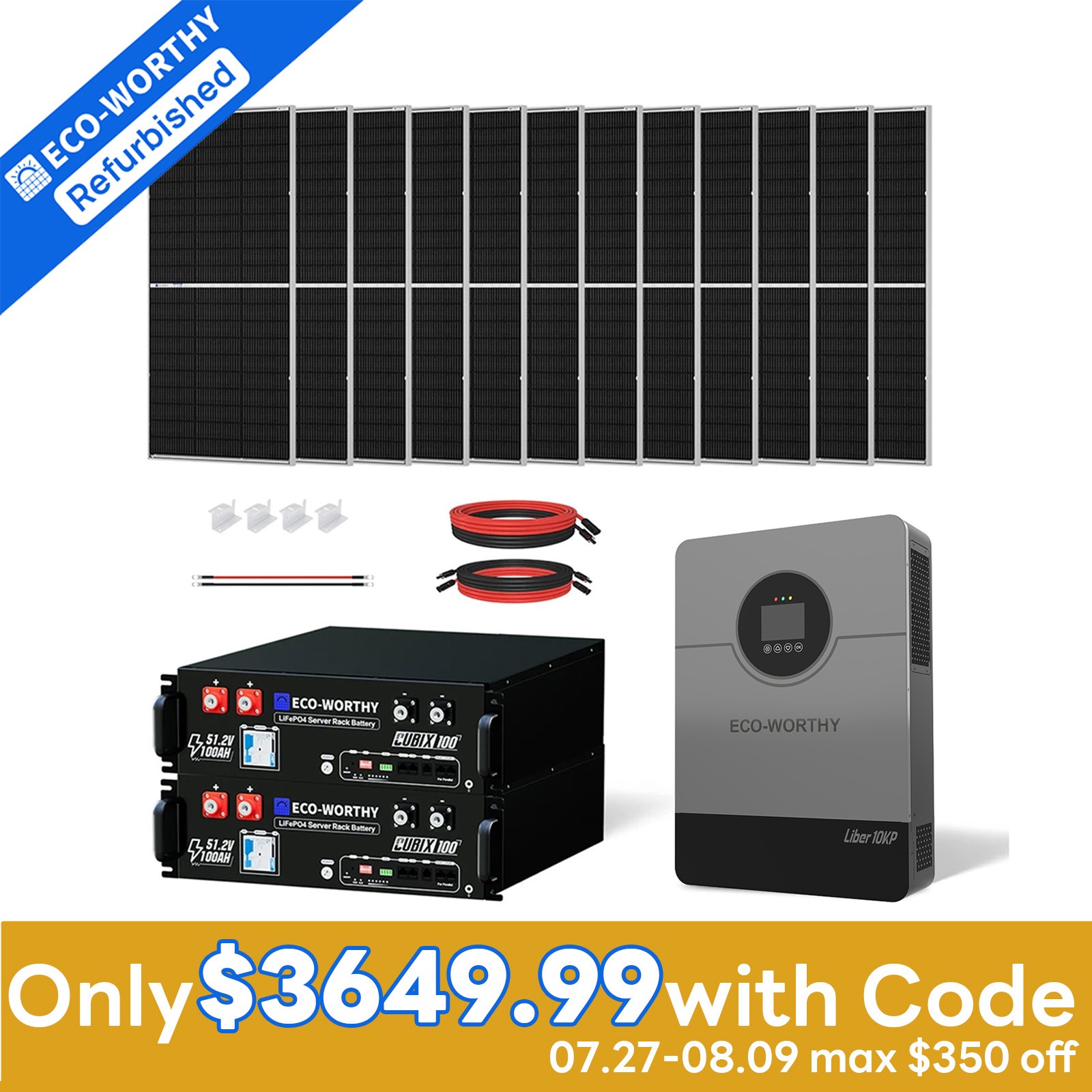
This is the entry point to 10kW output without the bigger battery price tag. The certified-refurbished kit combines a 2,340W solar array with a 48V LiFePO4 battery built around a 9.36kWh daily energy rating, so it handles refrigerators, TVs, coffee makers, microwaves, and other 240V split-phase loads in a shed, cabin, or backup scenario. The inverter supports parallel operation up to six units for future expansion, carries UL 1741 certification, and includes a Wi-Fi module for remote monitoring. The trade-off is that the smaller battery and lower panel wattage leave less headroom for extended overcast stretches, and the certified-refurbished condition means you are not getting a brand-new unit. If your loads stay modest, this keeps the initial investment lean.
ECO-WORTHY 10KW Output 16.07KWH Off Grid Solar System Complete Kit for Home
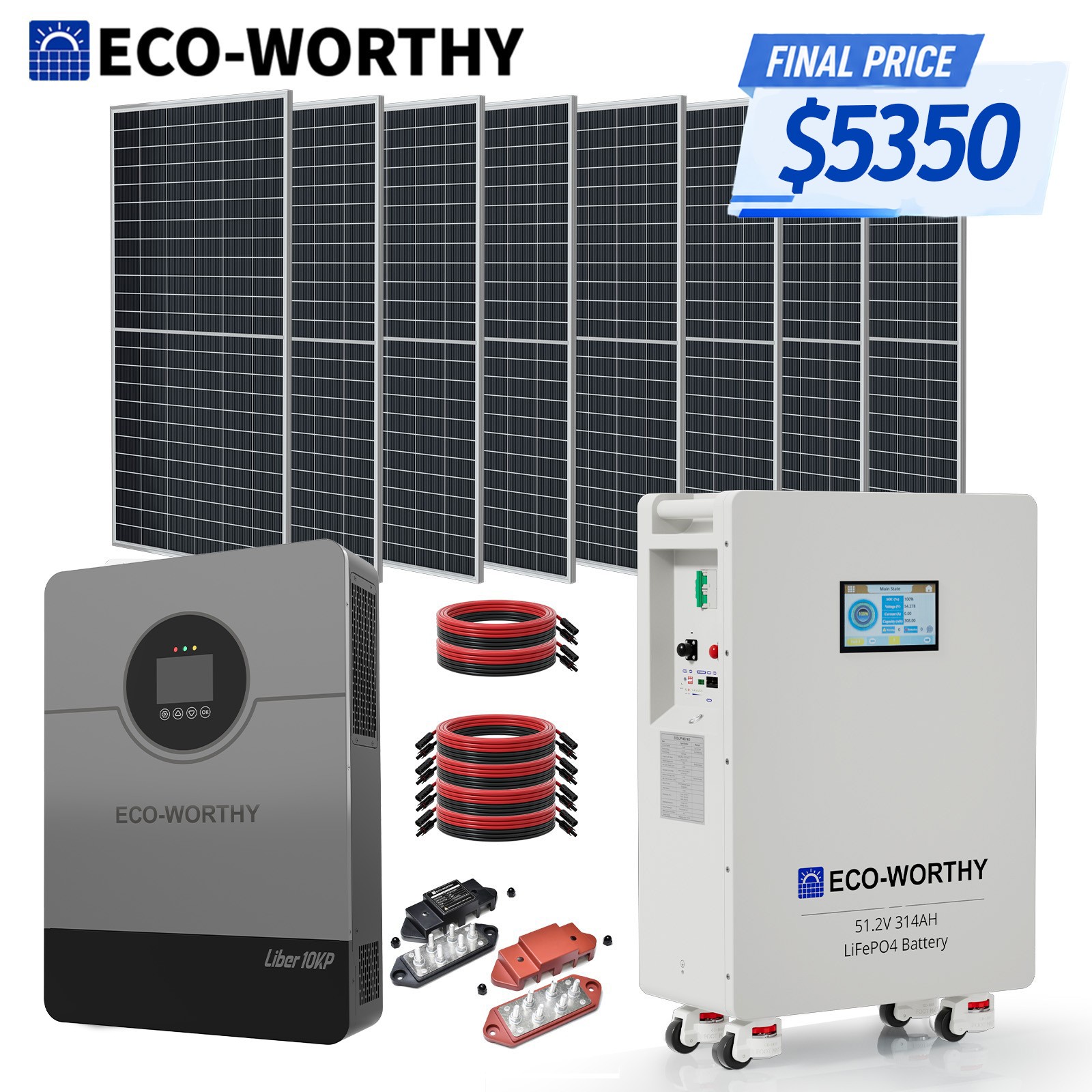
This is the kitchen-sink option for households that want to stop budgeting watts. The new kit pairs eight 590W panels for 4,720W of PV capacity with a 48V 314Ah LiFePO4 battery storing 16.07kWh, and its listed daily generation reaches up to 19.68kWh under optimal conditions. That headroom comfortably covers air conditioners, well pumps, and simultaneous appliance use across 120V/240V single-phase split-phase output. The PACE 200A battery management system and included cabling round out the package. The limitation is the commitment: the physical footprint at 90 × 48 × 51in is substantial, and the higher listed price reflects the much larger battery and new condition. If your home runs heavy loads daily or you want multi-day reserve, this is the one to fit.
Final choice by use case
Choose the lower-priced kit if you want a complete off-grid solar system for essential loads on a part-time property and you are comfortable with a smaller solar array. Choose the higher-priced kit if you live off-grid year-round, expect to run air conditioning or a well pump, or want the full daily generation headroom of a larger battery. Both kits share the same output ceiling; your real decision is how much storage and panel capacity your household actually consumes.