When the power goes out, the first question isn't just whether you have backup power-it's whether your transfer switch makes you go outside to connect it or handles the automatic backup itself. That's the real fork between these two transfer switches.
Quick Verdict
The manual switch is for people who want to be in charge of the moment backup power comes on. It's the pick if your backup source is a portable generator and you want an outdoor-rated housing. The automatic switch is for people who want power continuity without thinking about it: it reacts to a main power failure on its own and costs less. If you're building a fixed setup and you'd rather not throw a switch in a storm, the automatic model is the stronger fit.
At a Glance
| Product | Price | Standout detail | Best fit |
|---|---|---|---|
| Manual transfer switch with NEMA 3R outdoor housing | USD 112.09 | NEMA 3R outdoor; 120V/240V; person-controlled transfer | Generator backup with a deliberate, person-controlled transfer |
| Automatic transfer switch 3P 100A | USD 53.81 | Automatic/manual switching; under 0.1s conversion time | Hands-free continuity in a permanent two-source setup |
Where Each Product Wins
The manual transfer switch wins when you want to keep control of the transfer and the switch needs to live outside. It's framed for a home backup power setup and gives you the deliberate switch-throw moment. The automatic transfer switch wins when you don't want to be part of the power-failure reaction. It's designed to switch to backup automatically and keep a two-source system moving without someone stepping in.
Product Notes
Manual Transfer Switch for Home Backup Power, 120V/240V, NEMA 3R Outdoor
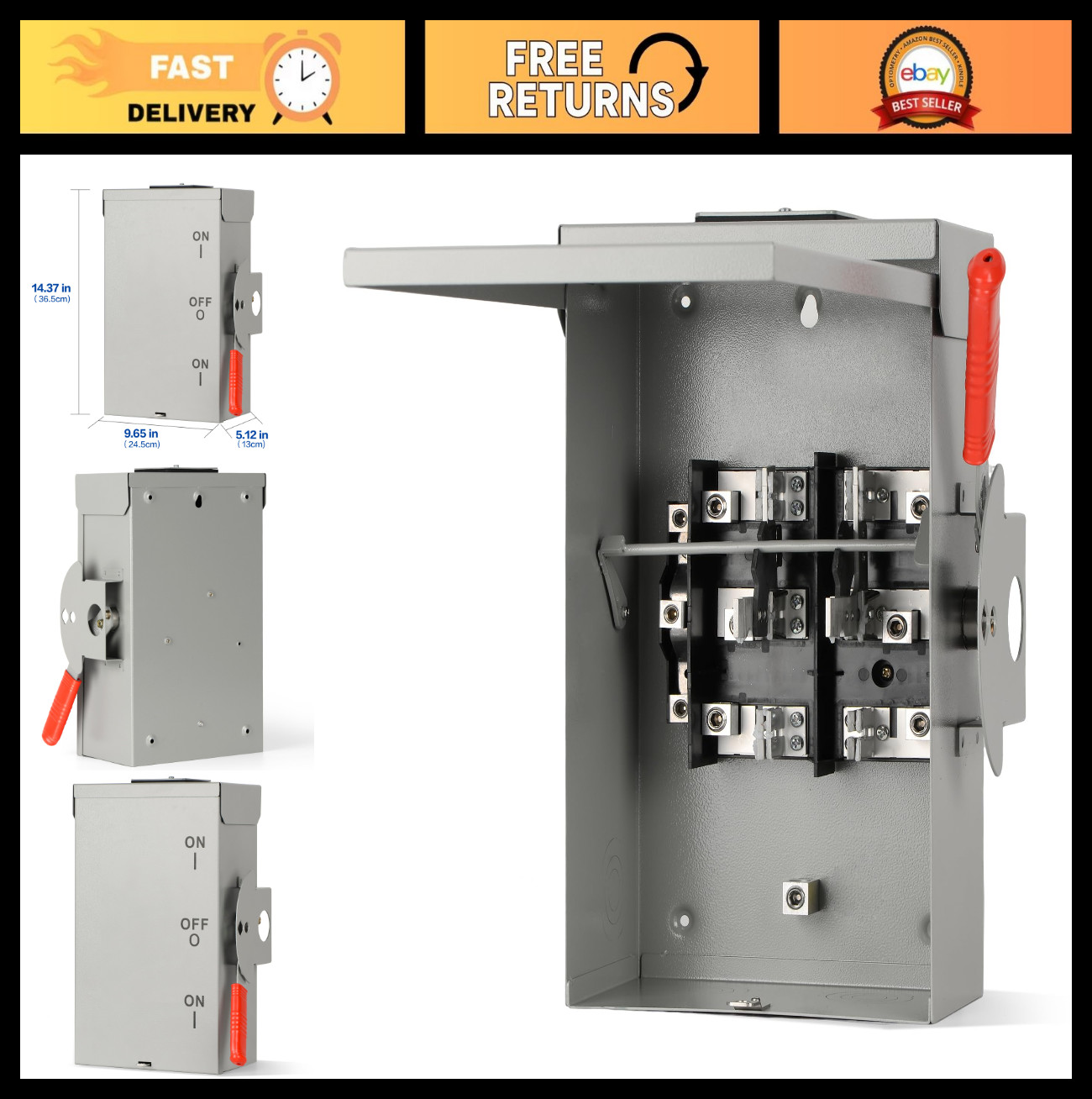
If your backup plan starts with a portable generator, this switch keeps the transfer in your hands. It's built to safely move power from a portable generator to your home during outages, and the NEMA 3R outdoor rating makes clear it belongs where weather is involved. The 120V/240V spec matches a familiar household generator connection.
The trade-off is right in the name: it's manual. Someone has to be there to move through the switching sequence when power fails, so backup waits until that person acts. If you're away or asleep, the generator stays disconnected until someone handles it. For a homeowner who wants complete control, that's a feature. For someone who wants protection without participation, it's the reason to look at the automatic model.
Automatic Transfer Switch 3P 100A
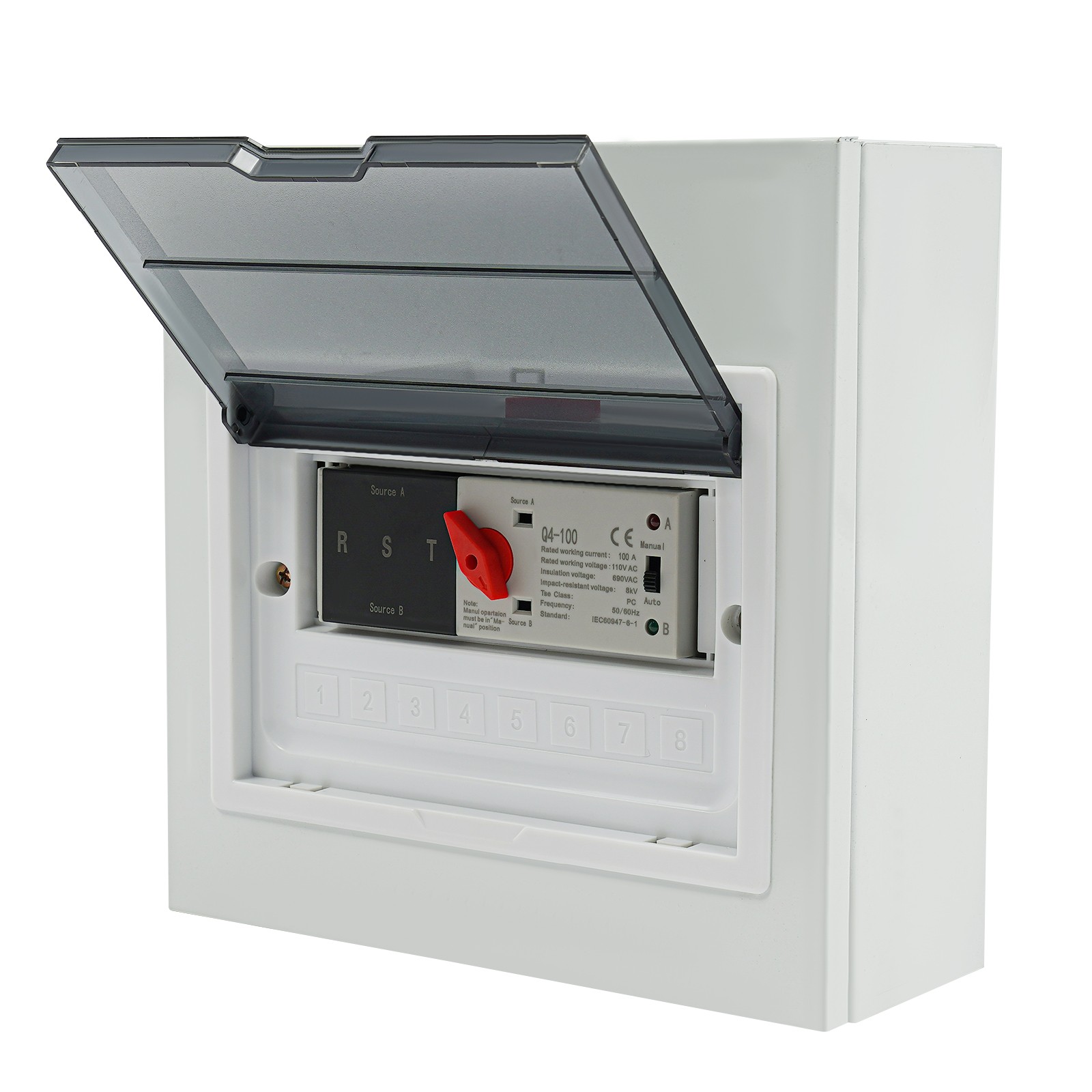
This automatic switch is built for the moments when you can't or don't want to run the show. Its best feature is reaction speed: conversion time of under 0.1 seconds, so backup can take over almost immediately after main power fails. The switch also supports automatic/manual operation, so you can still take control when a situation calls for it. It's wall-mounted and made of cold-rolled sheet with a plastic spraying process, which points to a durable, permanent installation.
The limitation is the flip side of that automation. Because the unit is intended for a wall-mounted dual-power setup, it's not a roll-out-generator workflow. You're planning around fixed wiring and a switch that reacts on its own. For hands-off continuity, that's ideal. For someone who prefers to stage a generator, check the load, and decide the moment, this switch moves that decision out of your hands.
Final Choice by Use Case
- Choose the manual transfer switch when you want outdoor placement and a person available to operate the switch.
- Choose the automatic transfer switch for a wall-mounted dual-power installation where backup should take over by itself.
- If you want to decide exactly when to leave utility power, the manual switch keeps that decision with you.
- If you want backup to happen before you can react, the automatic switch does it for you.