When you're shopping for a micro hydro setup, the first thing to decide isn't wattage-it's what kind of electricity you need. Do you want to charge a battery bank for off-grid living, or do you plan to power loads directly? These two generators take very different paths to that answer, and the right one depends on your site and your system. Your choice will come down to how you plan to use the power.
Quick Verdict
The Motenergy ME1016 Pelton wheel and PMA generator set is the stronger pick if you're building an off-grid power system. The 1000W water turbine is the simpler, more affordable option if you have a site with the right drop and just want a generator that puts out usable voltage as-is. It's not a matter of which is better overall-it's about matching the machine to your setup. For most off-grid homes with an existing DC system, the Motenergy set is worth the extra cost; for those with a suitable head and a direct-load need, the 1000W turbine delivers the simplest value.
Comparison Table
| Spec | Motenergy ME1016 Set | 1000W Water Turbine |
|---|---|---|
| Price | $249.00 | $175.75 |
| Output | 1k-3kW for battery charging | 1000W |
| Voltage format | 3-phase AC, rectify to 12-36VDC | 110-220V |
| Turbine type | Pelton wheel, die-cast aluminum cups | Snail impact turbine |
| Special features | Ceramic magnets, over 85% efficiency | Waterproof seal, bearing-stabilized impeller |
| Installation needs | External AC-to-DC conversion required | Needs 15-20m drop and 75mm pipe |
Where Each Product Wins
- Choose the Motenergy set if you want a high-efficiency PMA generator with a durable Pelton wheel.
- Choose the 1000W turbine if you want a fully sealed unit that produces direct output without extra conversion hardware.
Product Notes
Motenergy ME1016 Pelton PMA Generator Set
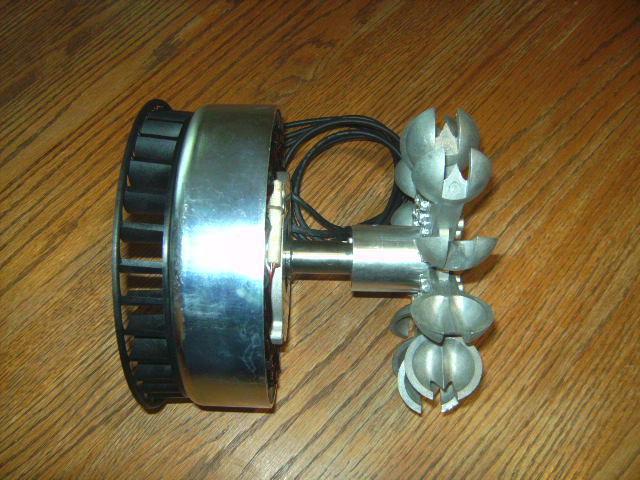
The Motenergy set costs $249.00, and that higher price buys a purpose-built battery charging solution. The Pelton wheel has 12 die-cast aluminum cups, and the ME1016 generator uses ceramic magnets to reach over 85% efficiency-well above the typical car alternator's 60%. That efficiency is a real advantage when your water flow is limited. The main catch is that the generator puts out three-phase AC, so you'll need to supply a rectifier to convert it to DC for your 12-36V battery bank. This gives you flexibility to match a charge controller and battery setup, but it also adds an extra component to the system.
1000W Hydroelectric Generator Water Turbine
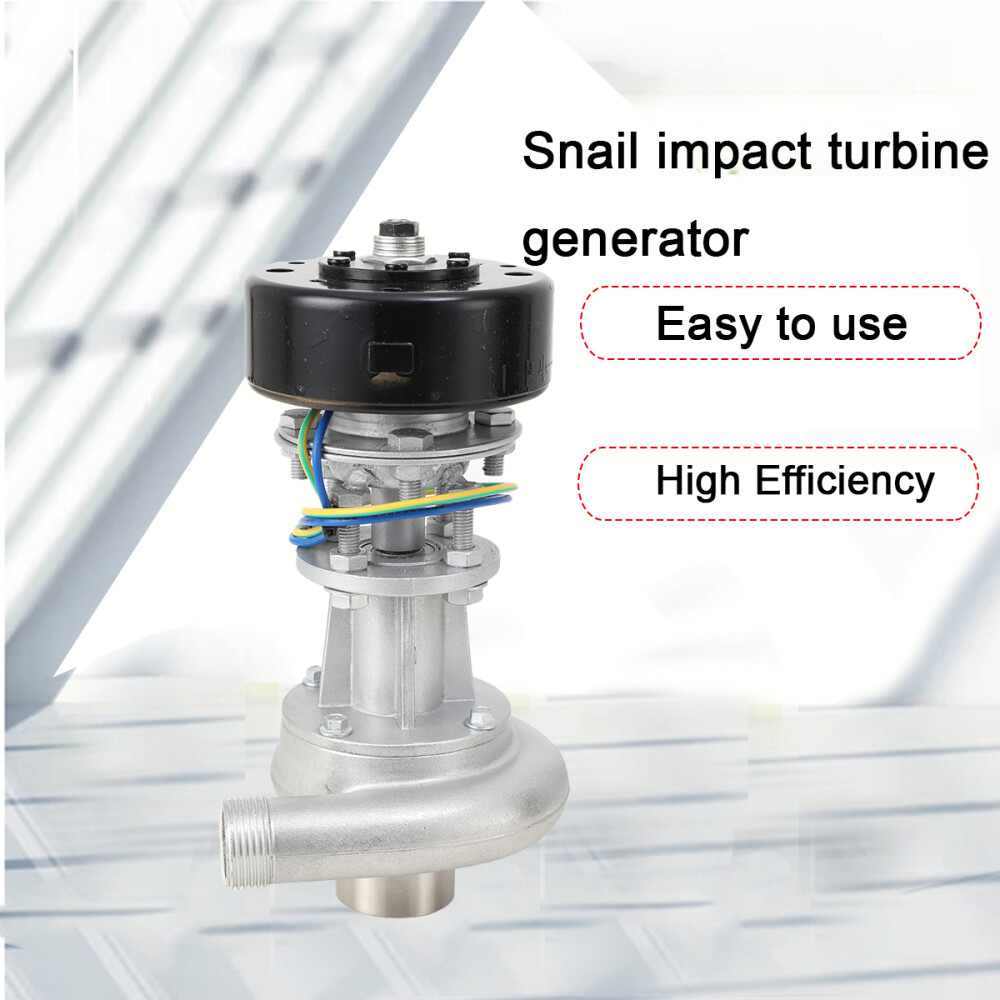
This turbine is the more affordable option, and it delivers a more self-contained package. It's engineered for a specific installation: a 15-20m vertical drop and a 75mm pipe diameter. The housing includes a waterproof rubber seal to keep moisture out of the generator and bearings, and a bearing at the impeller outlet keeps the rotation steady. It provides a 110-220V output, so you can feed AC loads directly without additional conversion gear. The aluminum alloy body keeps the weight down to 3kg. The trade-off is that the fixed head and pipe requirements make it less adaptable if your site conditions differ.
Final Choice by Use Case
If your off-grid setup already runs on a 12V or 24V DC system, the Motenergy set is the stronger starting point-just be prepared to build out the conversion and charging chain. If you have the recommended head and pipe size for the 1000W turbine, it offers a more direct route to usable power. Use the Motenergy for customization and efficiency; use the 1000W for straightforward installation.