Quick Take
Choosing power cables connectors combiners for a solar system comes down to how many panel strings you need to bring together, how much protection you want at the junction, and how much time you want to spend connecting. The options here range from a $25.98 tool-free cable connector kit to a $207.99 solar combiner box, so the first decision is whether you need a simple connector or a central hub. If your goal is to consolidate several panel leads into one protected junction, a combiner box makes sense. If you just need a quick way to join solar panel cables, the connector kit covers that smaller task.
Listed Price Comparison
| Product | Listed Price | Price Bar | What Stands Out |
|---|---|---|---|
| 6-String Solar Combiner Box with Surge Protection & 16A Breaker | USD 207.99 | Six-string capacity and surge protection | |
| Durable 4-String Solar Combiner Box with 80A Circuit Breakers for Off-Grid Use | USD 154.99 | Four-string hub with 80A breakers | |
| Tool Free Solar Cable Connectors for 3 Solar Panel Connectors Kit Solar | USD 25.98 | Tool-free MC4 connectors for three panels | |
| Hyundai Solar HiN-T440 NF(BK) 440-Watt Bifacial Panel | USD 150.00 | Bifacial 440W panel with MC4 connector type |
Decision Matrix
- Need a central junction with surge protection for many panel inputs → pick the six-string combiner box.
- Need a compact off-grid combiner with circuit-breaker protection → pick the four-string combiner box.
- Need a quick, tool-free way to connect solar panel cables → pick the tool-free connector kit.
- Need a 440W bifacial panel with MC4 connectors as the generating side of the circuit → pick the Hyundai bifacial panel.
Product Notes
6-String Solar Combiner Box with Surge Protection & 16A Breaker
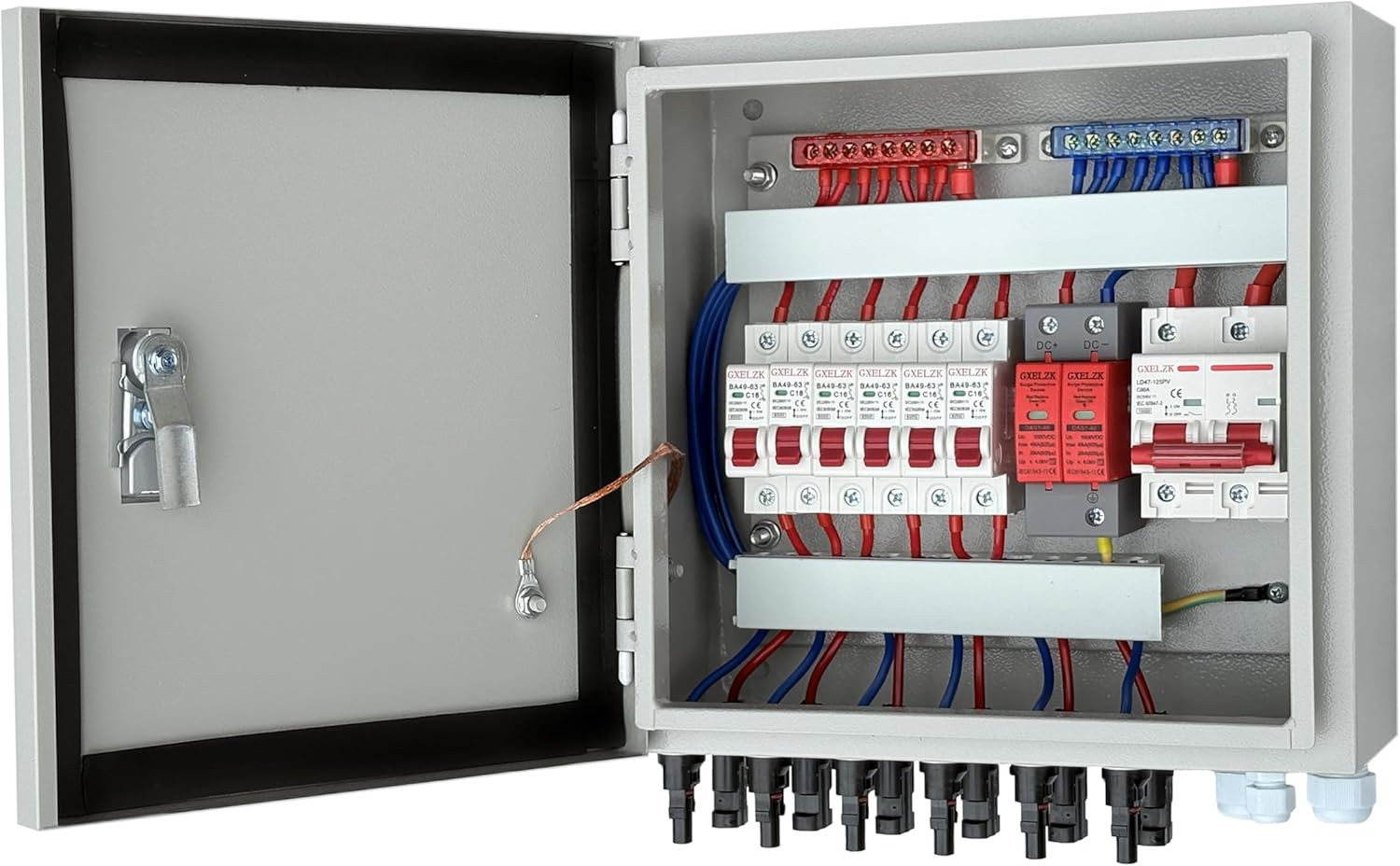
This is the most expensive option in the group, but the price corresponds to a larger junction box. The product title points to surge protection and a 16A breaker, making it a candidate for an array with several panel strings feeding into one place. Included components cover a circuit breaker, power surge cable, MC4 cable, and photovoltaic combination box, so you get the parts you would expect for a central-junction role. On the other hand, a two- or three-panel setup probably doesn't need this much capacity, and choosing a hub with extra input slots means paying for room you won't use. Use it when the array genuinely needs a large consolidation point.
Durable 4-String Solar Combiner Box for Off-Grid Use
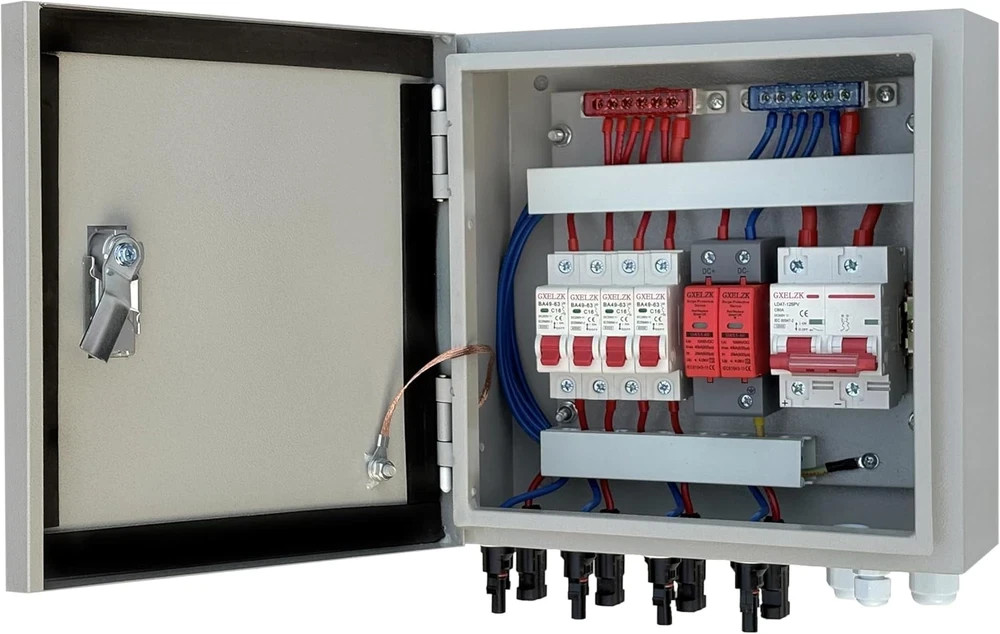
This combiner box is priced between the simple connector kit and the larger six-string hub. The title points to a durable design for off-grid use, and the specs include 16A DC breakers, an 80A main breaker, and a 40KA high-voltage arrester. That combination is useful when you want circuit-level protection in a compact package. The catch is the input count: if your array has more incoming strings than this box can consolidate, you would need to step up to a larger model or split the runs. It is a solid fit for a smaller off-grid system that needs breaker protection without the full capacity of the larger hub.
Tool Free Solar Cable Connectors for 3 Solar Panel Connectors Kit Solar
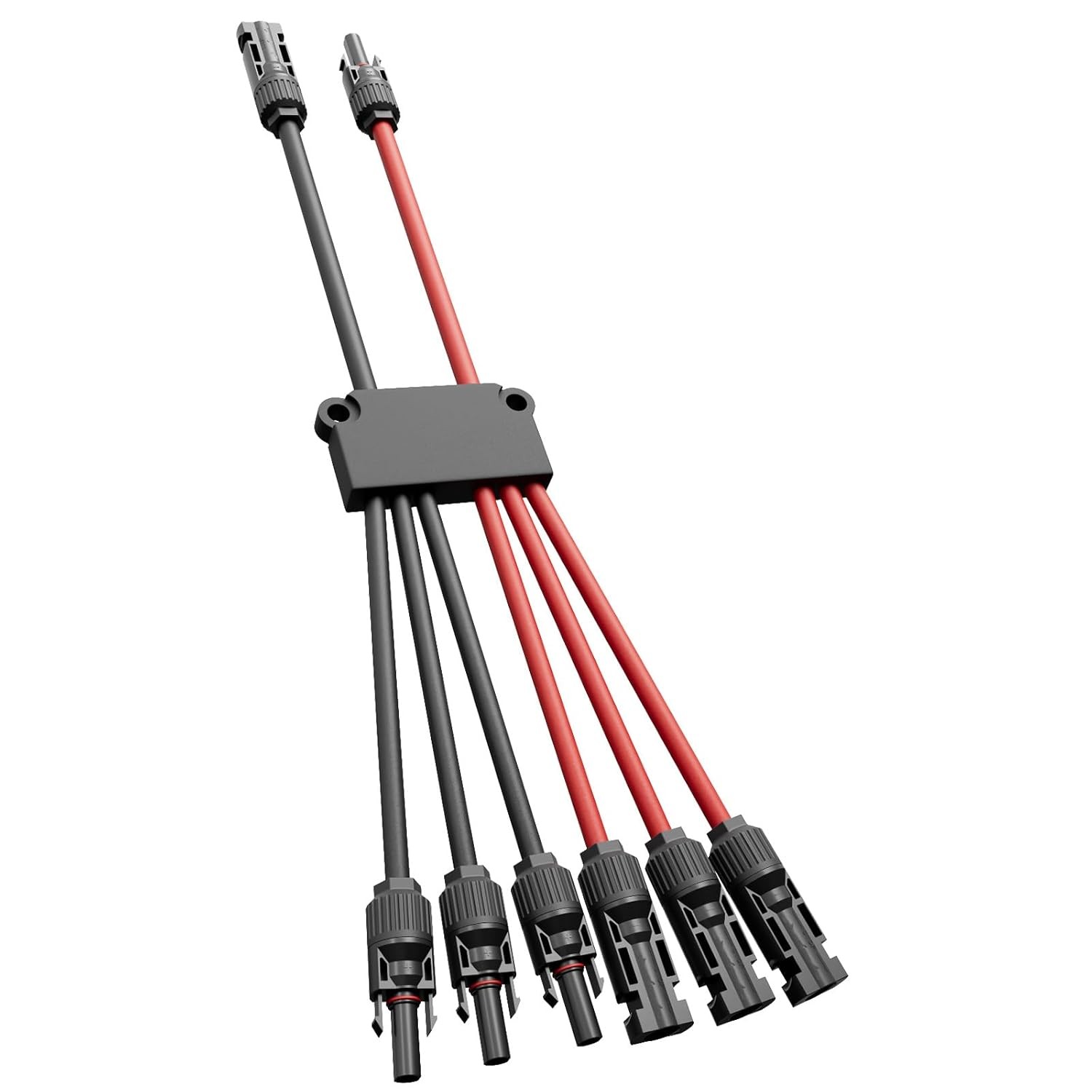
This kit is the entry-level price point in the lineup. The title calls out tool-free solar cable connectors, so the core benefit is speed: you can connect or disconnect without extra tools. The connector type is MC4. The limitation is the kit size. It covers a limited number of panel connectors, so a larger array will require multiple kits or a different solution. It is a reasonable pick for a small panel-to-panel hookup, but it doesn't provide the circuit-breaker protection or enclosure that a combiner box brings. Don't treat it as a replacement for a combiner in a multi-panel setup.
Hyundai Solar HiN-T440 NF(BK) 440-Watt Bifacial Panel

This is the only solar panel in the group, so it plays a different role in the power chain. The title identifies a Hyundai Solar HiN-T440 NF(BK) 440-watt bifacial panel with MC4 connector type. If your project is a 440W panel with MC4 connections, this can be part of the generation side of the system rather than the consolidation side. The practical limitation is that it is not a combiner box: you still need separate components to merge multiple strings and protect the circuit. It operates on DC current with a current output range of 11-19 A, which helps when matching it to a charger or inverter. Treat this as a building block rather than a complete connection solution.
Final Recommendation by Use Case
Choose the six-string combiner box when you need a large central hub with surge protection for many panel inputs. Choose the four-string combiner box when you need breaker protection for a compact off-grid setup. Choose the tool-free connector kit when your job is a simple cable-to-cable connection. Choose the Hyundai solar panel when you need a 440W bifacial panel with MC4 connectors, and pair it with a separate combiner box to finish the system.