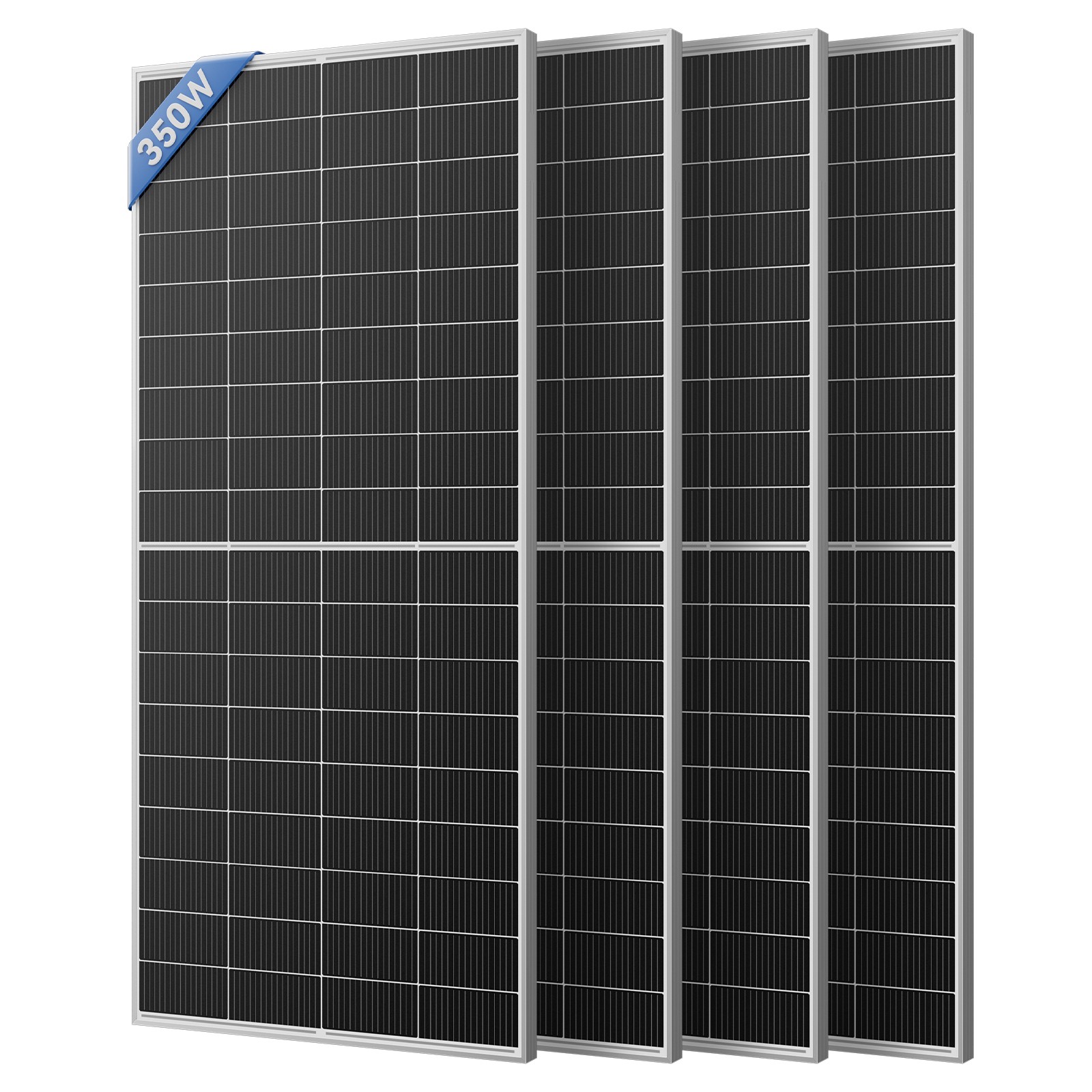
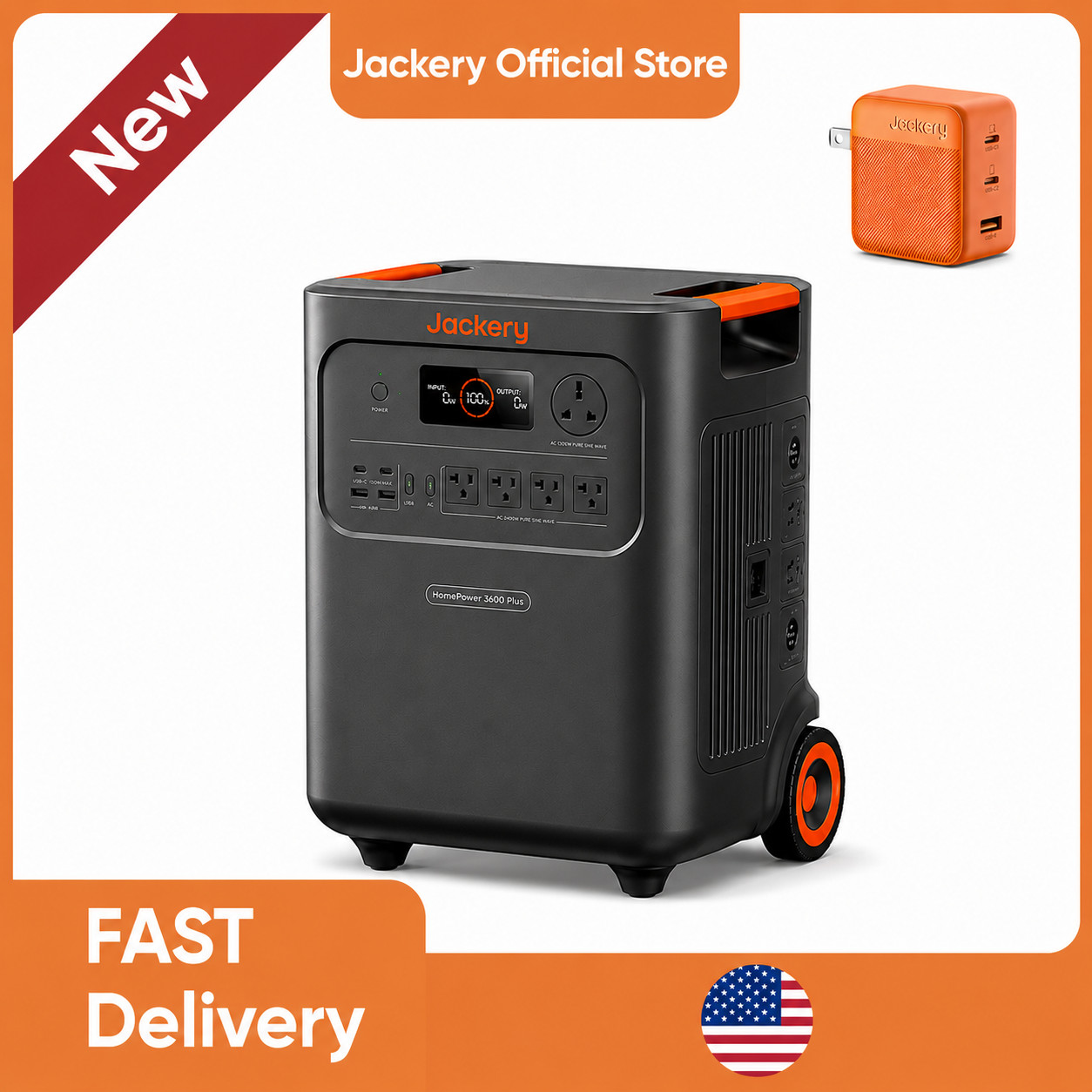
When you're building an off-grid mobile power system, the biggest decision is whether you need a panel to harvest sunlight or a power station to run your gear when the sun goes down. The Werchtay 350W mono solar panel and the Jackery HomePower 3600 Plus portable power station sit on opposite sides of that choice. One is a high-efficiency solar panel; the other is a battery-powered station with a built-in charger. They also sit far apart on price, and that difference reflects what each product is designed to do.
Quick verdict
If you're assembling a system from parts-like adding solar to an existing battery bank or outfitting a farm, RV, or yacht-the Werchtay panel gives you a high-efficiency way to generate power at a much lower cost. If you want plug-and-play electricity for home backup or large appliances, the Jackery is the more complete solution, but it costs significantly more and weighs in at over 77 pounds.
At a glance
| Feature | Werchtay 350W Mono Solar Panel | Jackery HomePower 3600 Plus |
|---|---|---|
| Price | USD 640.99 | USD 1,499.00 |
| Type | Solar generation panel | Portable power station with battery |
| Key specs | TOPCon cells, >25% efficiency, MPPT/PWM charging | 3580Wh LiFePO4 battery, 3600W output |
| Ideal for | Agriculture, camping, RVs, homes, yachts | Home backup and high-power appliances |
| Expansion | N/A | Up to 21kWh with extra packs, 43kWh with multiple units |
Where each product wins
The Werchtay solar panel wins on upfront price and efficiency. It costs $858.01 less than the Jackery, and its TOPCon and 16BB cell design helps deliver better performance in low light and shading.
The Jackery HomePower 3600 Plus wins on readiness and capacity. It includes a battery, delivers high continuous output, and can be expanded, making it a serious backup solution for a home.
Werchtay 350W Mono Solar Panel
The Werchtay panel uses TOPCon technology and N-type 16BB cells to reach a cell efficiency above 25%, which is a meaningful advantage if you want to generate more power from a compact panel. It's designed to fit a variety of installation spaces and comes with MC-4 connectors plus MPPT/PWM charging compatibility, so it can integrate into an existing solar setup. The main reason to choose it is the lower upfront price and the ability to generate clean power for a farm, RV, or home. The trade-off is that this is the generation side of a system; it won't run a space heater on its own without additional power storage and conversion equipment. If you already have or plan to build a battery bank, this panel is a strong building block.
Jackery HomePower 3600 Plus Portable Power Station
The Jackery HomePower 3600 Plus is built for serious loads. It packs a 3580Wh LiFePO4 battery and 3600W continuous output, which can run water pumps, space heaters, dryers, and other essential household gear. With the included 102W fast charger, you can replenish the station, and it supports 120V/240V dual-voltage output in parallel mode for expanded home backup. The capacity can be scaled up with additional battery packs, so it's a future-proof choice. The main limitation is the price tag and the weight: at around 77 pounds, this is not a lightweight device you'll casually carry around. If you need all-in-one electricity that works right out of the box, the Jackery delivers.
Final choice by use case
Choose the Werchtay solar panel if your budget is tight, you have a battery bank already or are willing to build one, and you want to add solar generation to a farm, RV, yacht, or home. Choose the Jackery HomePower 3600 Plus if you need immediate, high-power backup, want a battery included, and can handle a larger, heftier unit. Both products serve different halves of an off-grid power system, and the right one depends on whether your priority is generating energy or storing it.