Choosing a solar panel for an RV, home backup, boat, or off-grid power station can feel like a tradeoff between wattage, voltage, and price. The four monocrystalline N-type panels here all use 18BB cells and MC-4 connectors, so they share the same underlying technology. What separates them is the wattage range, the presence of a bifacial design, and a listed price spread that runs from just under $100 to over $540.
Quick take: If you want the lowest listed price in this group, the 12V 200W black mono panel from RVPOZWER is the entry point. If you want a bifacial panel that captures reflected light, the bifacial 300W model gives you that feature for the same listed price as a conventional 300W panel. If you need a standard 300W panel for a boat or off-grid battery, the other 300W mono is priced the same. And if you want a single listing that includes both 200W and 800W variants, the multi-wattage panel is the one to look at.
Price comparison at a glance
| Solar panel | Listed price | Price bar |
|---|---|---|
| Bifacial 300W N-Type 12V | USD 115.99 | |
| 200W-800W Mono 18BB | USD 540.99 | |
| 12V 200W Mono Black N-Type | USD 99.99 | |
| 300W Mono 18BB | USD 115.99 |
How to choose
| Solar panel | Good fit for | Limitation to weigh |
|---|---|---|
| Bifacial 300W N-Type 12V | Reflective settings, RV or home use | Fixed 300W output |
| 200W-800W Mono 18BB | Multi-wattage buildouts | Highest listed price |
| 12V 200W Mono Black | Low-cost 12V RV or shed setups | 200W ceiling |
| 300W Mono 18BB | Boat or off-grid battery charging | No bifacial capture |
Product notes
Bifacial 300W N-Type 12V
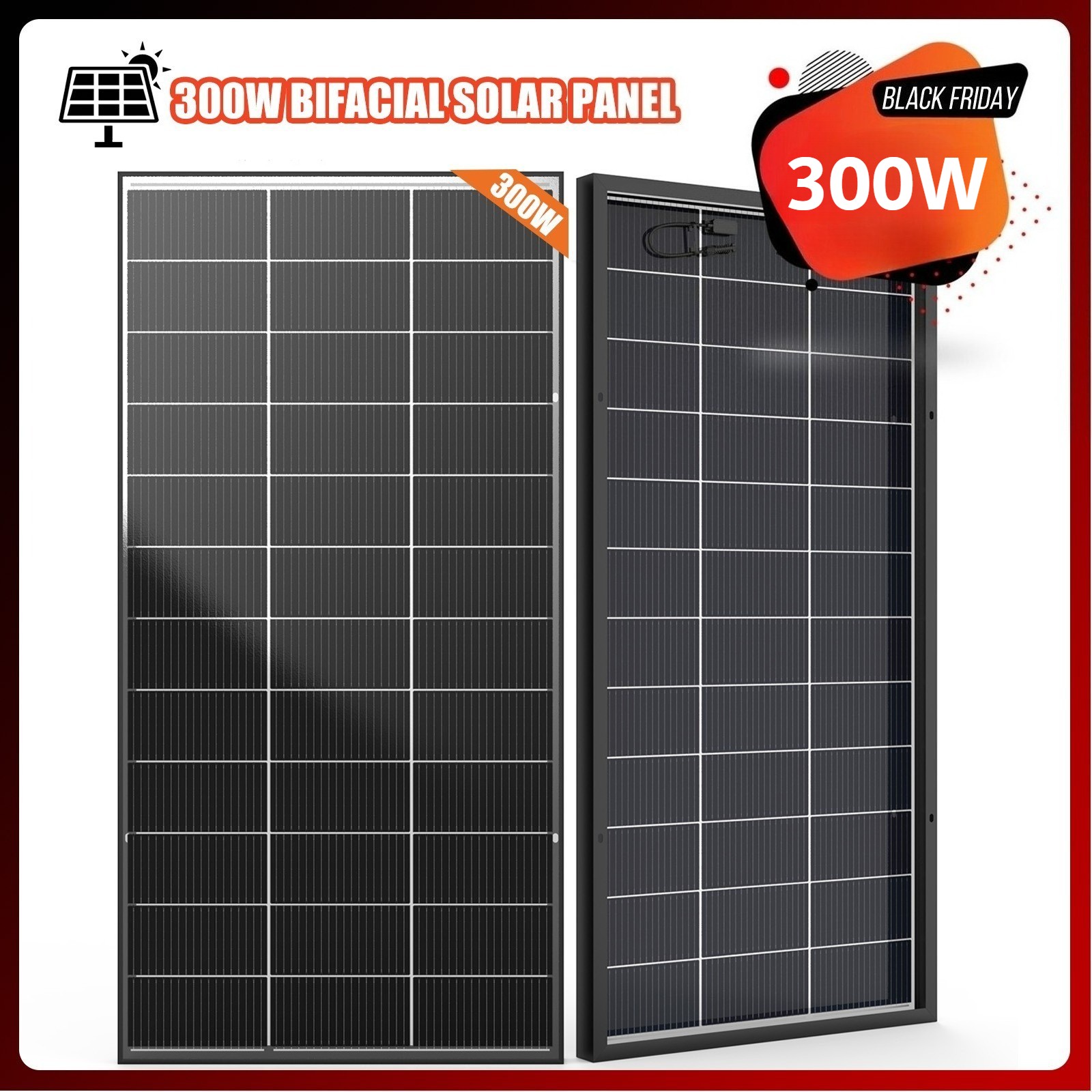
This panel's bifacial design lets the back side absorb reflected and scattered light, which can be useful when the panel is mounted over snow, sand, or water. It offers up to 25.2% conversion efficiency, and the MC-4 connector configuration works with a 12V battery bank. Multiple panels can be wired in series to reach 24V or 48V. At the same listed price as the standard 300W mono panel, this is the one to pick when you want the extra energy-gain potential of a bifacial build. The limitation is that you're choosing a 300W panel specifically; if your setup needs more than 300W, you'd need to add another panel.
200W 300W 400W 800W Solar Panel Mono 18BB
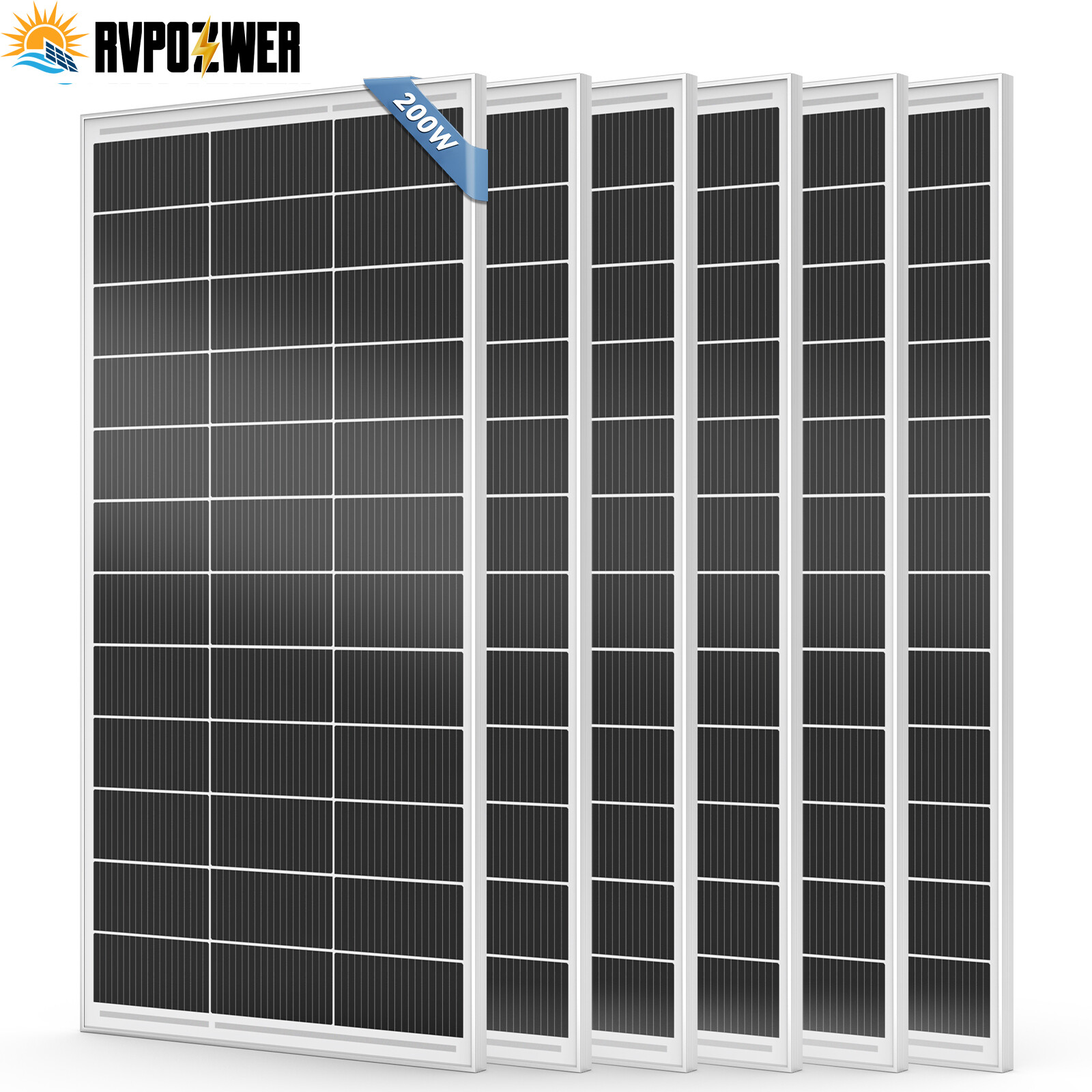
The title alone tells you what makes this listing different: it spans four wattage points, from 200W up to 800W, so you can use the same product page to order panels at different sizes for different parts of a system. Its build includes tempered glass, a corrosion-resistant aluminum frame, and IP68-rated connectors, plus pre-drilled mounting holes. The tradeoff is the listed price: it's the highest by a wide margin in this comparison. If you don't need the multi-wattage flexibility, the other three panels offer lower-priced alternatives for a single fixed output.
12V 200W Solar Panel Mono Black N-Type
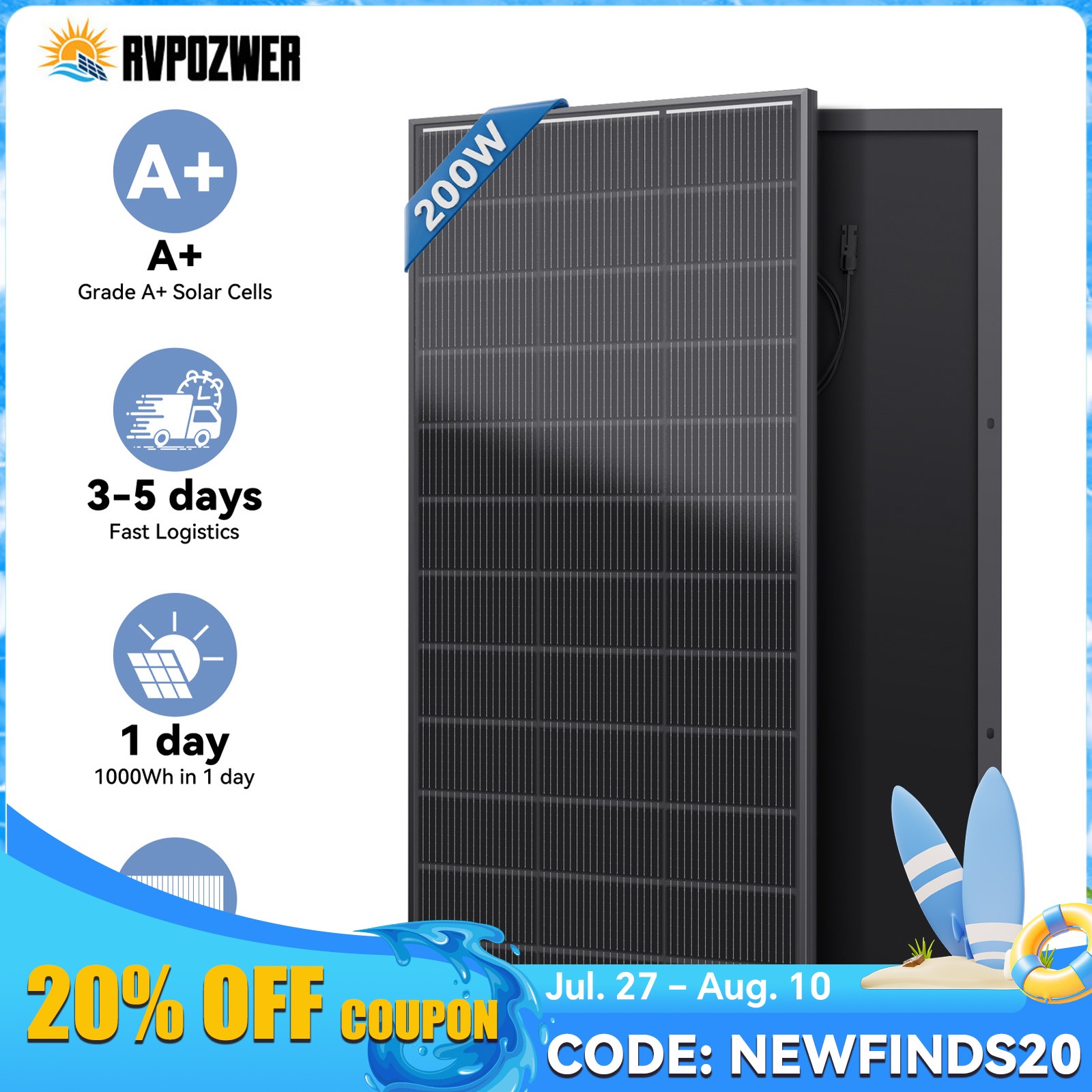
This RVPOZWER panel is the lowest-priced model in the group, and it matches that entry point with a 12V 200W output. The title calls out 25% high-efficiency, and the feature list includes anti-shading performance and all-day-light conditions, which help it keep charging even when part of the surface is shaded. It comes with pre-attached 2.95ft cables and MC-4 connectors in multiple configurations, making it easy to integrate into a small 12V system. The limitation is the 200W ceiling: if your load demands more than that, you'll need to add a second panel or step up to one of the 300W options.
300W Solar Panel Mono 18BB
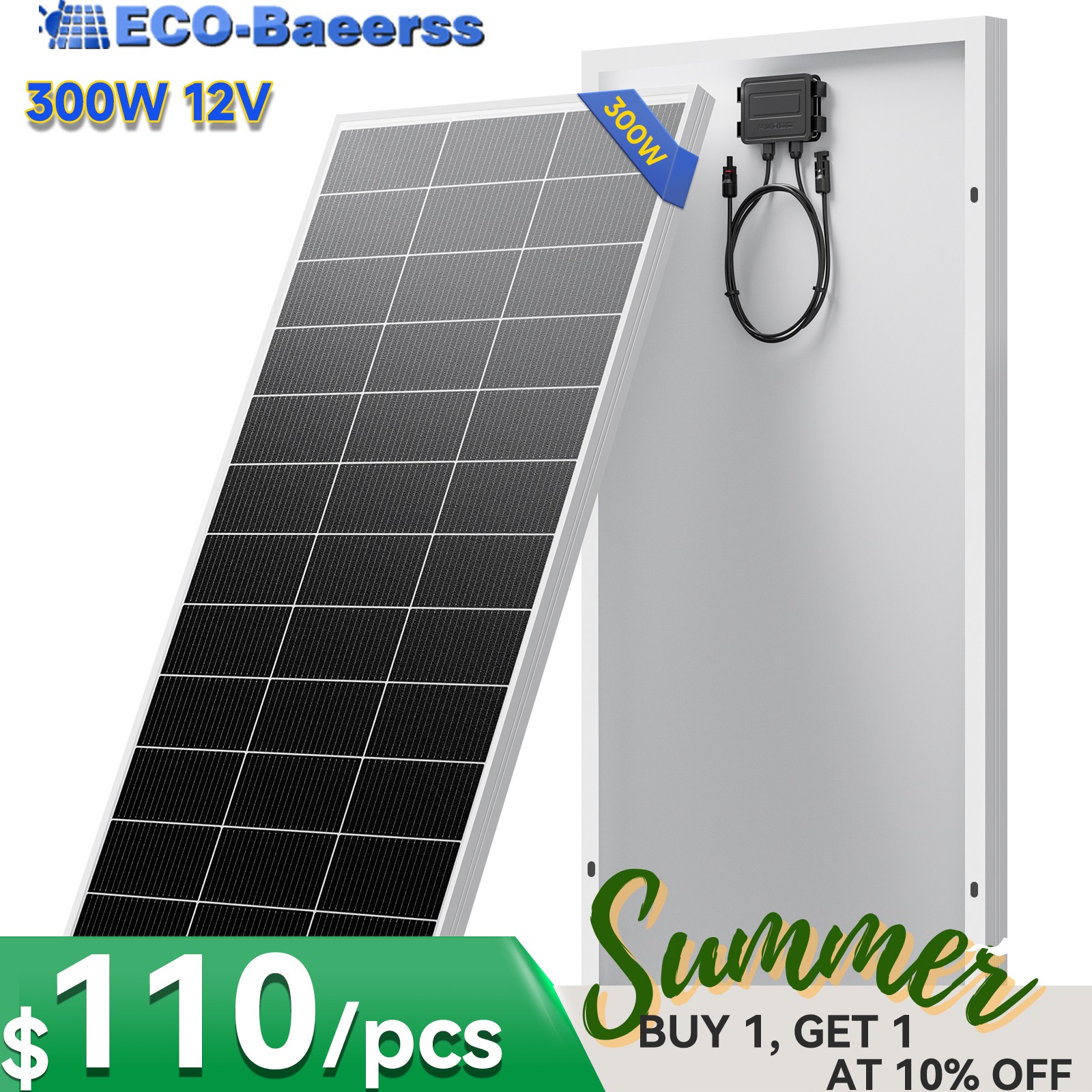
For a straightforward 300W panel aimed at home, boat, or off-grid battery charging, this mono panel is the simplest match. It features a corrosion-resistant aluminum frame and pre-drilled holes for mounting, making it ready to mount in a home, boat, or off-grid location. Its listed price is the same as the bifacial 300W panel, so you're paying the same amount for a more conventional design. That's the main thing to weigh: if you don't care about bifacial back-side capture, this panel gives you the same wattage for the same outlay. The limitation is that it doesn't have the bifacial layer, so it won't pick up reflected-light gain the way the bifacial model can.
Final recommendation by use case
- For the lowest-priced 12V panel: choose the 12V 200W RVPOZWER panel if you're outfitting a small RV, camper, or shed.
- For a 300W panel that can capture reflected light: choose the bifacial 300W panel when your mounting spot has a bright, reflective surface.
- For a standard 300W panel for a boat or off-grid battery: choose the 300W mono panel; it costs the same as the bifacial but skips the bifacial design.
- For a multi-wattage order spanning 200W to 800W: choose the 200W-800W listing if you need that flexibility and are okay with the highest listed price in this group.