When you're wiring solar panels to a battery bank, the charge controller decides how safely and effectively that energy gets stored. The challenge is that these controllers span a huge range of prices and capacities, and choosing wrong can mean either paying for power you don't need or coming up short on current for a system that does need it.
Here are two very different approaches to that job: a basic PWM controller and a high-power MPPT controller. Both regulate battery charging from solar panels, but the similarities end there.
Quick verdict
If your solar array is small and you mainly need to keep a battery topped up, with dual USB ports for charging a phone or small device, the PWM controller is a practical, low-cost choice. If you are running a larger off-grid load, need a lot of charging current, or want support for bigger battery-bank voltages, the MPPT controller is the one for that workload.
Price and specs at a glance
| Controller | Charging mode | Battery voltage | Max current | Price | Price bar |
|---|---|---|---|---|---|
| 10A 12V/24V PWM Charge Controller | PWM | 12V / 24V | 10A | $6.99 | |
| 5200W 100A MPPT Charge Controller | MPPT | 12V / 24V / 36V / 48V | 100A | $151.99 |
The price difference is clear: $6.99 versus $151.99. That $145 gap reflects two controllers built for different jobs. The smaller unit is about basic regulation and convenience; the larger unit is about high-current, high-voltage off-grid power. Both use DC output and include an LCD display, but their capabilities diverge sharply from there.
Where each controller wins
The PWM controller wins on price, simplicity, and convenience. It is a straightforward regulator for lower-power solar panels, with protections against overcharging, reverse polarity, and reverse discharge at night.
The MPPT controller wins on power handling, voltage flexibility, and battery-type compatibility. It handles larger off-grid systems, accepts a higher PV input voltage of up to 250V, and works with lead-acid and lithium batteries including LiFePO4, gel, and AGM.
Product notes
10A 12V/24V PWM Charge Controller with Dual USB
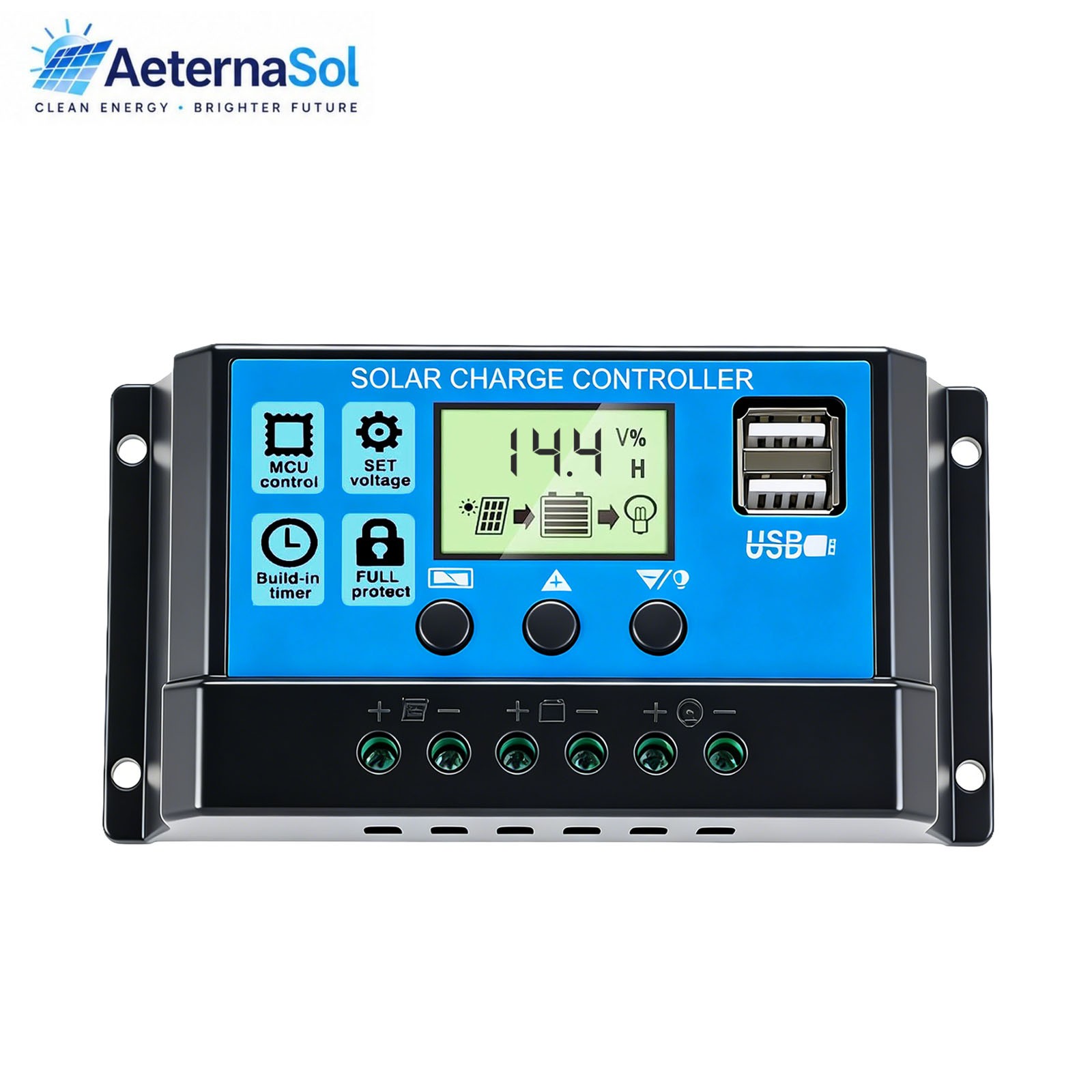
This controller is the kind of part you choose when the job is intentionally simple. It regulates 12V or 24V batteries from a solar panel, uses PWM charging, and has an LCD display so you can see charging status. The dual USB ports also let you charge a phone or small portable device directly from the controller, which is a handy extra for a cabin, small workshop, or off-grid setup. At $6.99, it is easy to start with. That said, its 10A capacity limits it to smaller solar panels, so if your power needs grow, you will likely outgrow this controller.
5200W 100A MPPT Charge Controller for 12V-48V Systems
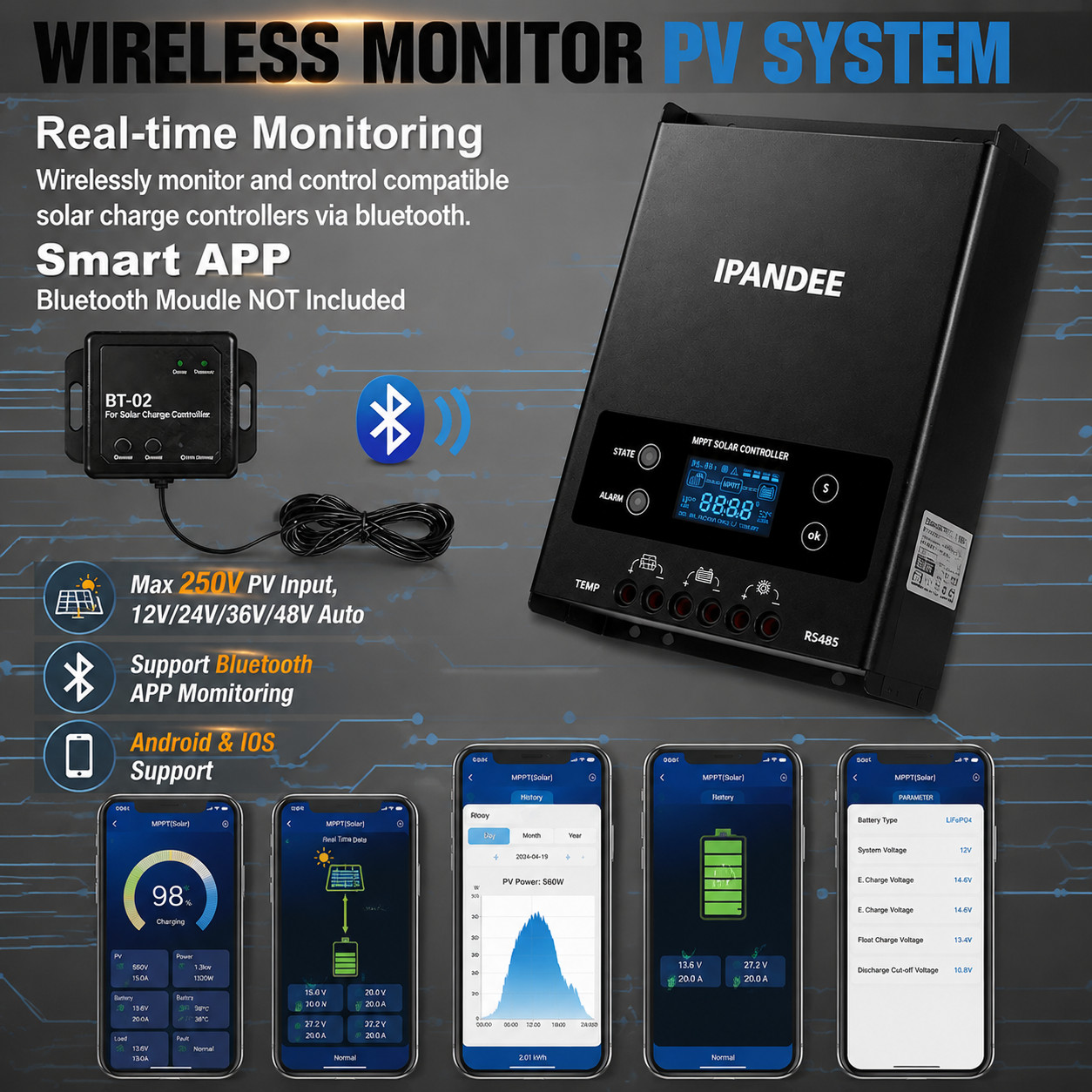
This is a different class of solar regulator. It uses MPPT charging, supports 12V, 24V, 36V, and 48V battery banks, and is rated for 100A output, so it is designed for larger off-grid homes, workshops, marine setups, and mobile power stations. The 250V max PV input gives you more freedom in how you wire your solar array, and the high-efficiency design helps you get more from each panel. It also accepts lead-acid and lithium batteries, including LiFePO4, gel, and AGM, which makes it far more flexible for different battery chemistries. The trade-off is the $151.99 price tag, so this level of power only makes sense if your system genuinely needs it.
Final choice by use case
Choose the PWM controller when your solar panel is modest and you want a low entry price. Choose the MPPT controller for a serious off-grid system with higher current demands, larger battery-bank voltages, or a mix of battery chemistries. If you are not sure, start with your battery voltage and your loads: controllers are sized by charging current, so a larger current rating is only useful if your system can actually use it.