For anyone shopping for power conversion at home, choosing between a 12KW 48V hybrid inverter and a 6200W 48V on/off-grid inverter is really about matching the machine to your wiring and loads. Both units use MPPT solar charging, support lead-acid or lithium batteries, and target home applications. The 12KW model is the larger unit; the 6200W model is the lower-price path to a straightforward solar setup.
Quick verdict
Go with the 12KW inverter if you need more power and plan to scale later. Choose the 6200W model if you want a lower-price way to start running on solar, with or without a battery bank.
Comparison
Here is a compact look at the price and output differences.
| Inverter | Output and MPPT | Price (USD) | Relative price |
|---|---|---|---|
| 12KW 48V Hybrid Solar Inverter | 120V/240V split-phase, dual MPPT | 986.25 | |
| 6200W 48V Solar Hybrid Inverter | 220/230V single-phase, 120A MPPT | 282.00 |
Where each product wins
Where the 12KW hybrid inverter wins
The 12KW model wins when headroom and expandability are the priorities. It supports parallel operation, so you can add another unit without replacing the first. Timed charge/discharge and energy-saving modes also help shift loads away from peak-rate grid power.
Where the 6200W on/off-grid inverter wins
The 6200W model wins on price and convenience. It includes a WiFi dongle, provides dual AC output ports, and is ready to work in a simple solar setup out of the box.
Product notes
12KW 48V Hybrid Solar Inverter (120V/240V Split Phase)
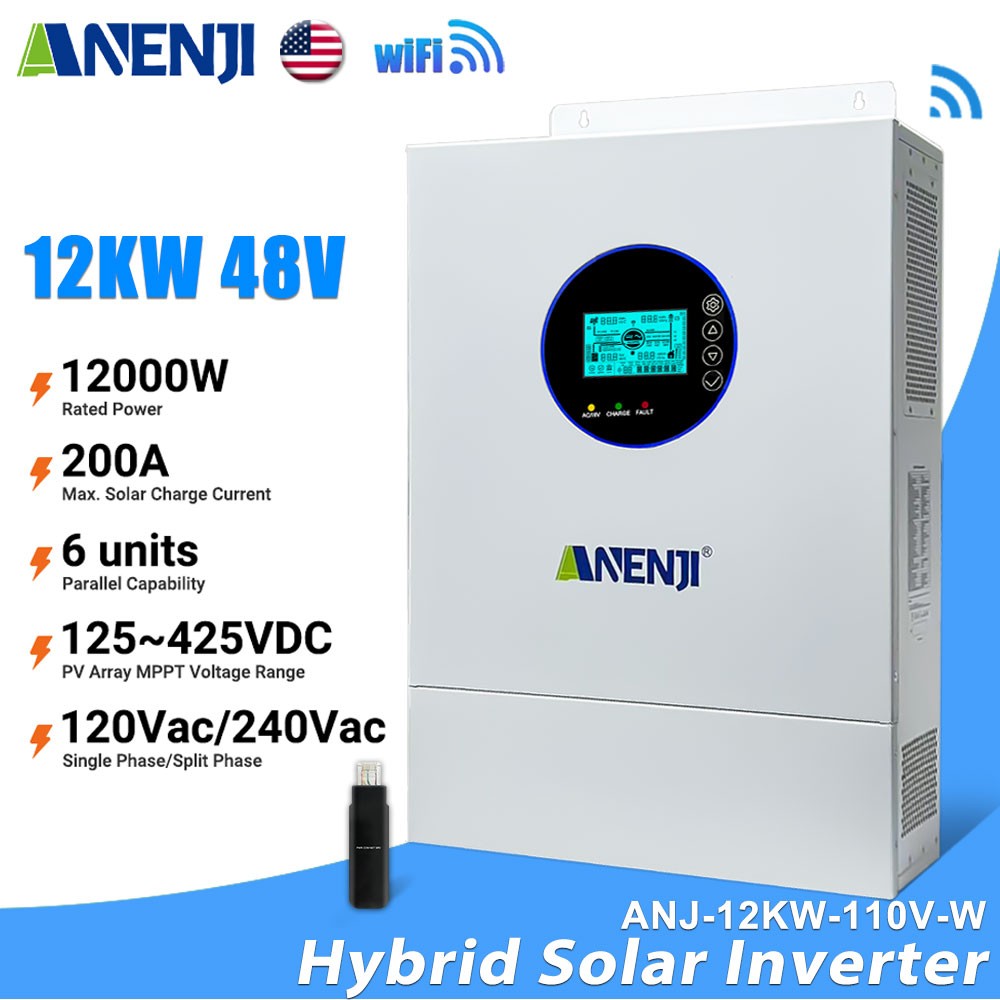
Choose this inverter when your electrical setup is built around 120/240V split-phase service and you need more capacity. The dual MPPT channels track two PV strings independently, and parallel support means you can add another unit instead of starting over. Communication interfaces include USB, RS485, and CAN, with WiFi/GPRS and dry-node control options. Timed charge/discharge works well with time-of-use electricity rates, and an energy-saving mode reduces no-load losses. The main limitation is the higher upfront price: this model costs $704.25 more than the 6200W unit. That extra cost makes sense only if you need the larger output, split-phase compatibility, or future expandability.
6200W 48V Solar Hybrid Inverter (On/Off Grid)
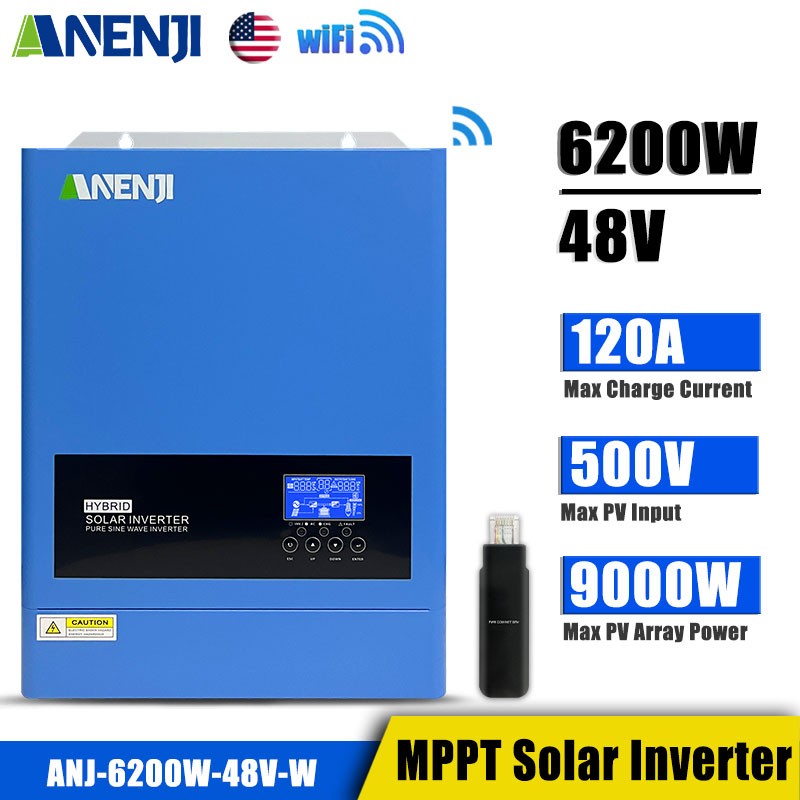
Pick the 6200W inverter for a 220/230V single-phase setup where keeping the upfront cost down matters. The built-in 120A MPPT charge controller handles up to 9000W of PV array, and the unit supports lead-acid, lithium, and LifePO4 batteries via RS485. It comes with a WiFi dongle, a removable dust cover, dual AC output ports, and an EQ function to optimize battery performance. It can also run without a battery bank. The trade-off is that it outputs 220/230V AC, so 110/120V appliances need an external step-down transformer that is not included. At $282, it is the lower-cost starting point for a modest solar setup.
Final choice by use case
Choose the 12KW 48V hybrid inverter when your household loads are high and you plan to grow. Choose the 6200W 48V on/off-grid inverter for a straightforward solar setup with a smaller upfront investment.