Quick Verdict
Should you buy the lower-capacity hybrid inverter or the larger home-scale system? For solar power conversion, the choice between these two comes down to load size: the TRELI is a battery-flexible unit for smaller solar kits, while the ANENJI is a home-scale system. The two sit at opposite ends of the price scale-$178.80 versus $986.25-so your load size will probably decide the winner before you look any deeper.
Comparison Table
| Product | Listed Price | Price Position | What It Brings |
|---|---|---|---|
| TRELI 4000W Hybrid Solar Inverter | USD 178.80 | 4000W rating with MPPT 120A controller for 12/24/36/48/96V battery banks, LCD display, USB port, portable build | |
| ANENJI 12KW Hybrid Solar Inverter | USD 986.25 | 12KW output, 48V battery range, 120V/240V split-phase, dual MPPT, parallel support, USB/RS485/CAN communication |
Where Each Product Wins
- TRELI wins for solar kits, cabins, and mobile setups where you want one controller that works with the battery voltage you already own.
- ANENJI wins for whole-home power systems where the loads are larger and you want room to expand.
Product Notes
TRELI 4000W Hybrid Solar Inverter
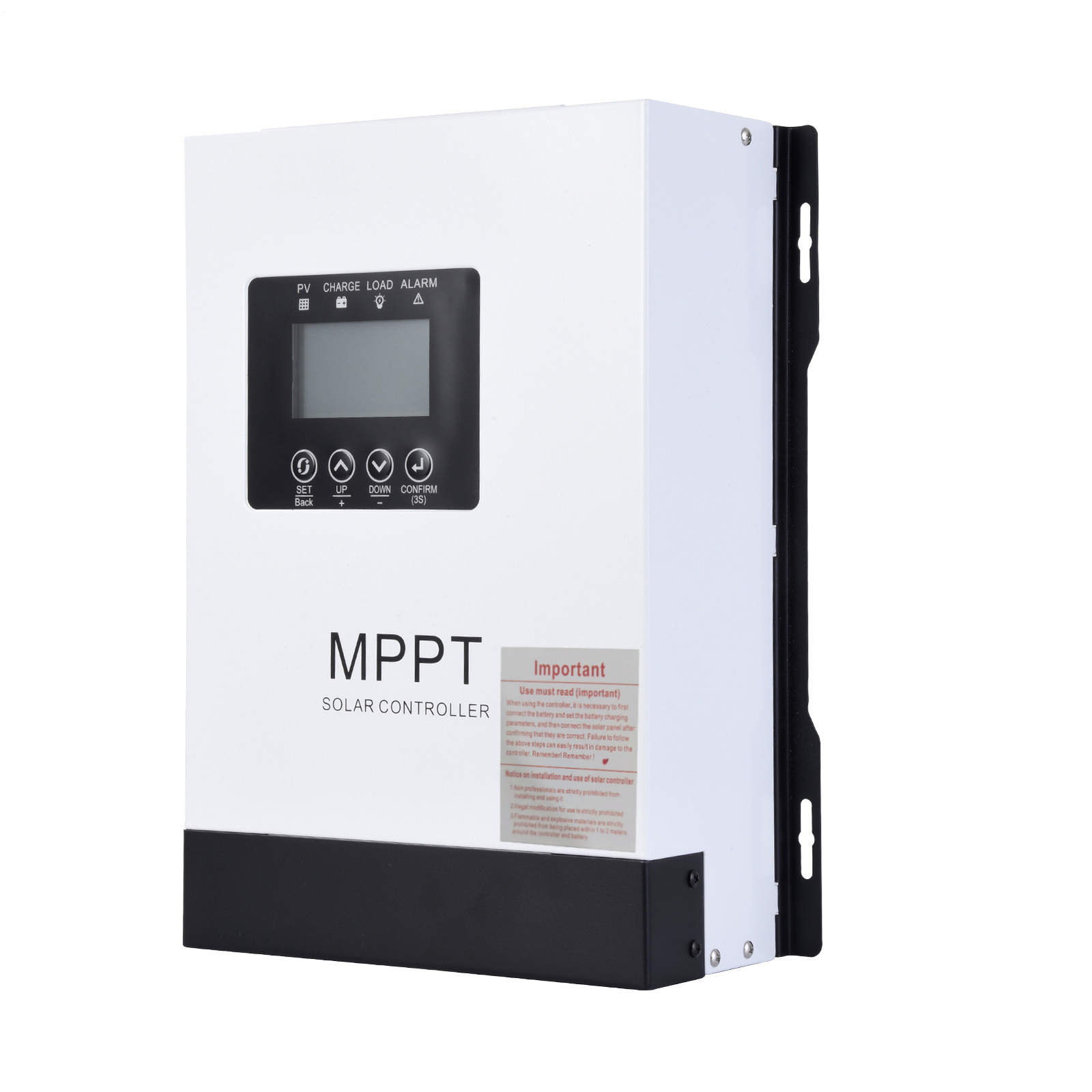
The TRELI 4000W unit covers an unusually wide battery voltage band-12, 24, 36, 48, or 96V-which makes it easy to move between different battery banks without swapping the controller. The integrated 120A MPPT controller adds programmable float and absorption voltages, low-voltage disconnect, and protection against overcharge, over-discharge, overload, short circuit, and reverse polarity. The LCD screen, USB port, and portable build fit solar-kit projects well. The cooling fan is temperature-responsive, turning on above 45°C and off below 40°C, with a design aimed at long fan life. Keep in mind that the 4000W rating is the ceiling for the loads you can run, so this unit suits smaller solar kits and lighter loads. Price aside, this is the more flexible option for battery voltage range, not for raw output.
ANENJI 12KW Hybrid Solar Inverter
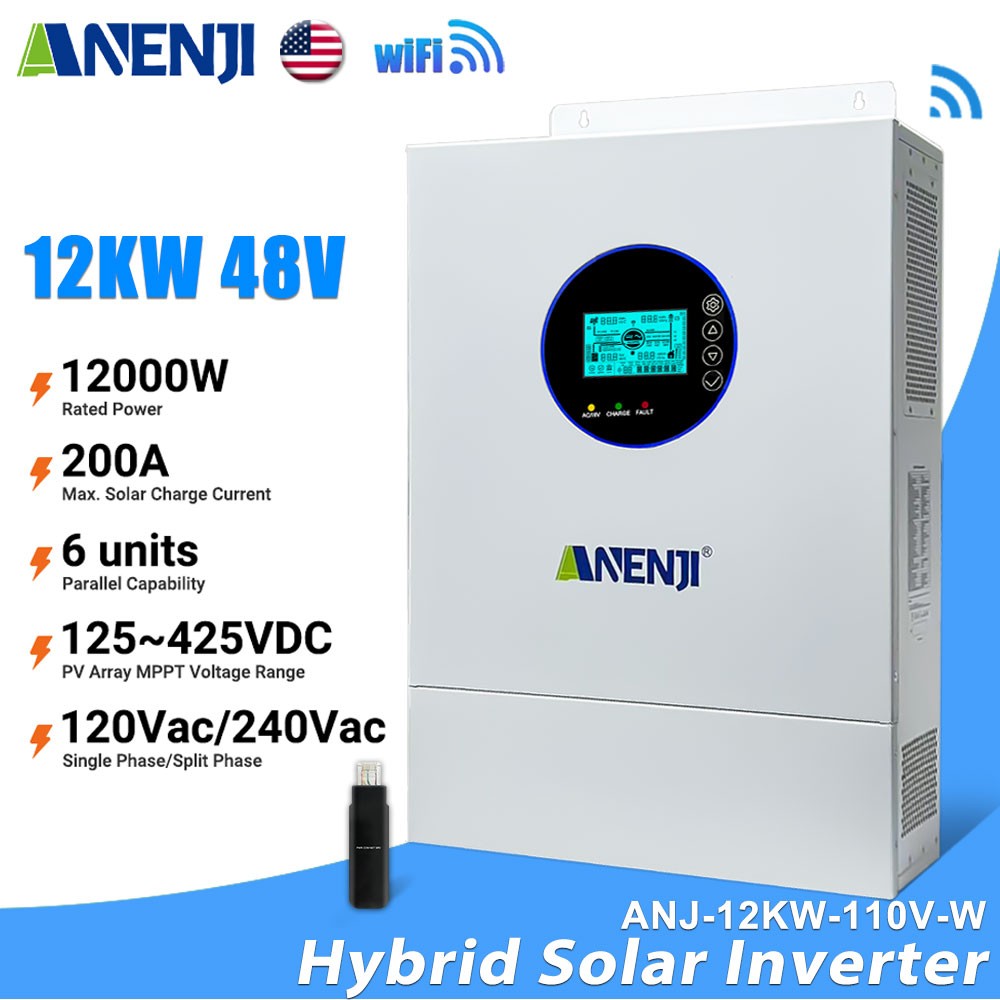
The ANENJI 12KW model steps up to 48V battery operation and 120V/240V split-phase output, matching a home/garden use case. It accepts two solar inputs at once and uses dual MPPT tracking to maximize charging and carrying capacity. The unit also supports split-phase or single-phase pure sine wave output, timed charge and discharge based on time-of-use rates, an energy-saving mode to reduce no-load losses, and multiple communication interfaces including USB, RS485, CAN, and dry node control. It works with both lead-acid and lithium-ion batteries and includes dual activation for sleeping lithium packs. The practical limitation is cost and scale: at the top of this pair's price spread, the ANENJI is best reserved for projects that actually need that much capacity, since it relies on a 48V battery bank and the associated wiring. For home/garden use, this is the heavier-duty, split-phase answer.
Final Choice by Use Case
If you need a solar kit inverter that can adapt to whatever battery voltage you own and you want to stay at the lower end of the price range, choose the TRELI. It is the easier, lighter lift for small off-grid projects and mobile builds.
If your loads are closer to a whole home and you are prepared for a larger battery bank, choose the ANENJI. The larger investment buys the capacity and expandability that small kits cannot use.