Choosing an inverter usually comes down to matching your DC source to the AC power you actually need. This pure sine wave power inverter is offered in several peak power options and multiple input voltages, so the real question is not just how much wattage it can handle, but which configuration matches the battery bank and loads you have in mind.
5000W 8000W 12000W 12V 24V 48V 72V to 110V/220V Pure Sine Wave Power Inverter US
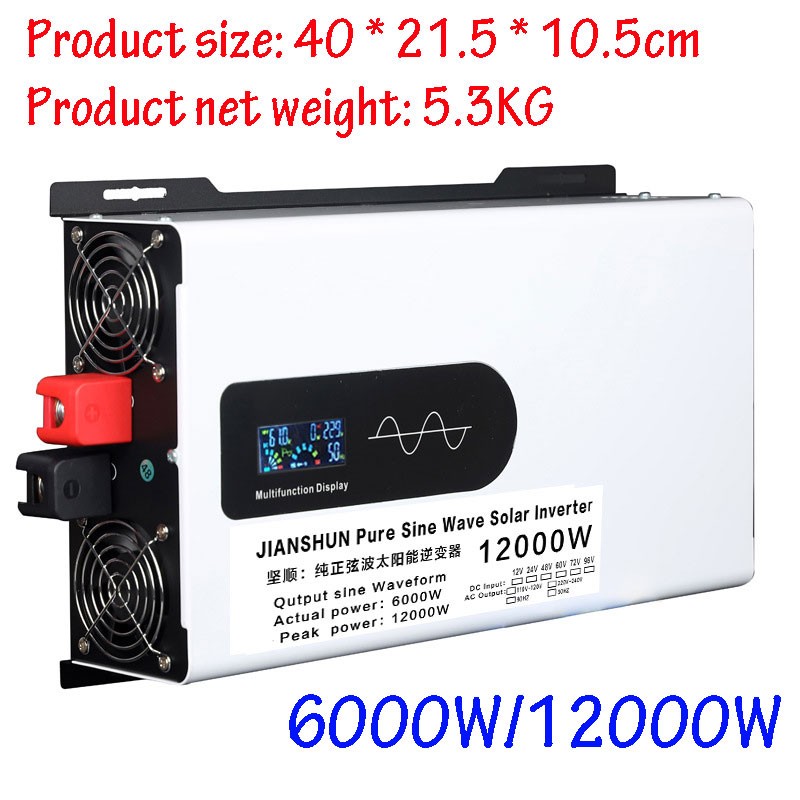
#### Quick verdict This is a pure sine wave inverter with a choice of peak power levels plus input voltage options of 12V, 24V, 48V, or 72V. It is listed at USD 289.99. The unit is aimed at someone who already knows their DC system voltage and wants clean AC output from a single inverter rather than a basic square-wave converter.
#### Who it suits If your setup runs on a 12V, 24V, 48V, or 72V battery bank, this inverter is designed to span those common input voltages. Pure sine wave output matters most when you plan to power electronics, appliances, or tools that can be sensitive to modified sine wave power. The multiple peak power options give you room to match the unit to your expected load, as long as you choose the version that fits your system.
#### What stands out from the listed details The feature set is more complete than a bare-bones inverter. You get an LCD display for monitoring, a remote control option, temperature control, and a smart control module among the listed features. Protection coverage includes low voltage, overvoltage, overload, overcurrent, short circuit, and open circuit protection. That combination of monitoring and safeguards makes it easier to run the inverter with an eye on system health.
#### Meaningful trade-offs The most important trade-off to understand is peak power versus rated power. The listing describes peak power levels, but the continuous rated output is lower than those peak figures. A high peak helps with the initial surge of motor-driven loads, but the continuous load you can expect is much closer to the rated number.
Another trade-off is the range of input voltages. Because the same platform covers 12V, 24V, 48V, and 72V systems, you have to choose the variant that matches your battery bank. Buying with the wrong input voltage in mind could leave you with an inverter that does not fit how your system is wired. At USD 289.99, the price applies to the listing and its range of configurations, so the specific power and input voltage you select will shape your overall experience.
#### Bottom line If you need pure sine wave AC power from a known DC input voltage, this 5000W/8000W/12000W inverter is a practical option. The LCD monitoring, remote control, temperature control, and built-in protections help it handle real system demands, but the peak versus rated power difference is the main thing to keep in mind. At USD 289.99, it offers a flexible pure sine wave solution for buyers who can match the variant to their setup.