Power conversion isn't one-size-fits-all. If you're running small electronics from a vehicle or solar battery bank, you need a compact unit that turns battery power into clean, household-style power. If you're feeding industrial equipment, you need a transformer that steps voltage down to the level your machines accept. These two units sit on opposite ends of the power conversion spectrum: the WZRELB inverter and the Xing Laser transformer.
Quick verdict: For small loads-electronics, small appliances, and other light-duty uses-choose the pure sine wave inverter. For heavy industrial loads that need conversion, choose the transformer. Their listed prices are separated by roughly USD 979.61, but the real deciding factor is the voltage and load you're working with.
Price and role at a glance
| Product | Listed Price | What it does | Best for |
|---|---|---|---|
| WZRELB 500W Inverter | USD 70.39 | Converts 12V DC to 110V/120V AC | Portable electronics, small appliances, mobile use |
| Xing Laser 50kVA Transformer | USD 1,050.00 | Steps down 480V AC to 208V AC | Industrial three-phase equipment, larger loads |
Where each product wins: The inverter wins for portability. It starts from a vehicle or solar battery input and delivers clean AC that suits sensitive electronics. It also carries a set of built-in protections. The transformer wins for sheer capacity. Its high-voltage conversion and heavy load rating put it in a different class from any portable inverter.
The right choice depends on where the power comes from and what you're powering. A portable rig needs clean power from a low-voltage battery. A facility needs high-capacity conversion for industrial machinery. Match the unit to the scale of your load rather than trying to make one do the other's job.
WZRELB Power Converter 500W Pure Sine Wave Inverter 12V to 110V 120V Truck Camp Solar
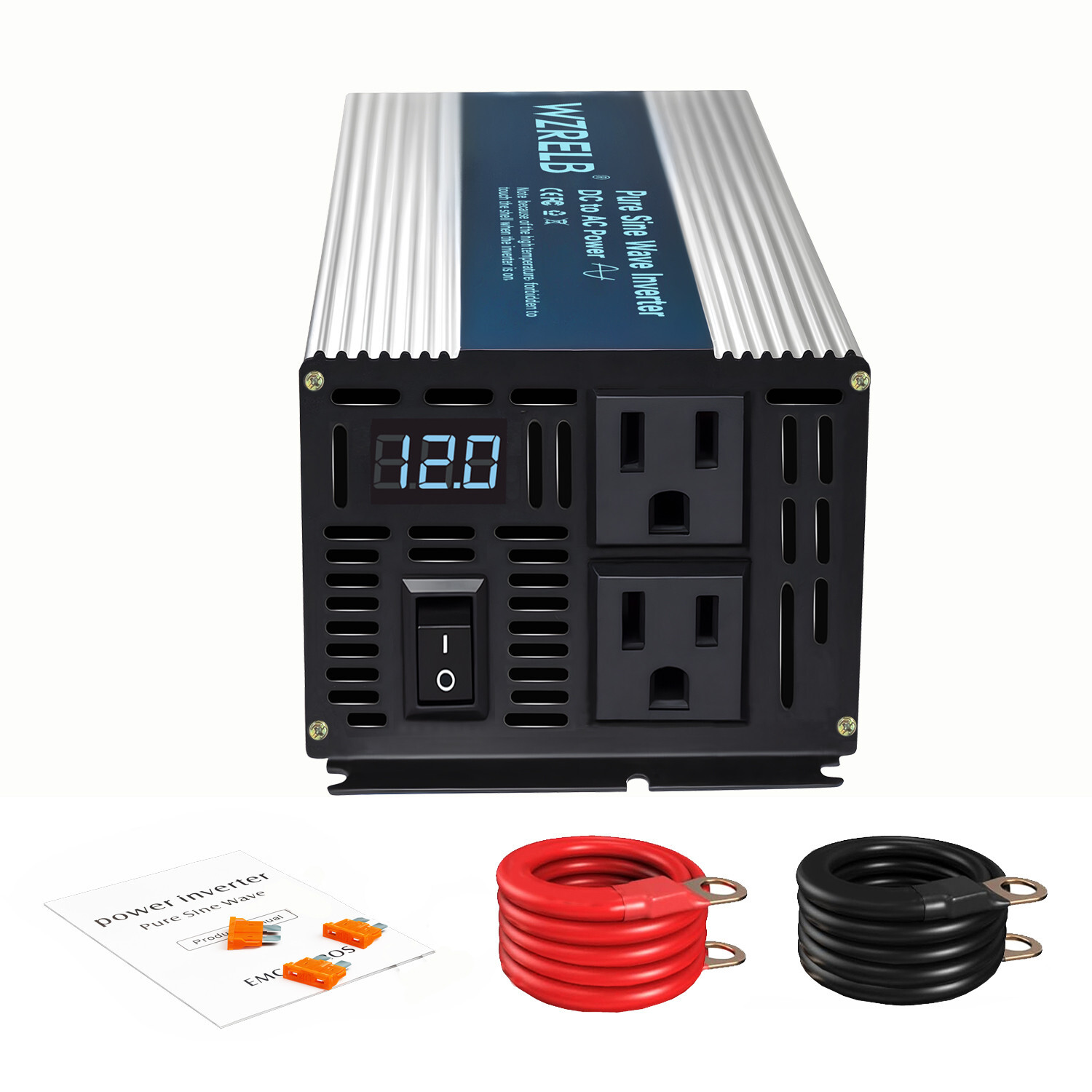
This is the right tool when your power source is 12V DC and your demand is modest. It delivers pure sine wave AC, which is useful for electronics that don't tolerate rough modified-square-wave power. The protections include over-voltage, low voltage, overheating, reverse polarity, and short circuit, which helps in mobile setups. An LED display shows voltage changes while devices are running, and the On/Off switch lets you cut power easily. The main limitation is the 500W RMS ceiling; you won't run large motors, heaters, or industrial machinery from this unit. It's designed for truck, camp, solar, and backup power situations.
Xing Laser 50kVA Step Down Transformer 480V to 208V Industrial Power Converter 3 Phase
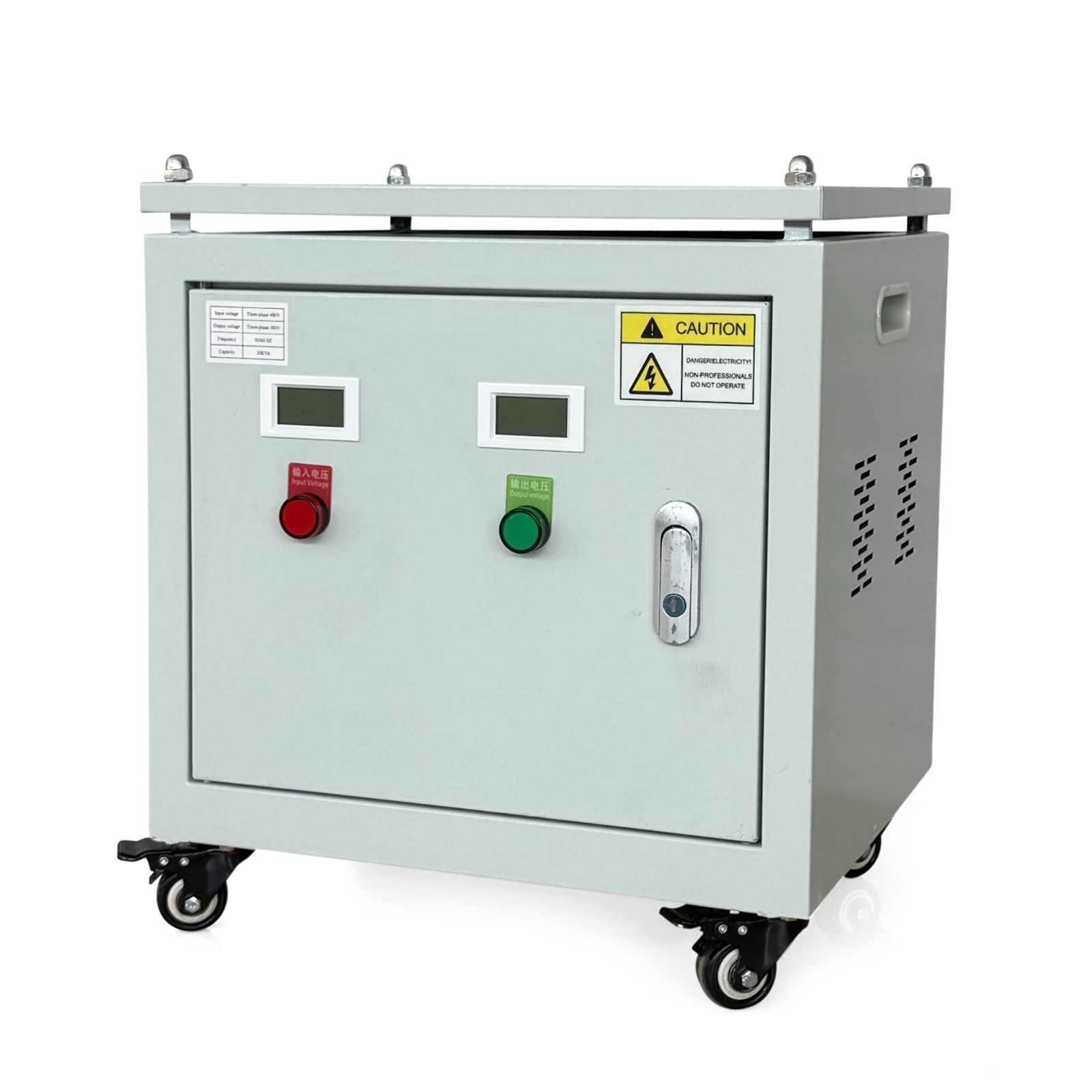
If your facility runs on 480V three-phase and the equipment needs 208V, this is the piece of infrastructure that bridges them. It's a 50kVA autotransformer with a step-down function, operating at 60 Hz and featuring built-in ventilation for continuous operation. The specified load limits are 40 kVA maximum resistive and 30 kVA maximum inductive. That's the kind of capacity that supports shop equipment, lighting panels, and larger conversion projects. The limitation is physical: it weighs about 120 kg (roughly 264 pounds) and measures 20.5 by 17.0 by 21.5 inches, so it's not something you'll carry around. You'd install it as part of a three-phase system.
Final choice by use case
- For portable battery setups with small electronics, camping, truck use, or solar backup: the inverter is the practical pick.
- For industrial applications that need conversion: the transformer is the necessary piece of equipment.
- If portability and clean backup power matter more than raw capacity, the inverter is the obvious match.
- If your priority is converting serious industrial power in a workshop or facility, the transformer is the right call.