Choosing between these two inverters is really a question of scale. Do you need to power small electronics from a vehicle battery or a small solar setup, or do you need serious continuous capacity from a battery bank that may run at a higher voltage? In inverters power conversion, those two jobs call for very different gear. One is a compact low-voltage unit; the other is a high-capacity platform with multiple voltage options. The price gap reflects that difference, so the deciding factors are your input voltage, your output voltage, and the amount of continuous load you expect.
Quick Verdict
For small loads around a vehicle or campsite, the compact WZRELB is the sensible fit. For heavier off-grid capacity, or appliances that need a different output voltage, the multi-voltage unit is the better direction.
Comparison
| | Compact 500W WZRELB | Multi-Volt High-Capacity |
| Price | $70.39 | $289.99 |
| Price bar | | |
| Input voltage | 12V | 12V, 24V, 48V, 72V |
| Output voltage | 110V/120V | 110V/220V |
| Continuous / peak power | 500W RMS | 2500W/4000W/6000W rated, 5000W/8000W/12000W peak depending on version |
| Display | LED | LCD |
| Protection highlights | High/low input voltage, overheating, reverse polarity, short circuit | Low/high voltage, overcurrent, overload, short circuit, open circuit |
Where Each Product Wins
The compact WZRELB wins when your power source is a low-voltage battery and your load stays modest.
The multi-voltage unit wins when you need serious capacity and a more flexible platform.
Product Notes
#### Power Converter 500W Pure Sine Wave Inverter 12V to 110V 120V Truck Camp Solar
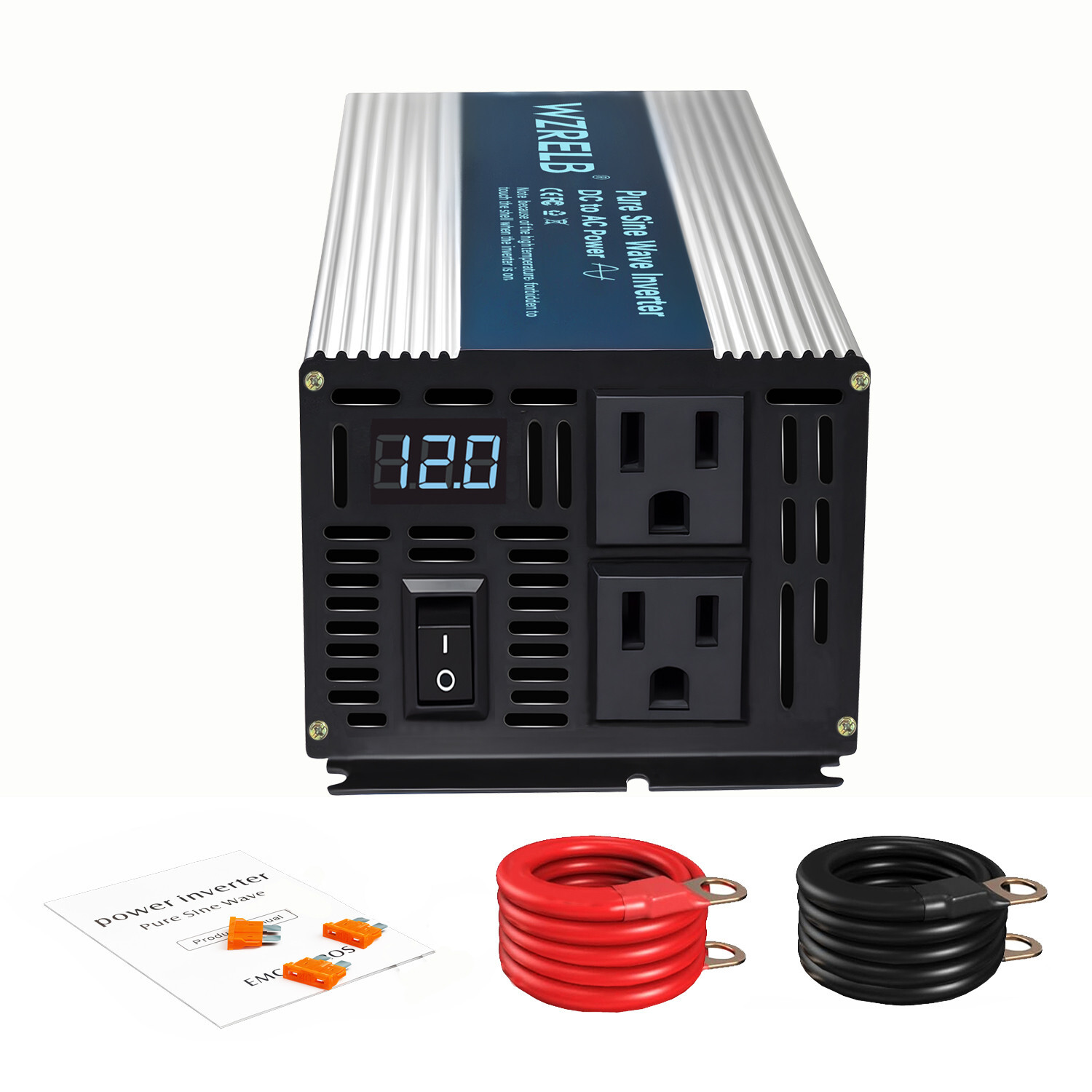
This compact WZRELB is built around one simple job: turn low-voltage DC from a truck, camper, or small solar battery into clean AC power. It is the right size when your load list is modest - phone chargers, laptops, LED lights, a small TV. The protection set covers high and low input voltage, overheating, reverse polarity, and short circuits, and the LED display lets you watch the voltage in real time. The trade-off is scale: the continuous output is at the lower end of the comparison, so high-draw appliances are off the table, and the input/output pairing is set for standard North American AC rather than a range of voltages. If that matches your setup, it is a straightforward, travel-friendly way to get AC where there is no grid.
#### 5000W 8000W 12000W 12V 24V 48V 72V to 110V/220V Pure Sine Wave Power Inverter US
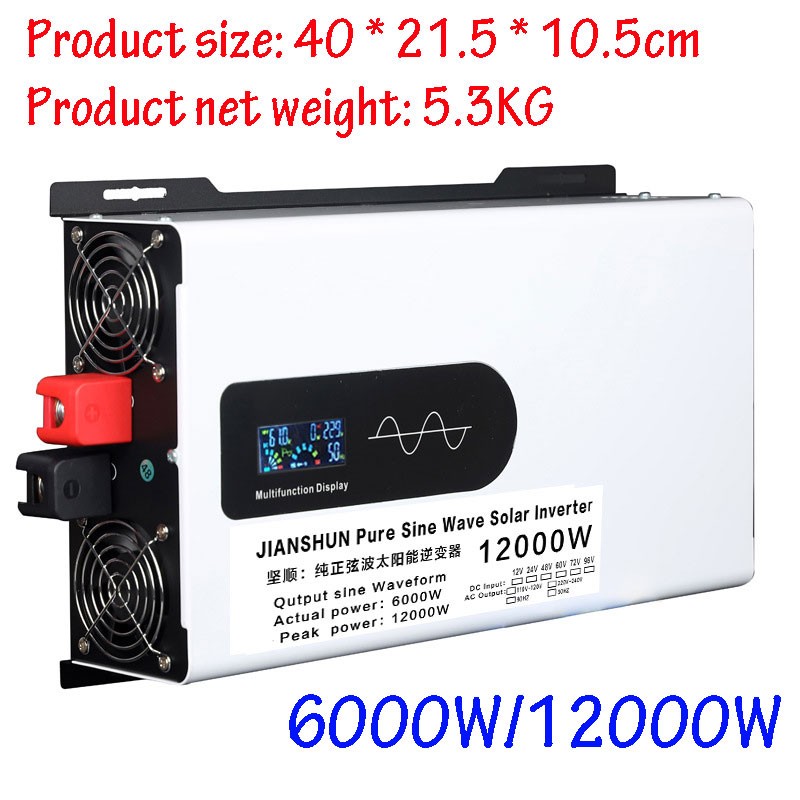
This is the bigger platform. It is built for more demanding setups, and it brings monitoring and convenience features: LCD display, temperature control, smart module, and remote control. The key thing to understand is the difference between peak and rated output. The peak figures are not the continuous figures; the rated options are what you use to match a continuous load. That means choosing the right version matters, and the additional flexibility is the reason to look this way. For a serious stationary setup where a small low-voltage unit is not enough, it is the more appropriate tool.
Final Choice by Use Case
Choose the compact WZRELB if: your power source is a 12V battery, your appliances run on 110V/120V, and your load fits a 500W-class inverter.
Choose the multi-voltage unit if: you need more continuous capacity, you run a 24V/48V/72V battery bank, or you need 220V output. Match the rated version to your expected load rather than relying on peak capacity.