For anyone sorting through inverters power conversion, the first question is not how many watts you can brag about. It is the shape of your AC power and how much charging capacity you actually need. The ANENJI 12KW 48V Hybrid Solar Inverter and the ANENJI 6200W 48V Hybrid Solar Inverter handle those two jobs differently, and the price spread between them is significant: the lower-price unit lists at USD 367.50 and the higher-price unit at USD 986.25. This head-to-head walks through the trade-off.
Quick verdict
For a bigger 48V hybrid system with room to expand, the ANENJI 12KW is the better match. For a more straightforward 48V hybrid setup at a lower listed price, the ANENJI 6200W is the sensible match. The deeper choice is capacity, input flexibility, and AC output type.
Price and feature comparison
| Product | Listed price | Price bar | Output | MPPT | Best for |
|---|---|---|---|---|---|
| ANENJI 12KW 48V Hybrid Solar Inverter | USD 986.25 | 120V/240V split phase | Dual MPPT | Split-phase 48V systems | |
| ANENJI 6200W 48V Hybrid Solar Inverter | USD 367.50 | 220/230V AC output | MPPT 120A charger controller | 220/230V 48V systems |
Where each product wins
The 12KW wins when you need headroom and parallel expansion. It carries a 12KW output rating and supports parallel operation, which matters if you plan to add a second unit later. It also supports energy-saving mode to cut no-load losses and timed charging that can be set around time-of-use electricity prices, so you can shift battery charging to cheaper rate periods.
The 6200W wins when entry cost and operational flexibility matter more. The lower listed price makes it the easier first purchase. It is an on/off-grid unit, can be operated without a battery, and has multiple output priorities (UTL, SOL, SBU, SUB) so you can decide whether utility, solar, or battery leads the load.
Product notes
ANENJI 12KW 48V Hybrid Solar Inverter
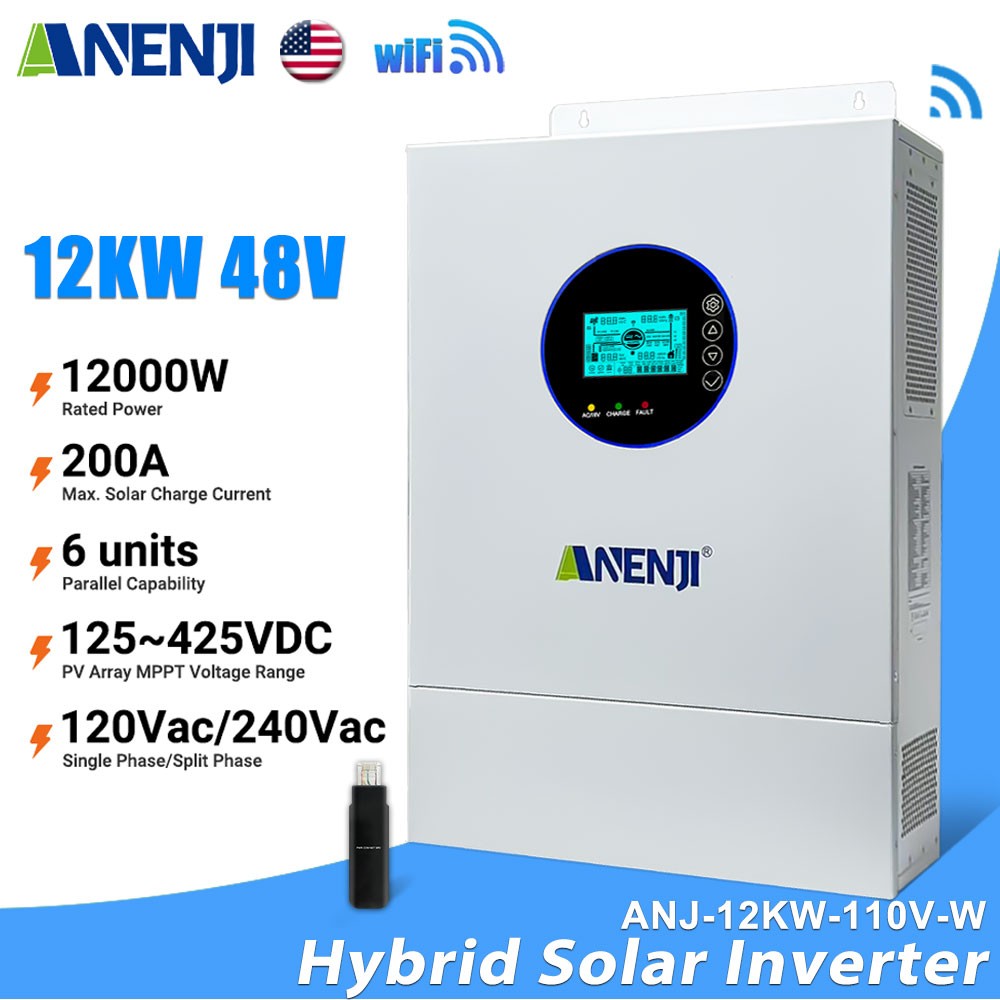
The 12KW ANENJI is the choice when the job goes beyond basic 48V charging. Its two-channel PV input means you can connect two solar strings and track them separately, which is useful when panels face different orientations. It also supports lead-acid and lithium batteries, includes mains/PV activation for sleeping lithium batteries, and has a timed charge/discharge function that can line up with time-of-use electricity rates. The main limitation is the higher price of this unit versus the 6200W model. If your loads do not need the higher power ceiling and dual-MPPT tracking, you may be paying for headroom you will never use.
ANENJI 6200W 48V Hybrid Solar Inverter
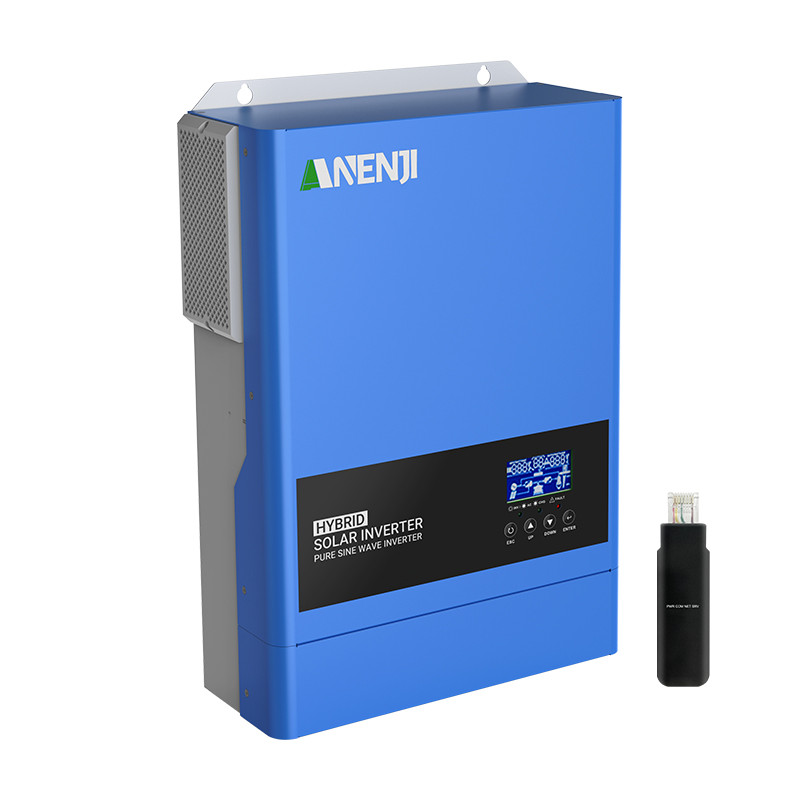
On the other side, the 6200W ANENJI is the lower-price on/off-grid route into 48V hybrid power. Peak efficiency is rated at 96 percent, and the built-in MPPT 120A charger controller plus lithium battery activation cover the charging essentials. RS485 communication works with LifePO4 batteries, you can operate the unit without a battery, and the removable dust cover helps in harsher environments. The big limitation is output: this is a 220/230V AC unit, so it is not a drop-in replacement for a 120V/240V split-phase layout. For 220/230V loads, the 6200W does the job without the higher price tag.
Final choice by use case
Make the final call by the loads you already have and the room you have to grow. Choose the ANENJI 12KW 48V Hybrid Solar Inverter for a heavier 48V profile with expansion in mind. Choose the ANENJI 6200W 48V Hybrid Solar Inverter when a lower listed price and a simpler 48V package fit the job. Both will charge from solar, but only one matches your actual AC requirements.