When it comes to inverters power conversion, the right hybrid model has to match your household wiring and the way you plan to use solar. The DATOUBOSS 6.3KW and ANENJI 6200W may look similar on paper, but they are built for different electrical environments. Some buyers need a single unit that can hop between a home, a shed, and a camping trip; others need a fixed installation that runs during the day with minimal battery involvement. The decision comes down to wiring and operating style.
Here is a side-by-side look at the specifications that matter most.
Quick Verdict
The DATOUBOSS is the flexible all-rounder; the ANENJI is the solar-first specialist. They are close in price, with USD 17.50 separating the USD 385.00 DATOUBOSS from the USD 367.50 ANENJI, so your decision should rest on your wiring and how you plan to charge the battery.
DATOUBOSS 6.3KW vs ANENJI 6200W at a Glance
| Feature | DATOUBOSS 6.3KW | ANENJI 6200W |
|---|---|---|
| List price | USD 385.00 | USD 367.50 |
| AC output voltage | 110V/120V AC | 220V/230V AC |
| Continuous power | 6300W | 6200W |
| MPPT charge current | 120A | 120A |
| Battery bank | 48V | 48VDC |
| Applications listed | Back-up power, camping, home, garden, RV, shed | Home/Garden |
| Standout extras | Generator-friendly charging, wide PV input range | Dual outputs, 96% peak efficiency, battery-free option |
Where Each Product Wins
The DATOUBOSS wins on application variety: it is positioned for homes, sheds, RVs, camping, and back-up power. The ANENJI wins on operating flexibility: it is the one to look at when solar-first operation matters. Think about where the inverter will live most of the time, because a portable power setup and a fixed home installation have very different needs.
Product Notes
DATOUBOSS 6.3KW 6300W 48V Hybrid Solar Inverter
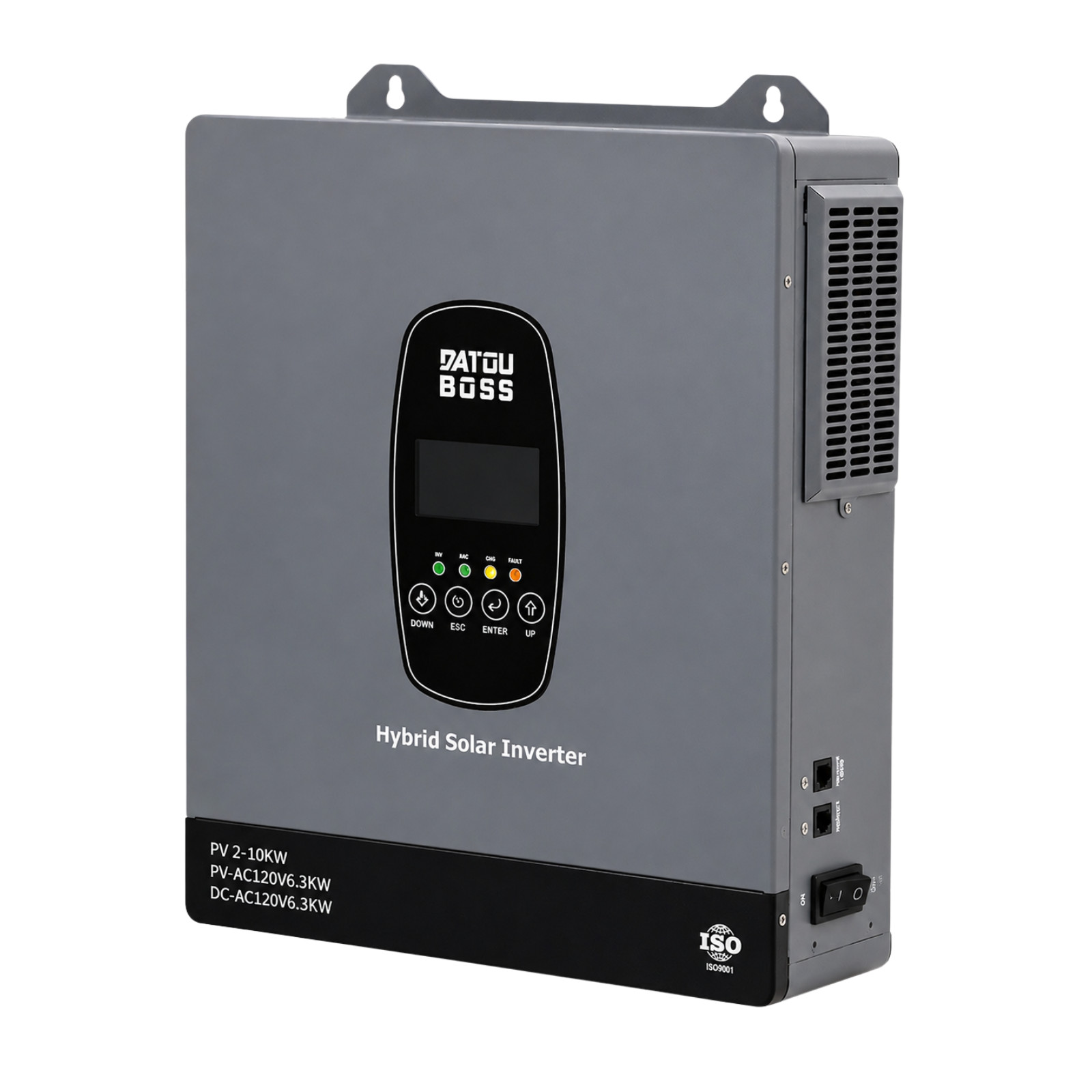
The DATOUBOSS pairs a 6300W output with an 80V~450VDC PV input range, so it can accept a fairly wide solar array voltage. Its title lists MPPT 120A charging and a 48V battery bank, and the description highlights three charging sources: solar PV, mains, and generator. That makes it useful for off-grid cabins, small farms, or RV setups where a generator backs up the solar array. The application list also includes back-up power and home/garden, so you are not locked into a single installation type. The main limitation is that its design is centered on battery-connected operation, so if you want to run purely without a battery bank, the other model in this comparison is the one to consider.
ANENJI 6200W 48V Hybrid Solar Inverter
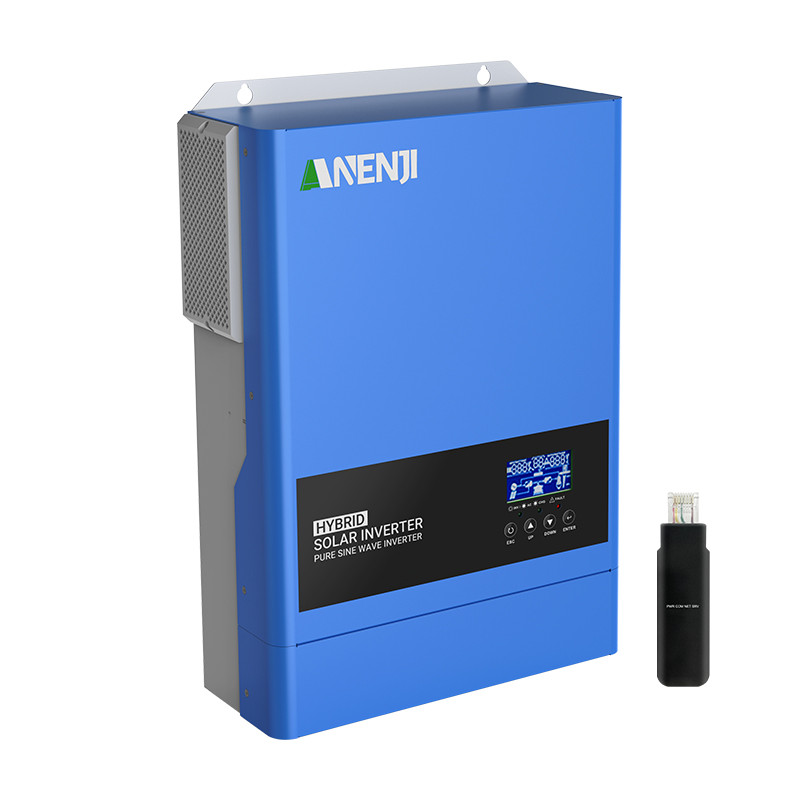
The ANENJI is aimed at 220V/230V AC homes. It lists a 6200W output, a 48VDC battery bank, and an MPPT 120A charge controller. Its advantages include dual outputs, a 96% peak efficiency claim, lithium battery activation, and LiFePO4 communication via RS485. It can also operate without a battery bank, which is a useful option for daytime solar use. The description includes a clear note that this unit is 220Vac for EU countries and that US customers would need a step-down transformer for 110Vac loads. That is the main limitation to weigh before ordering. If your home uses 230V and your battery bank is 48V, this inverter lines up neatly with that setup.
Final Choice by Use Case
If your project moves around, the DATOUBOSS is the easier companion. If your project is a fixed solar installation, the ANENJI is the sharper fit.