Choosing a 48V solar hybrid inverter for your home, backup, or off-grid system means weighing output power, input voltage range, and the features that fit your wiring and appliances. Two strong contenders in the inverters power conversion category are the DATOUBOSS 6.3KW 6300W and the ANENJI 6200W. Both are pure sine wave hybrid inverters with a 120A MPPT charge controller, and both run on a 48V battery bank. The DATOUBOSS sells for $385 and the ANENJI for $282, so the decision comes down to whether the extra $103 buys you the right features for your setup. This head-to-head guide breaks down the differences so you can choose with confidence.
Quick verdict
If you need a multi-location inverter that can handle more than just home backup, the DATOUBOSS 6.3KW at $385 is worth the extra money. If you want a more affordable 48V inverter with remote monitoring and dual AC outputs, the ANENJI 6200W at $282 is the smarter buy.
Comparison snapshot
| Product | Output Voltage | PV Input Range | MPPT Charging Current | Price | Relative Price |
|---|---|---|---|---|---|
| DATOUBOSS 6.3KW 6300W | 110/120V AC | 80V~450VDC | 120A | $385 | |
| ANENJI 6200W | 220/230V AC | 60V~500VDC | 120A | $282 |
Where each product wins
The DATOUBOSS 6.3KW wins for its broad application coverage. It handles back-up power, camping and hiking, home and garden, RVs, and sheds, and it supports solar, grid, and generator charging sources. This makes it a strong choice for multi-location use.
The ANENJI 6200W wins on price and feature density. It costs less while including a Wi-Fi dongle, dual AC output ports, lithium battery activation, and support for battery-less operation. For 220/230V-based setups, it delivers more flexibility per dollar.
Product notes
DATOUBOSS 6.3KW 6300W 48V Solar Hybrid Inverter
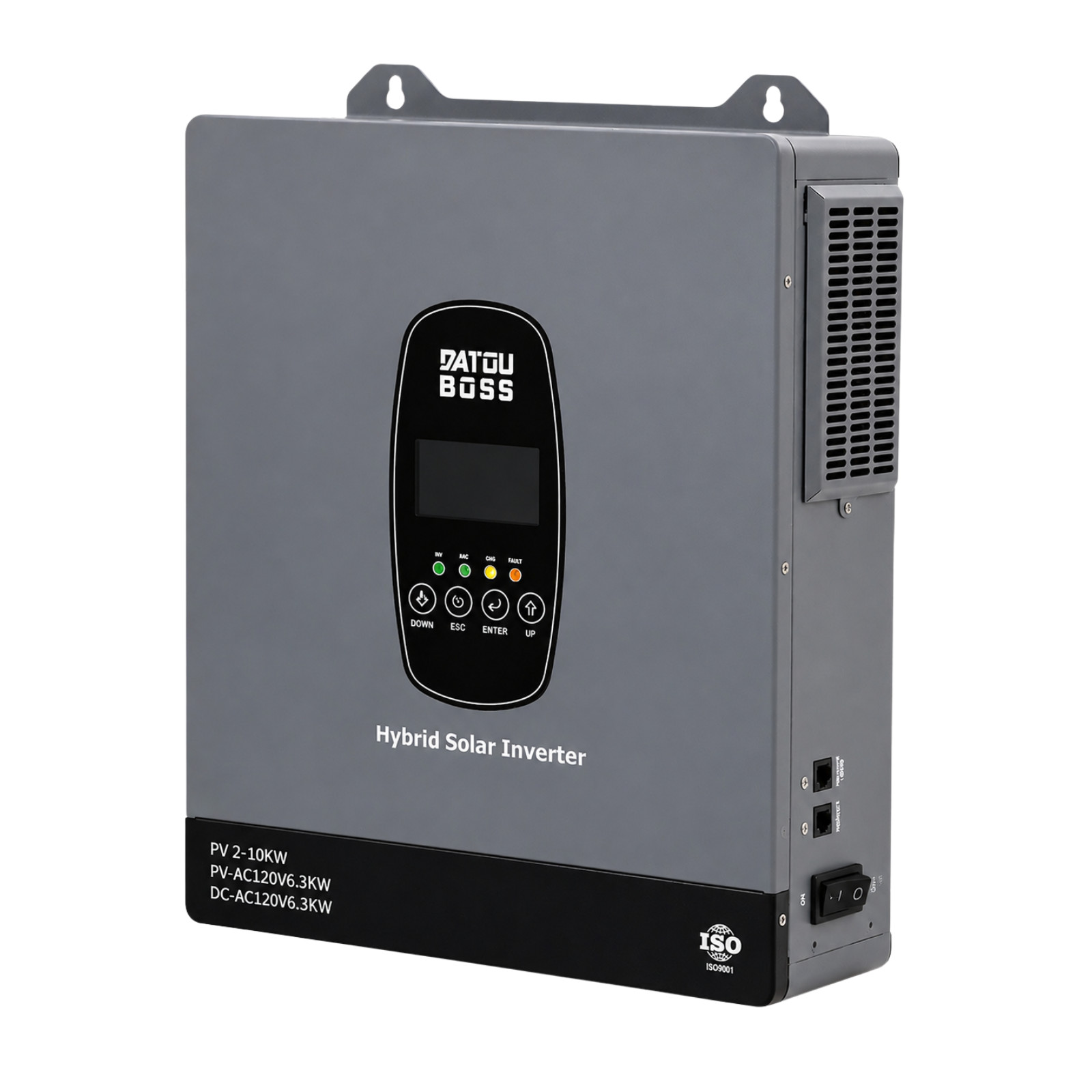
The DATOUBOSS is the flexible all-rounder of the pair. Its application list includes back-up power, camping and hiking, home and garden, recreational vehicles, and sheds, so you can move it between locations without changing your setup. It supports solar, grid, and generator charging sources, making it a solid fit for sites where the utility feed isn't always reliable. Battery compatibility covers lead-acid and lithium iron phosphate, which gives you options when building your bank. The trade-off is a PV input range that stops at 450V; while that covers many common arrays, it may limit you if you plan a high-voltage solar configuration. If you need one inverter for several roles, this is the one to consider.
ANENJI 6200W 48V Solar Hybrid Inverter
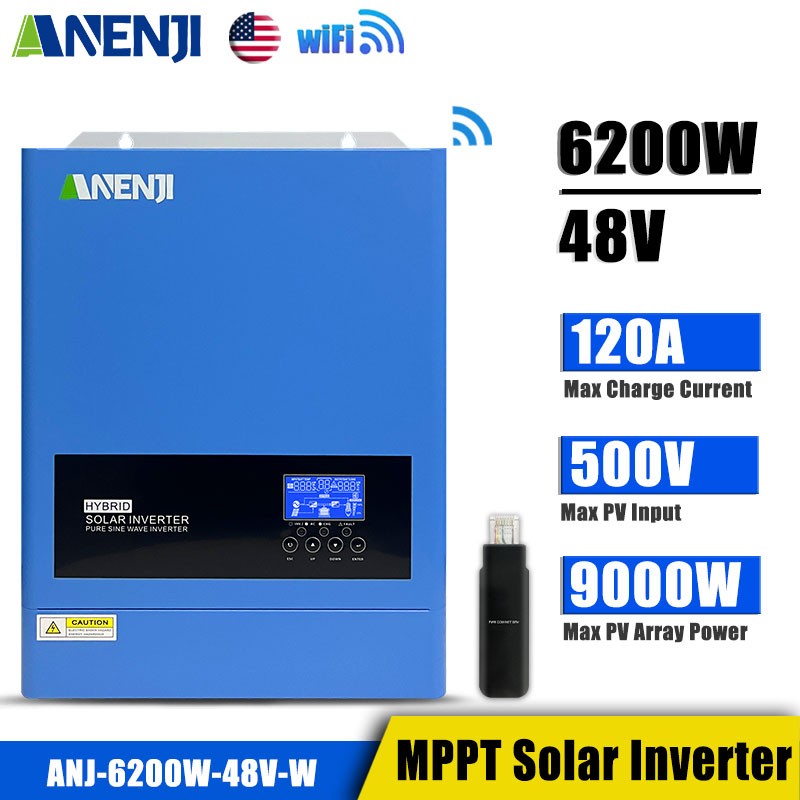
The ANENJI includes a Wi-Fi dongle for remote monitoring, dual AC output ports to split loads, and support for lead-acid and lithium batteries. It can activate lithium batteries and can operate without a battery for daytime solar-only use. The main limitation is that 110/120V US appliances need a separate transformer, which isn't included. If you run 220/230V appliances, or you're willing to add a transformer, the ANENJI gives you a lot of control for a lower price.
Final choice by use case
If you want a single inverter that can move between multiple locations and switch between solar, grid, and generator power, the DATOUBOSS 6.3KW is the versatile pick. If you're building a fixed off-grid system at home and want remote monitoring, dual outputs, and a lower price, the ANENJI 6200W is the right call. The best choice ultimately comes down to how many locations you need to cover and whether you prioritize flexibility or lower cost.