Shopping for an inverter to handle power conversion in an RV, cabin, or home backup setup usually narrows down to how much solar you plan to run. The two units here take different approaches: the SUMRY 3.6KW Hybrid Solar Inverter is built around MPPT solar charging and battery management, while the 5000W-12000W Pure Sine Wave Power Inverter is a multi-voltage unit that covers a wider range of DC input voltages. Both deliver pure sine wave AC output, but they're optimized for different jobs.
Quick verdict: Choose the SUMRY if you're building a dedicated off-grid solar setup and want an all-in-one box. Choose the 5000W-12000W Power Inverter if you need one unit that can adapt to several battery voltages.
Here's how the two compare:
| SUMRY 3.6KW Hybrid Solar Inverter | 5000W-12000W Pure Sine Wave Power Inverter | |
|---|---|---|
| Price | $279.95 | $289.99 |
| Power | 3.6KW continuous | Multiple wattage variants from 5,000W to 12,000W |
| Battery input | 24V DC | 12V / 24V / 48V / 72V options |
| Best fit | Off-grid solar hybrid | Multi-voltage power conversion |
For most buyers, the decision starts with whether you already have solar panels and a battery bank. If you do, the SUMRY keeps the system tidy by combining inverter and solar charging duties. If you're running a simpler DC-to-AC conversion without solar, the multi-voltage unit is the more adaptable choice. Neither price is likely to be the deciding factor; the real difference is system design.
Where they win: The SUMRY wins for solar-centric systems that need a single hybrid box. The multi-voltage model wins when your battery voltage isn't set in stone.
SUMRY 3.6KW Hybrid Solar Inverter
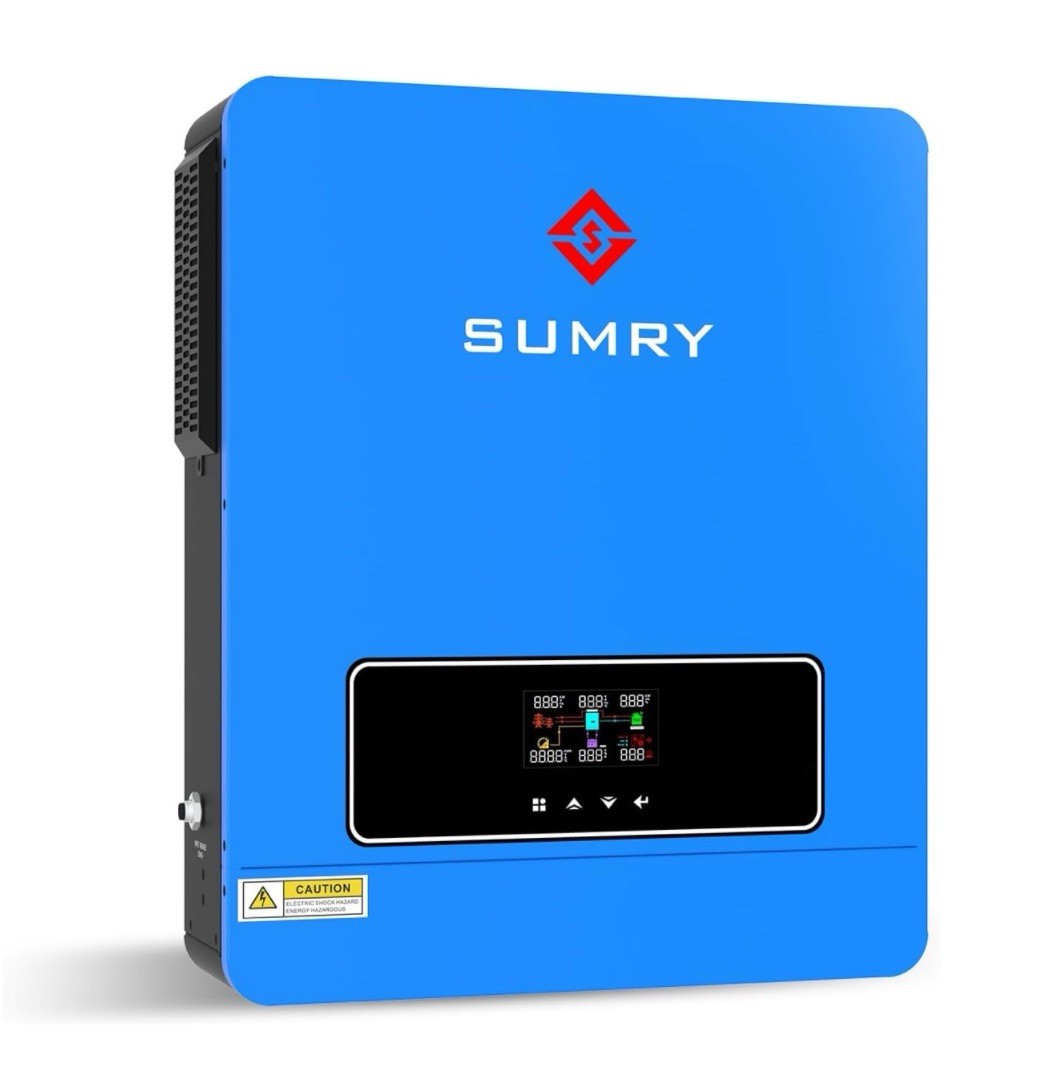
The SUMRY is the more solar-focused of the two. It integrates an MPPT solar charge controller, so a single unit can manage PV input, battery charging, and AC output. Four charging modes and four output modes are available, and a battery-less mode lets the inverter run loads directly from the solar array. RS485 communication for lithium BMS is included, which makes it easier to pair with a modern lithium battery bank. It also supports LiFePO4, GEL, AGM, and FLA batteries, and dual output is part of the spec. The tradeoff is input voltage: this is a 24V inverter, so it won't directly suit a 12V or 48V system unless you adjust the battery bank.
5000W-12000W Pure Sine Wave Power Inverter
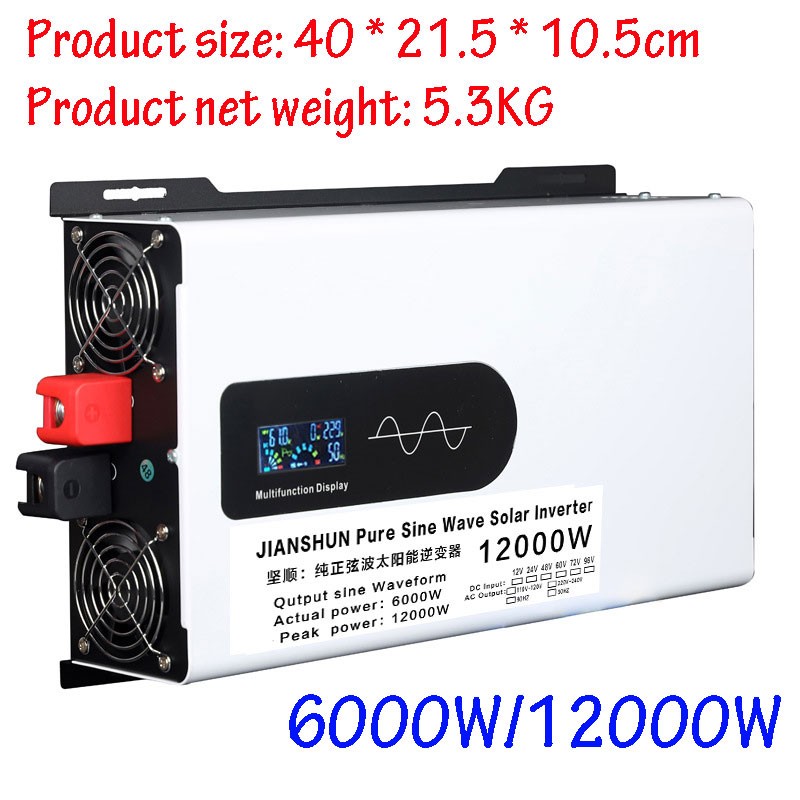
The strength here is flexibility. It accepts 12V, 24V, 48V, and 72V battery input options, so it can work with a wider spread of existing DC systems. An LCD display, temperature control, and a remote control all come with the unit, which helps when the inverter is installed in a tight compartment. The unit is a charger/inverter and includes overload and short circuit protection. The limitation is that multiple wattage variants are offered instead of a single fixed model, so the actual peak output depends on the variant chosen.
Final choice by use case:
- Go with the SUMRY 3.6KW Hybrid Solar Inverter for a solar hybrid build that includes battery-less PV operation and BMS communication in one box.
- Go with the 5000W-12000W Pure Sine Wave Power Inverter when your battery bank could be one of several DC voltages and you want one inverter with LCD and remote control included.