When you're comparing inverter power conversion options, the biggest decision is matching the unit to your battery bank, your home's wiring, and your power draw. The SUMRY 3.6KW Hybrid Solar Inverter and the ANENJI 12KW Hybrid Solar Inverter both convert DC from solar panels and batteries into clean AC power, but they sit at opposite ends of the power and price scale. This head-to-head helps you decide which one belongs on your wall.
Quick verdict: If you need a compact, affordable inverter for a small off-grid cabin, RV, or backup system, the SUMRY 3.6KW is the clear choice. If you need whole-home backup with room to scale, the ANENJI 12KW is worth the higher price.
| Product | Price | Battery/Output | Solar Charging | Best For |
|---|---|---|---|---|
| SUMRY 3.6KW Hybrid Solar Inverter | USD 279.95 | 24V battery, 120V AC pure sine wave | MPPT up to 80A, PV input 60-450V | Off-grid homes, RVs, cabins, backup |
| ANENJI 12KW Hybrid Solar Inverter | USD 986.25 | 48V battery, 120V/240V split-phase pure sine wave | Dual MPPT, two PV inputs | Whole-home backup and large solar arrays |
Where each product wins:
- The SUMRY wins on affordability and easy integration into small, mobile setups. It's a lower-cost way to get reliable AC power in a cabin, RV, or tiny backup, and it pairs well with smaller battery banks. If you're just starting out or need a dedicated system for a small space, it keeps the entry barrier low.
- The ANENJI wins on capacity and scalability for full-home installations. It's built to handle larger loads and gives you the flexibility to power multiple circuits. For a home with robust solar and battery resources, it provides a path to grow as your energy needs increase.
- Both are hybrid inverters, so you can expect them to blend solar input, utility charging, and battery power. The real dividing line is the size and wiring of the place you're powering.
Product notes:
SUMRY 3.6KW Hybrid Solar Inverter 24V 120V Pure Sine Wave MPPT 120A Dual Output
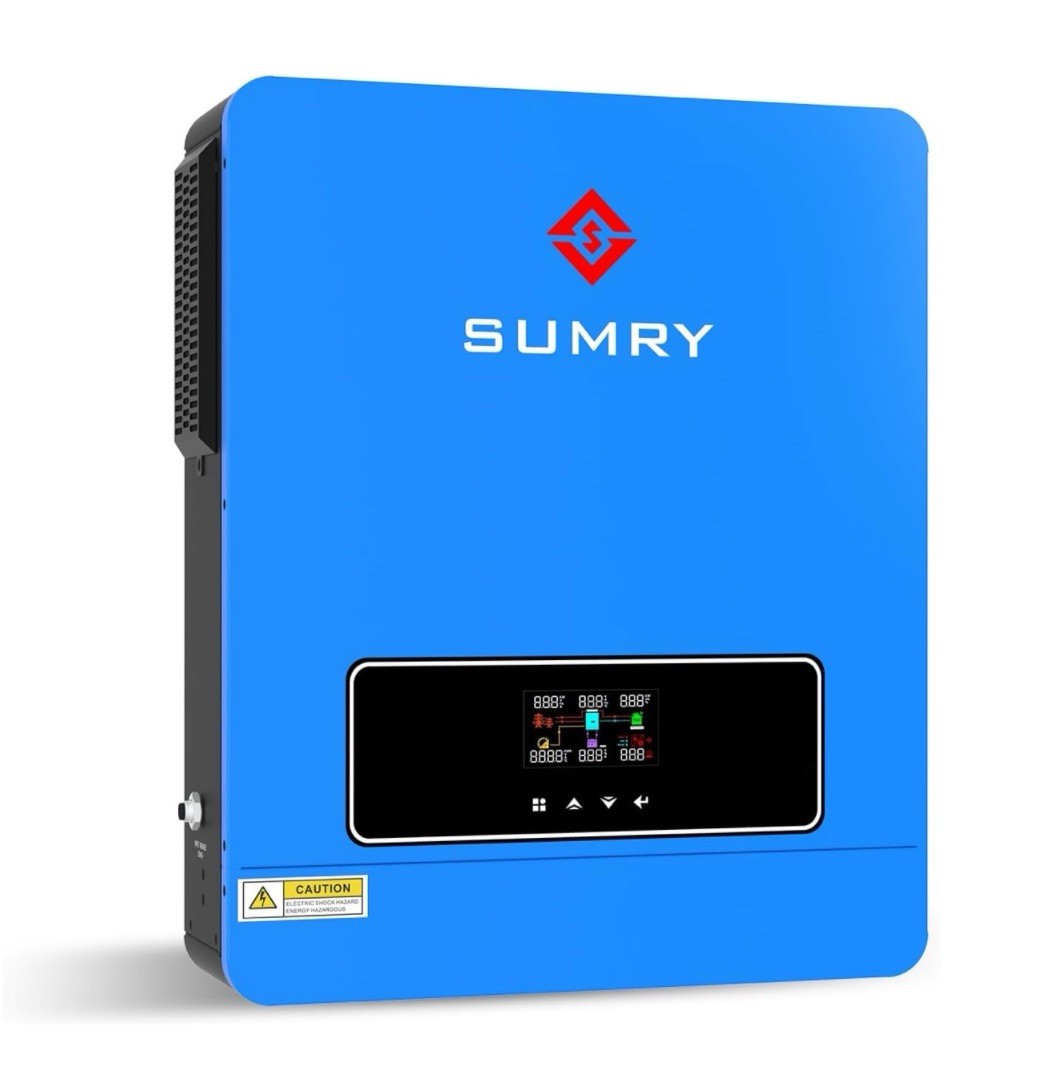
This is the inverter to choose when your loads are modest and your budget is tight. It gives you a 3.6kW continuous output from a 24V battery bank, converting to 120V AC with MPPT solar charging up to 80A and a PV input range of 60-450V. Four charging modes and four output modes let you decide whether solar, utility, or battery takes priority. The RS485 port for lithium battery BMS communication is a genuinely useful convenience, and the battery-less mode lets you run loads directly from PV in daylight. The limitation is the 120V output: you won't power 240V appliances or panels, and the 24V system is less suited to larger whole-home arrays. For a cabin, RV, or small backup system, this is a solid, lower-cost starting point.
ANENJI 12KW Hybrid Solar Inverter 120V/240V Split Phase Dual MPPT 200A Parallel
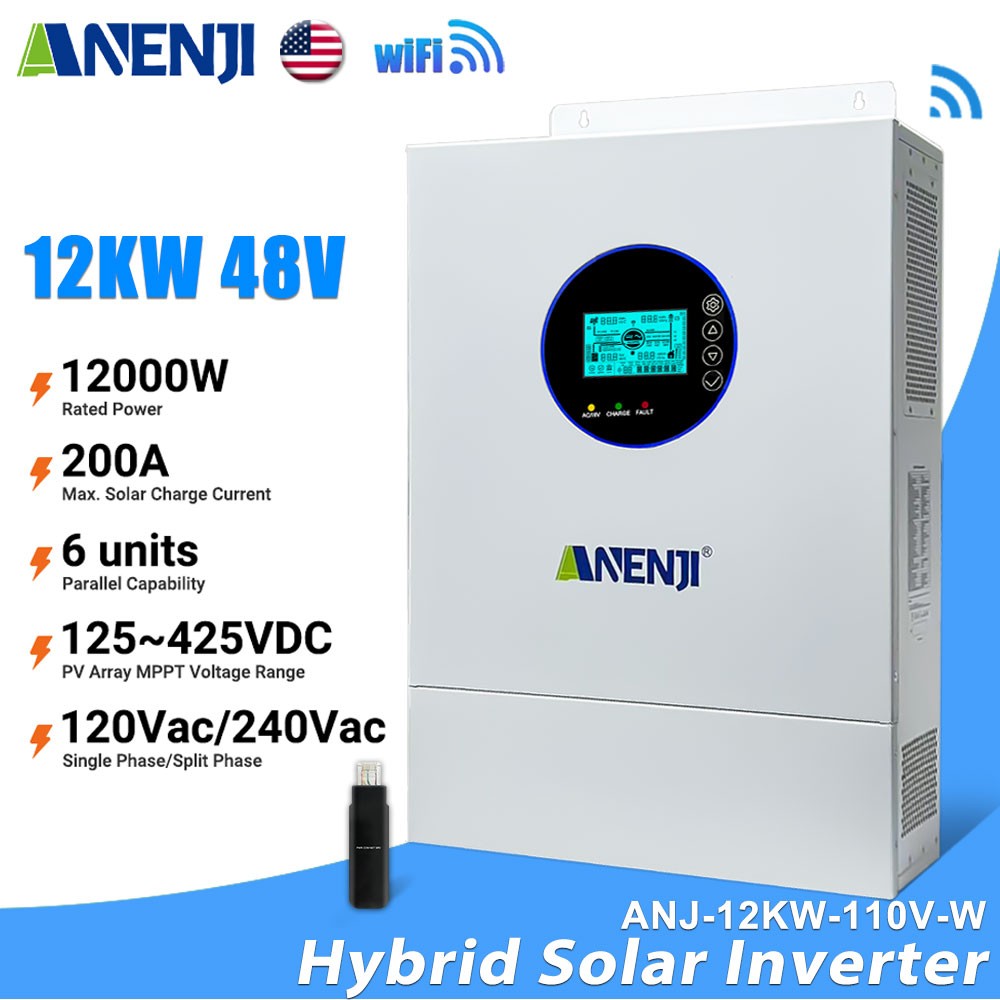
This is the heavy lifter. It carries a much higher price, but it also brings 12kW of output and split-phase capability. The 120V/240V output matches homes with 120/240V service, and the 48V battery range of 40-58.4Vdc works with both lead-acid and lithium-ion packs. Dual MPPT tracks two PV inputs independently, and parallel support lets you scale beyond 12kW as your needs grow. Timed charge/discharge and an energy-saving mode help you cut no-load losses and shift usage to cheaper time-of-use periods. The catch is the price premium and the fact that a 12kW, 48V system expects a serious battery bank and wiring plan. If your home needs split-phase power and your solar array is large, this is the one to budget for.
Final choice by use case:
- Choose the SUMRY 3.6KW Hybrid Solar Inverter for a cabin, RV, or small backup system.
- Choose the ANENJI 12KW Hybrid Solar Inverter for a whole-home installation that needs more output and room to scale.