Choosing a hybrid solar inverter is a power-conversion decision, not just a wattage shopping trip. You need the right DC input for your battery bank, the right AC output for the loads you plan to run, and enough capacity to avoid running out of headroom. The SUMRY 3.6KW Hybrid Solar Inverter and the ANENJI 6200W Hybrid Solar Inverter take very different paths to the same job, so the right pick depends on how your system is wired.
Quick Verdict
If you want a direct off-grid or backup unit that feeds standard AC loads with minimal hardware, the SUMRY is the simpler pick. If you need more capacity and can live with a different AC output standard, the ANENJI is the bigger system. On price, the SUMRY is $279.95 versus $367.50 for the ANENJI, a spread of $87.55.
At a Glance
| Product | Listed Price | Power | Output Voltage | Battery Input |
|---|---|---|---|---|
| SUMRY 3.6KW Hybrid Solar Inverter | $279.95 | 3.6KW | 120V AC | 24V DC |
| ANENJI 6200W Hybrid Solar Inverter | $367.50 | 6200W | 220/230V AC | 48V DC |
Where Each Wins
SUMRY wins when you want the least complicated path from a battery bank to your outlets and your loads stay modest. ANENJI wins when the load list is longer and the system is designed around bigger storage capacity, giving you more power to draw on.
SUMRY 3.6KW Hybrid Solar Inverter
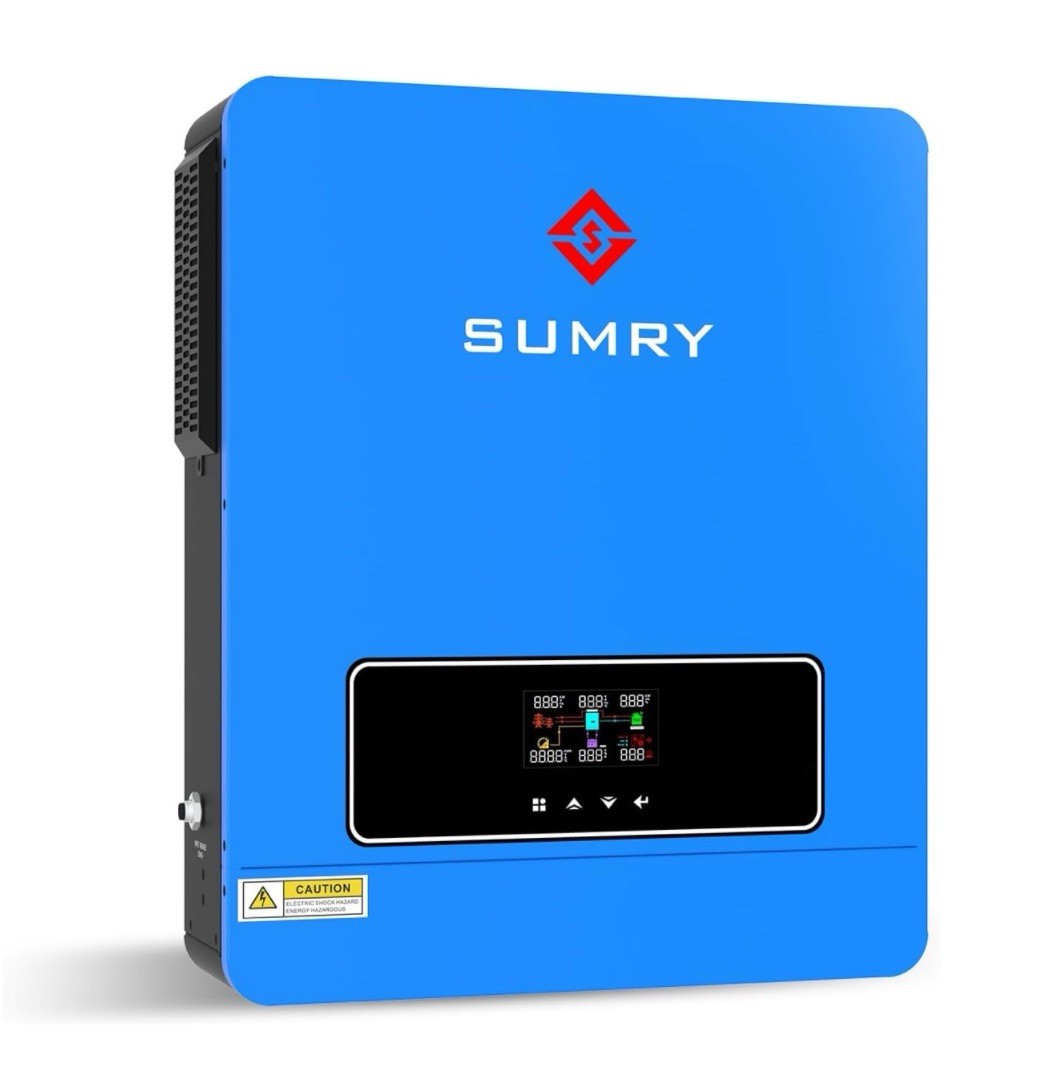
The SUMRY unit makes sense when you want 120V AC without extra conversion hardware. It includes four charging modes and four output modes, so you can steer whether the system runs from solar, utility, inverter, or a hybrid mix. The four output modes give you a solar-first, mains-first, inverter-first, and hybrid plan, which is handy when your power source varies through the day. The PV input window of 60-450V DC gives you room to design the solar array around the inverter. The limit shows up in capacity: at 3.6kW continuous output, it suits cabins, RVs, and essential home backup better than large whole-house loads. It is the direct 120V option in this comparison.
ANENJI 6200W Hybrid Solar Inverter
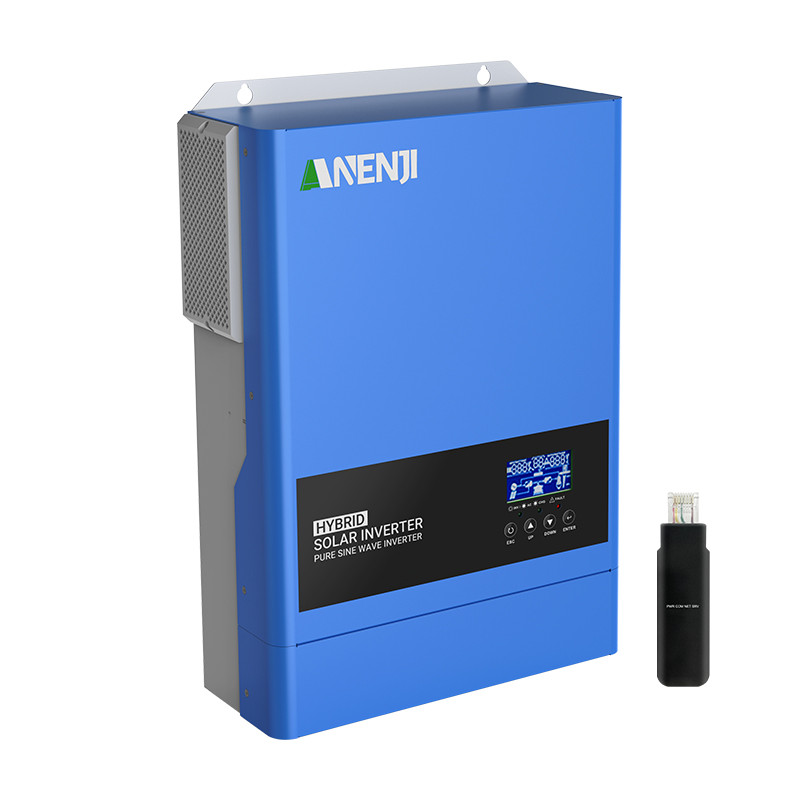
The ANENJI unit is the higher-capacity option, with a 6200W output, a 48V battery input, and 220/230V AC output. It has an LCD display, a removable dust cover, and a peak efficiency of 96%. It also supports lithium battery activation and LifePO4 communication over RS485, which is useful for a solar-plus-storage install. The catch is output voltage: if you are in a 110V region, this inverter expects a step-down transformer to feed standard US-style outlets. The transformer is an extra piece of hardware to mount, wire, and plan around, so this model makes more sense when the higher capacity and the 48V architecture justify that extra step.
Final Choice by Use Case
Choose the SUMRY 3.6KW for a modest off-grid or backup setup where you want the cleanest path from battery to outlet. Choose the ANENJI 6200W when your loads demand more power and you are ready to handle the output conversion it requires. If your site uses standard US-style 110V outlets, plan for that conversion before you buy. The SUMRY keeps the wiring simple; the ANENJI buys you more electrical room. Make the choice based on your battery, your outlets, and your realistic peak load.