Choosing a solar BOS charge controller gets tricky when two units sit side by side with nearly identical stats. Both of these 100A MPPT controllers support 12V/24V/36V/48V battery banks, accept up to 250V from the panels, list the same 5200W maximum, and handle the same lead-acid and lithium battery chemistries. The actual difference is in their priorities: one is oriented toward continuous 24/7 output for demanding loads, and the other toward harvesting maximum energy from variable sunlight.
Quick verdict
Choose the 5200W PV Max Regulator if your system runs around the clock and needs steady charging under continuous loads. Choose the 5200W 250V LCD Battery Regulator if your solar conditions shift and you want a controller focused on tracking the maximum power point. Both use MPPT and support the same battery chemistries, so the deciding factor is how you prioritize those two strengths.
Price and specs at a glance
| Feature | 5200W PV Max Regulator | 5200W 250V LCD Regulator |
|---|---|---|
| Price | $151.99 | $153.99 |
| Max charge current | 100A | 100A |
| System voltage | 12V/24V/36V/48V | 12V/24V/36V/48V |
| Battery types | Lead-acid and lithium: FLD, LiFePO4, SLD, Gel, AGM, etc. | Lead-acid and lithium: FLD, LiFePO4, SLD, Gel, AGM, etc. |
| PV input | 250V max, up to 5200W | 250V max, up to 5200W |
| Display | LCD | LCD |
| MPPT approach | MPPT tracking | Multi-curve MPPT tracking |
| Primary emphasis | Continuous output for 24/7 loads | Reinforced power design, efficiency focus |
Where they stand out
The PV Max Regulator is aimed at always-on installations. Its emphasis is on true continuous output without throttling, and it calls out marine vessels, workshops, off-grid homes, RV off-grid setups, and mobile power stations as intended environments. If your panels feed a load that runs around the clock, this is the unit pitched for that workload.
The 250V LCD Regulator uses an advanced multi-curve MPPT algorithm to continuously track the true maximum power point, with up to 99.9% tracking efficiency and over 98% conversion efficiency. A reinforced 1.5X power design supports that continuous-output story. Choose it when your priority is pulling more charge from the same panels under partly cloudy or variable conditions.
Product notes
5200W PV Max Regulator
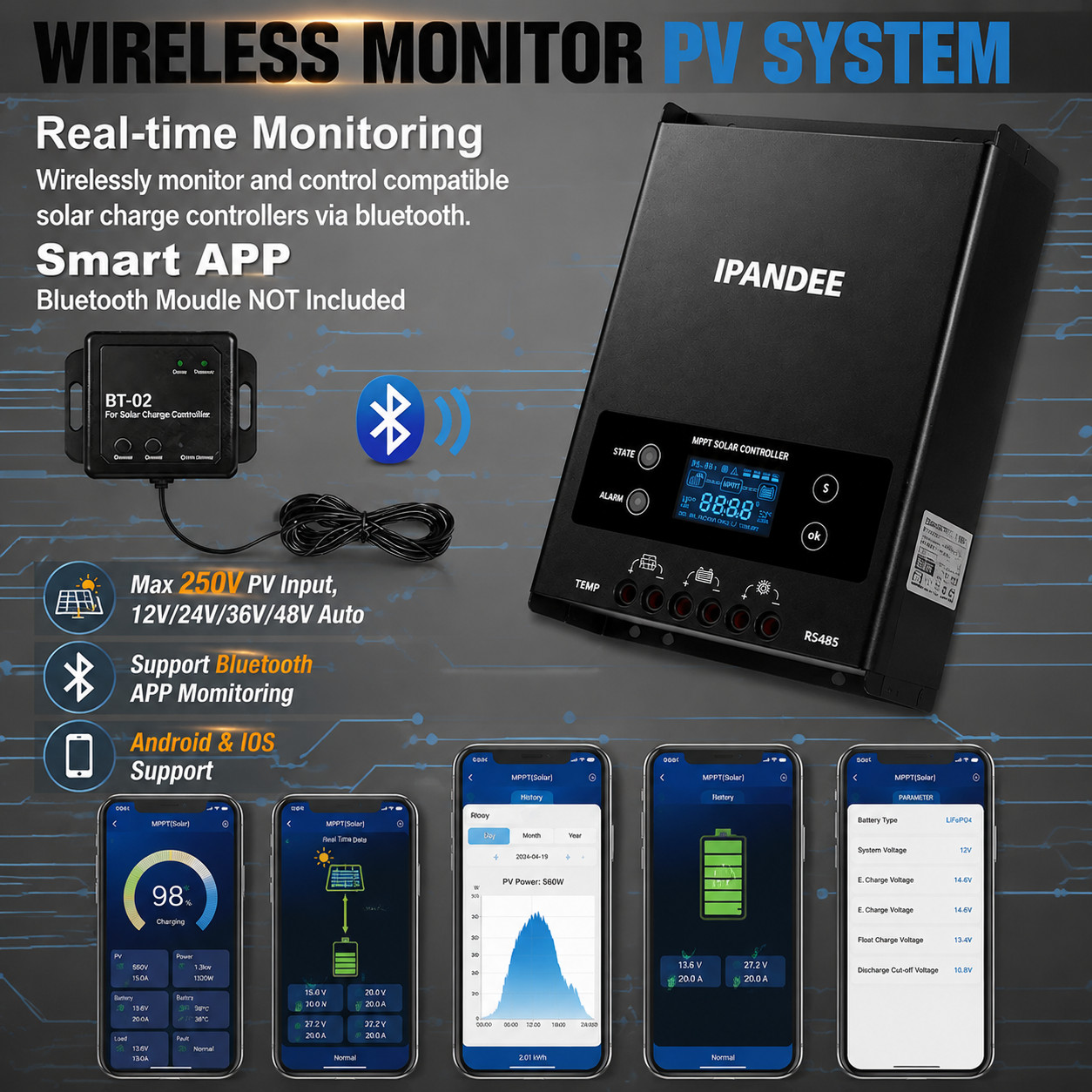
The PV Max Regulator is the better fit for setups that cannot tolerate charging interruptions. Its product emphasis is on true continuous output with zero throttling, even under high-temperature or continuous-load conditions, and it names marine vessels, workshops, off-grid homes, RV off-grid setups, and mobile power stations as intended environments. For a 12V battery bank, it offers a useful planning guideline: a recommended maximum PV input of 1300W, so size a larger 12V array with that limit in mind. That makes it a workhorse pick when your solar BOS needs steady charging rather than aggressive energy tuning.
5200W 250V LCD Battery Regulator
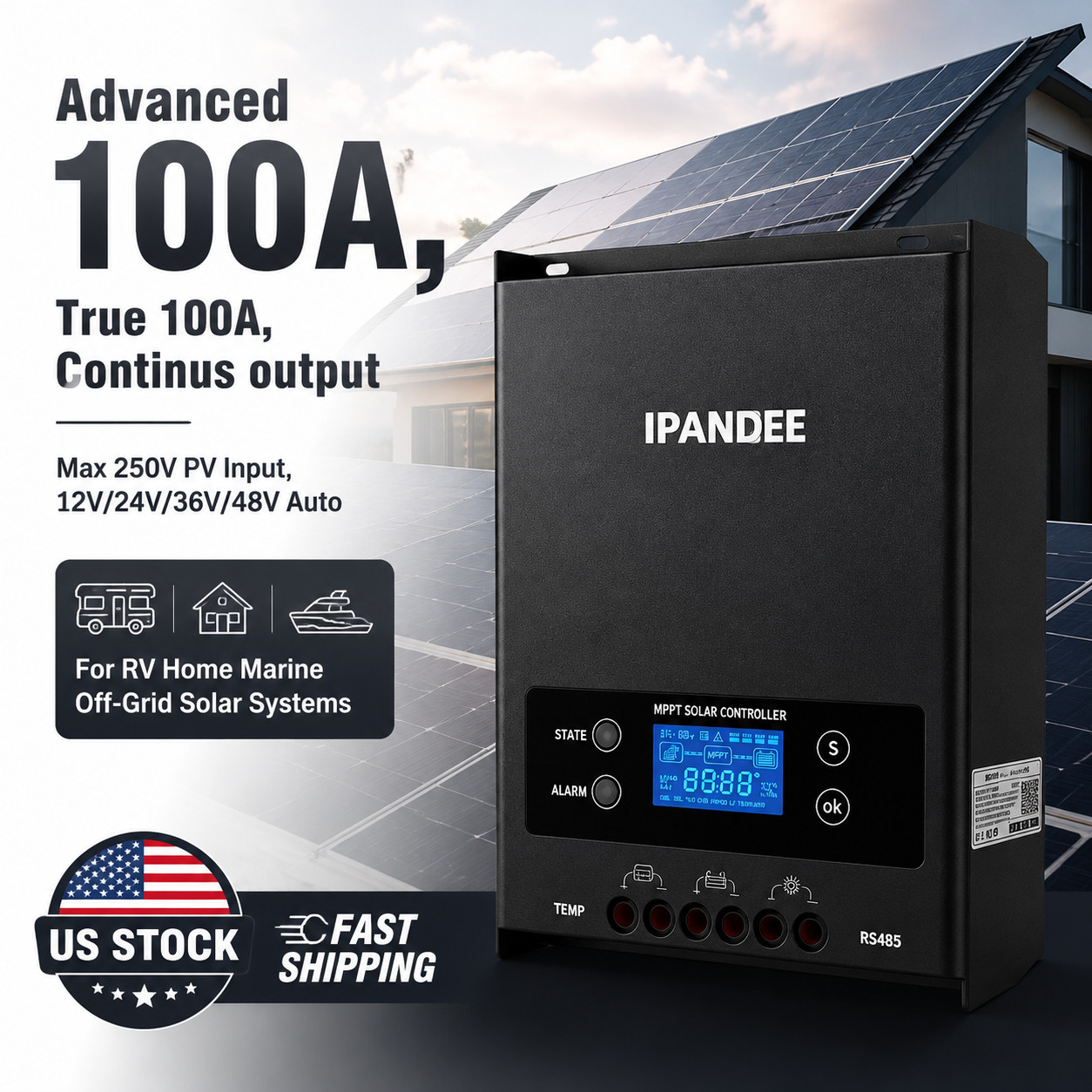
The 250V LCD Battery Regulator leans into energy harvesting. Its advanced multi-curve MPPT algorithm is designed to track the true maximum power point as sunlight changes, with up to 99.9% tracking efficiency and over 98% conversion efficiency, supported by a reinforced 1.5X power design. If your solar array sees shifting cloud cover, this is the controller that emphasizes capturing more energy from the same panels. It also carries the LCD battery regulator name, so the display is a highlighted feature. The trade-off is a small one: at $153.99 it costs $2 more than the alternate unit, so shoppers watching every dollar may prefer the other model.
Final choice by use case
If your solar BOS needs a continuous-duty charge controller for 24/7 loads, choose the 5200W PV Max Regulator. If you want maximum energy capture from shifting light, choose the 5200W 250V LCD Battery Regulator. If you are still undecided, the PV Max Regulator covers the same battery types and system voltages and is the safer default.