Two solar charge controllers sit at opposite ends of the market: the 10A 12V/24V PWM battery regulator is listed at USD 6.99, while the 4800W 100A MPPT battery regulator, with support for 12V, 24V, 36V, and 48V systems, is listed at USD 25.79. The decision comes down to the size of your solar array and the voltage of your battery bank. Choose too small and you limit the current reaching your batteries; overshoot and you are carrying more capacity and more control settings than your setup needs.
Quick Verdict
If you need a simple regulator for a small solar setup, the PWM controller is the low-stress choice: it charges the battery, prevents overcharging, and stops reverse discharge after dark. If you are building a larger system or running a higher-voltage battery bank, the MPPT controller adds the headroom and control needed for that kind of setup.
Comparison Table
| Feature | 10A PWM Controller | 100A MPPT Controller |
|---|---|---|
| Price | USD 6.99 | USD 25.79 |
| Charging mode | PWM | MPPT |
| Battery voltages | 12V/24V | 12V/24V/36V/48V |
| Current capability | 10A | 100A |
| USB charging | Dual USB | USB |
| Display | LCD screen | Backlit LCD display |
| Color | Blue | Black |
Where Each Controller Wins
Where the 10A PWM Controller Wins
The 10A PWM controller is the better match for small, low-current solar installations. Its 10A limit is enough for a single panel or a modest two-panel setup charging a 12V or 24V battery. The dual USB ports let you charge a phone or another small device without a separate adapter. Because it uses PWM charging, it keeps the system simple and the price down. It is also suited to home, industrial, and commercial settings.
Where the 100A MPPT Controller Wins
The MPPT controller wins when you need to handle higher current and a wider range of battery voltages. The 100A rating supports larger solar arrays, and the seven operating modes let you adjust float voltage, boost voltage, light control, and time delay through the panel keys. The configurable modes give you more control over how the system behaves. If your project includes a 36V or 48V battery bank, this MPPT controller covers those voltages.
Product Notes
10A 12V/24V Solar Panel Battery Charge Controller LCD Auto Regulator Dual USB
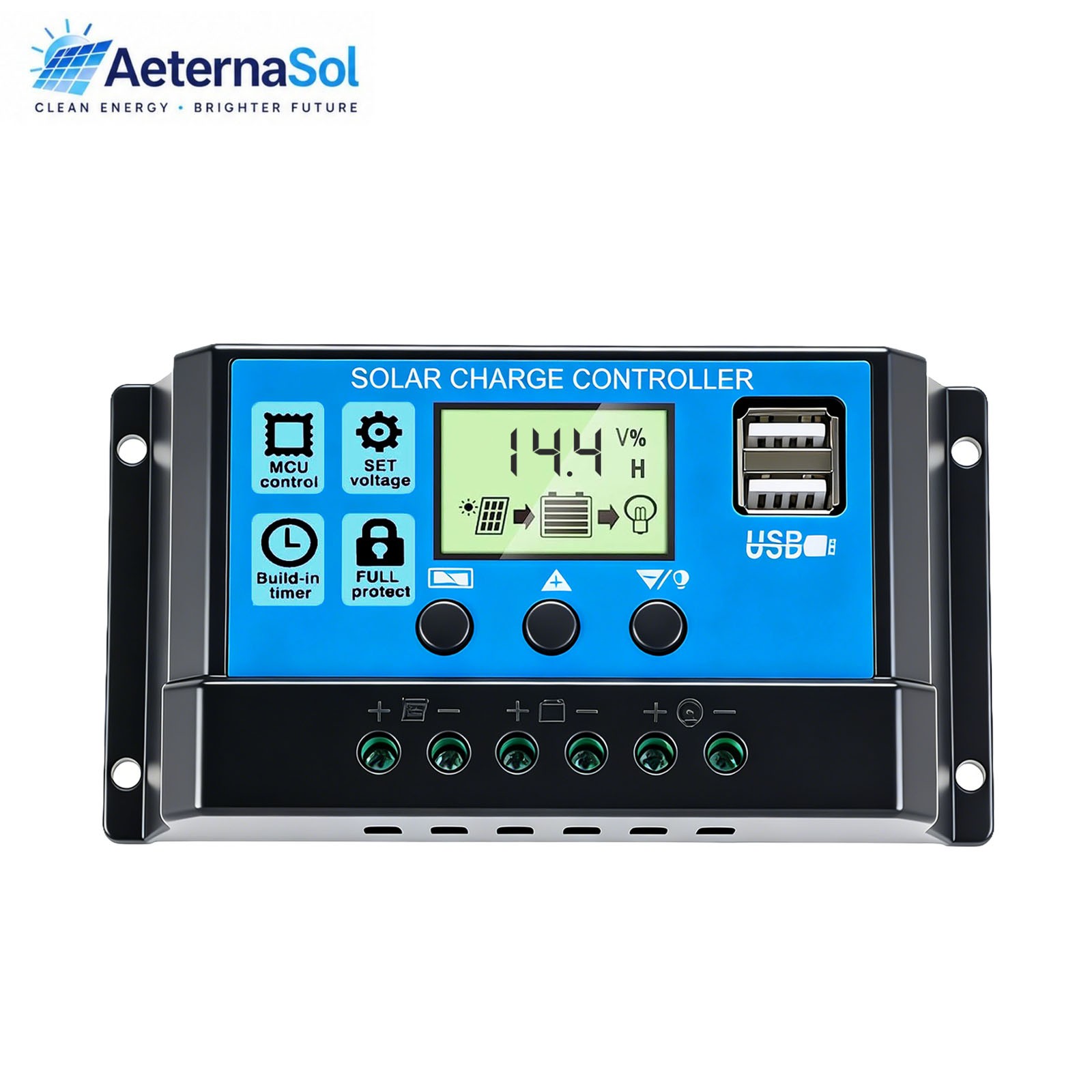
The 10A 12V/24V PWM controller handles the basic job of keeping a 12V or 24V battery from overcharging while stopping reverse discharge after dark. It automatically regulates voltage and current from the solar panel, and the LCD screen gives you a simple readout. The blue case is compact, and it is suited to home, industrial, and commercial settings. For a small off-grid setup, the 10A limit is the main thing to remember: it is designed for 12V and 24V systems. That is a fair trade given what it does. Choose it when the system is compact and the goal is safe, steady battery maintenance without extra configuration.
4800W 100A MPPT Solar Charge Controller USB 12V 24V 36V 48V PV Battery Regulator
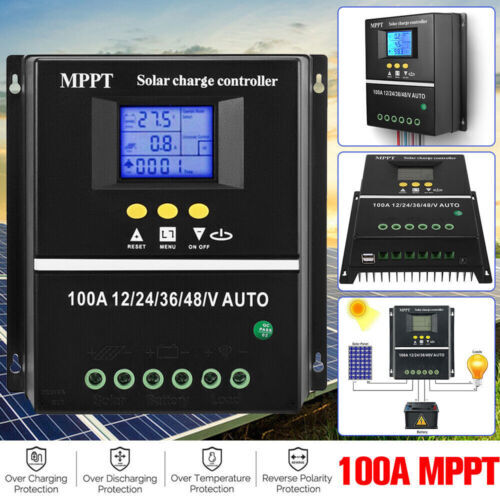
With a 100A rating, the 4800W MPPT controller is the high-capacity option in this pairing. It supports 12V, 24V, 36V, or 48V battery banks, so it works across a much broader range of off-grid projects. The backlit LCD display stays readable in low light, and the seven operating modes give you adjustable float voltage, boost voltage, light control, and time delay. The trade-off is that this unit is more powerful and more configurable than a simple PWM controller, which means more time upfront to set the parameters correctly. It is the right choice when you have a serious solar array, a higher-voltage battery bank, or plans to expand the system later.
Final Choice by Use Case
For a small 12V/24V installation with limited panel wattage, the 10A PWM controller is the practical way to protect a battery and keep a phone charged. For anything bigger, whether that means multiple panels, higher current, or a 36V/48V battery bank, the 100A MPPT controller is the better match. Match your decision to your battery bank voltage and array size, and the right unit becomes clear.