Choosing a solar charge controller comes down to how much power you need and how efficiently you want to harvest it. One option here is a $6.99 10A regulator for small setups. The other is a $153.99 100A regulator for serious off-grid systems. Both manage the flow from solar panels to batteries, but they serve very different projects. The right choice depends on the size of your panel array and the voltage of your battery bank.
Quick Verdict
If you have a small solar setup, the compact charge controller is the sensible pick. It includes dual USB outputs for charging small devices. If you're building a larger system with higher energy demand, the high-current charge controller is the stronger performer, with advanced tracking that can squeeze more energy from your panels. Consider your future plans: a controller that fits today may limit you if you add panels later.
At a Glance
| Consideration | 10A PWM Charge Controller | 100A MPPT Charge Controller |
|---|---|---|
| Price | $6.99 | $153.99 |
| Charging Mode | PWM | MPPT |
| System Voltage | 12V/24V | 12V/24/36/48V |
| Rated Current | 10A | 100A |
| Display | LCD | LCD |
Where Each Product Wins
The compact controller wins for cost-conscious projects and straightforward installations. It's enough for a few panels and a modest battery bank, and its dual USB ports add everyday convenience. The high-current controller wins for larger off-grid homes, agricultural buildings, or automotive and garage power systems that need to pull more energy from the same panel array and charge higher-voltage batteries. If you simply need to regulate a single panel and a small battery, the compact model is the practical route. If your power needs are already large, the high-current model is the route that lets you scale up.
Product Notes
10A 12V/24V Solar Panel Battery Charge Controller
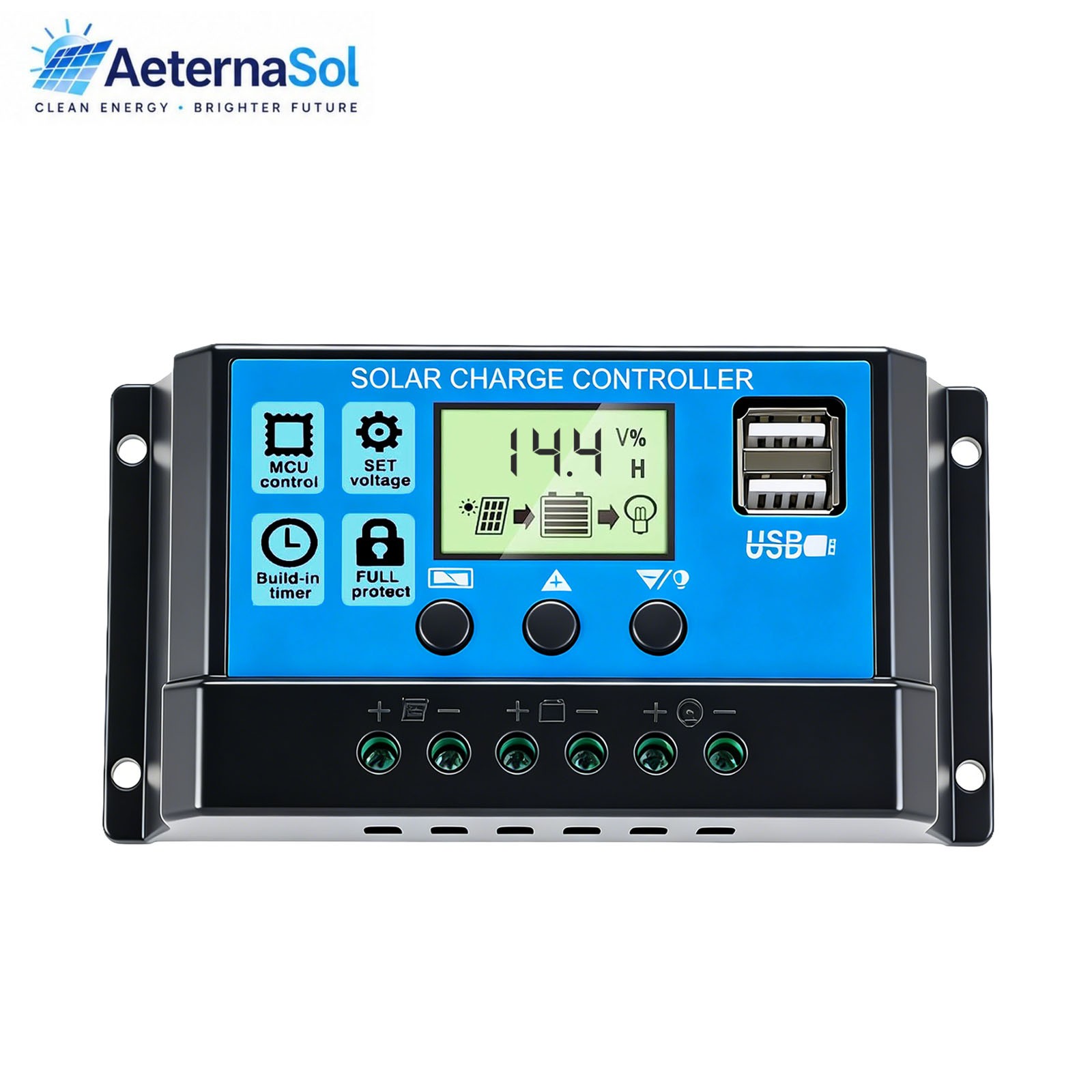
This PWM regulator is built for no-fuss solar setups. It prevents overcharging, stops the battery from discharging back into the panel at night, and guards against short circuits, reverse polarity, and overload. The main limitation is its modest output: it's meant for small systems, not a high-demand array. If your solar output regularly exceeds that level, you'll outgrow this unit quickly. For a simple cabin, a small RV, or a weekend camp setup, this type of regulator gives you reliable battery management without extra complexity.
5200W 250V 100A MPPT Solar Charge Controller
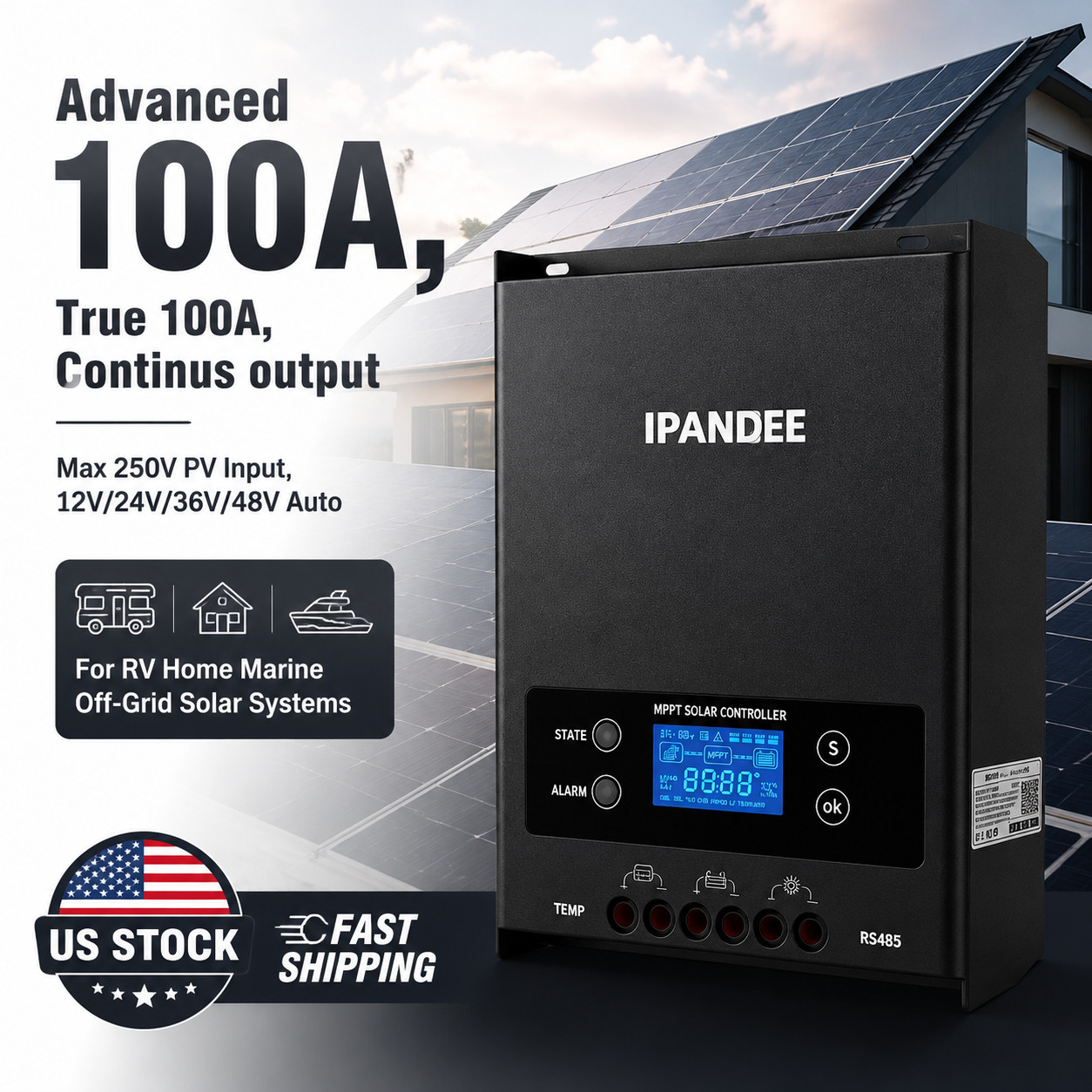
The MPPT controller tracks your panels' maximum power point continuously, so you get more usable energy when sunlight shifts from full sun to cloud cover. It also supports a wide range of battery-bank voltages and is compatible with lead-acid and lithium batteries, including LiFePO4, Gel, and AGM. The hardware is built for sustained continuous operation, so it can charge batteries around the clock without throttling back. The main limitation is that this level of performance only matters when your solar array is large enough to use it. On a small setup, you won't see much benefit from the advanced tracking and high capacity. This controller makes the most sense when you need to run pumps, tools, or household appliances from stored solar power.
Final Choice by Use Case
For a small camping rig, shed, or weekend project, pick the compact charge controller. It's a simple match for a small system and includes the protections you need for a modest 12V/24V battery.
For a home backup setup, agricultural building, or any off-grid system with a big battery bank, pick the high-capacity charge controller. It delivers higher energy harvest and enough headroom to grow your solar array.