Choosing a charge controller for your solar BOS setup is about matching the device to your panel output and battery type. Two charge controllers here work with the same battery voltages and both include a screen, but they are engineered for very different jobs. The first is a simple regulator; the second is an adaptive-tracking controller. Your decision comes down to how much current you need and how much complexity you want.
Quick verdict
The simple regulator is the easy pick for small, low-current setups where you want a low-cost controller with a clear display and USB ports. The adaptive-tracking controller is the pick when you need a wider current range and want to get more usable power from your panels. The extra price buys a lot of headroom for larger off-grid loads.
At a glance
| Feature | 10A PWM Controller | 30-100A MPPT Controller |
|---|---|---|
| Price | USD 6.99 | USD 18.89 |
| Price bar | ||
| Charging mode | PWM | MPPT |
| Rated current | 10A | 30A/60A/100A |
| System voltage | 12V/24V | 12V/24V |
| Display | LCD | LCD |
| USB output | Dual USB | Dual USB |
| Best for | Simple small-panel regulation | Larger arrays and adaptive tracking |
Where each product wins
- The simpler controller wins on upfront cost. It gives you the essential protections for battery charging, a display, and two USB outlets without stretching your budget.
- The higher-current controller wins on capacity and adaptive tracking. The 30-100A range and auto focus tracking are built for systems that demand more from their solar panels.
Product notes
10A 12V/24V Solar Panel Battery Charge Controller LCD Auto Regulator Dual USB
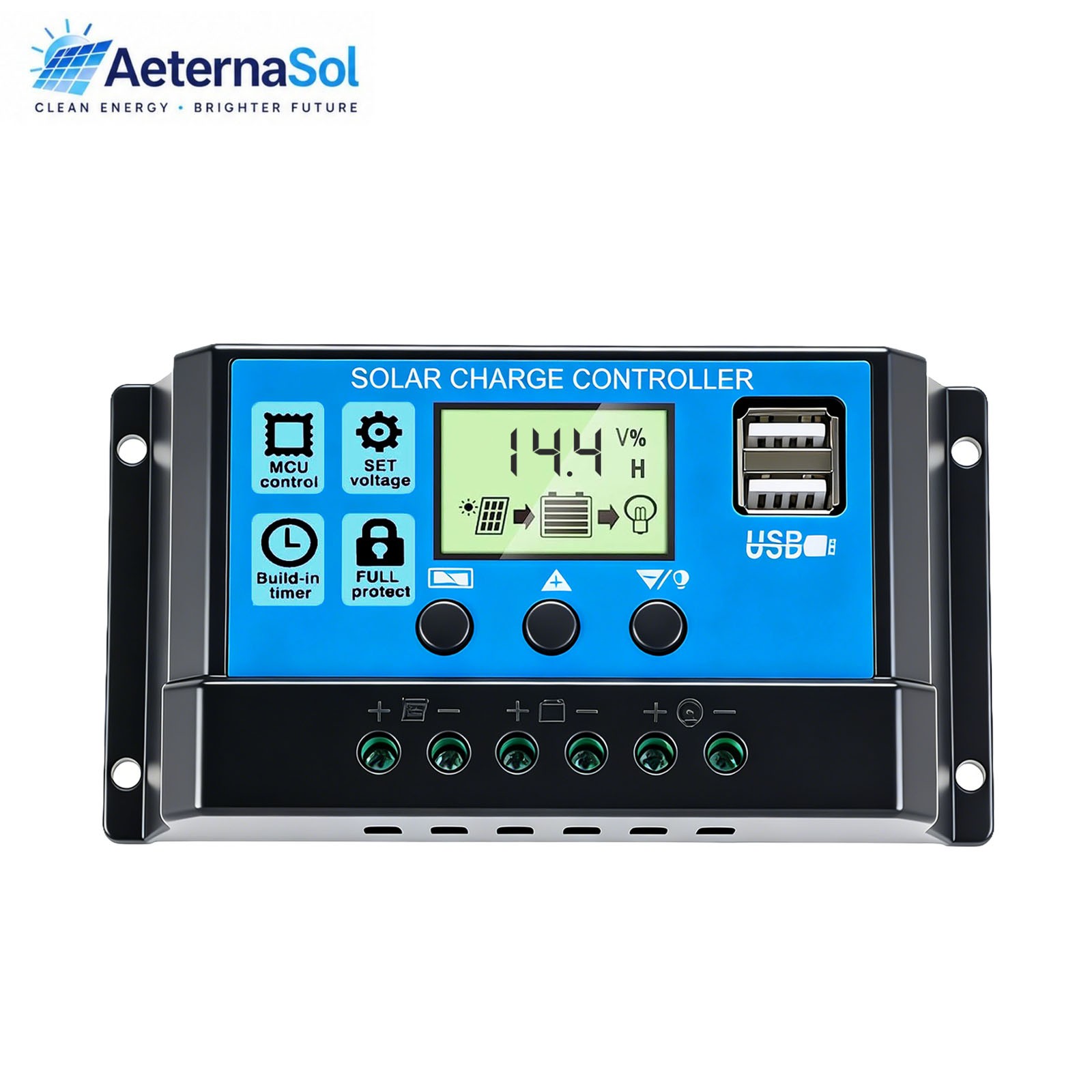
This controller handles the basics well. The title shows a 10A rating for 12V/24V systems, and the LCD gives you a clear readout. Dual USB ports let you charge small devices, and the description lists protections against overcharging, short-circuit, open-circuit, reverse polarity, and overload, plus a feature that stops reverse discharge at night. At USD 6.99, it is a low-friction way to get solar charging up and running. The main limitation is that 10A rating: it is not suited to larger panels or high-current loads. If all you need is a simple regulator for a small battery, this is the one.
30-100A MPPT Solar Panel Regulator Charge Controller 12V/24V Auto Focus Tracking
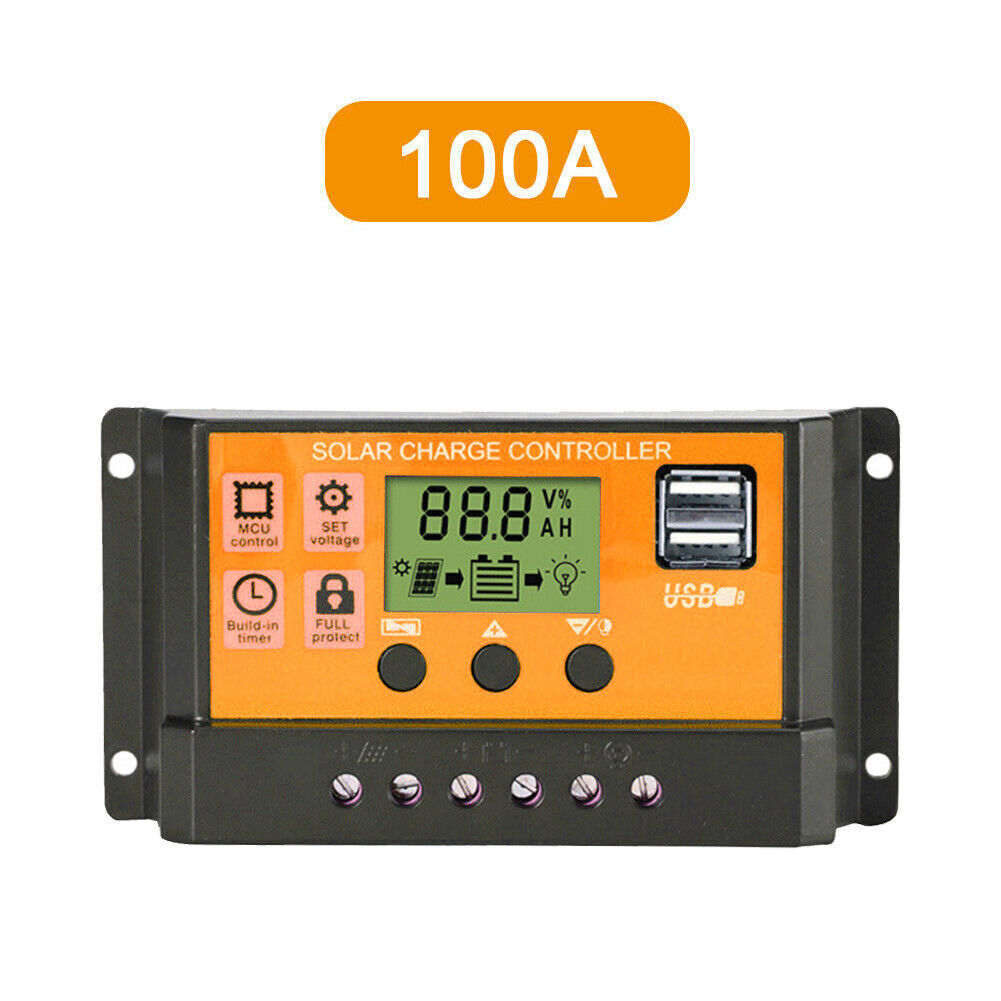
This MPPT controller is a different class. The title gives a 30-100A range, and the description spells it out as 30A, 60A, or 100A discharge current, which means it can keep up with a much larger array. MPPT charging with auto focus tracking is the key advantage: it adapts to changing light conditions, and the LCD screen makes mode changes and parameter configuration straightforward. The built-in industrial microcontroller remembers your settings even if power is lost, and the adjustable full power-off level can protect lithium batteries from over-discharge. It also supports lead-acid OPEN, AGM, and GEL batteries. At USD 18.89, it costs more, but it offers a metal housing and a lot more capacity. The limitation is that it may be overkill for a tiny 10A-class panel setup.
Final choice by use case
- Small panel setup, modest battery load: Go with the simple regulator. It is easy to use, includes the key protections, and keeps costs down.
- Higher discharge current or variable sunlight: Go with the higher-current controller. Its 30-100A range and auto focus tracking are aligned with more demanding 12V/24V systems.