Solar charge controllers sit between your panels and batteries, but choosing one gets confusing fast. Do you need a simple regulator that keeps a 12V or 24V battery topped up, or a high-current tracker that squeezes more power out of every panel? The two options here are about $99 apart, so the right choice depends on how much energy you actually need.
Quick Verdict
If you have a small 12V or 24V battery and just need a low-cost regulator with USB convenience, the 10A PWM model is hard to beat. If you're powering a serious off-grid system with lead-acid or lithium batteries and want to maximize solar harvest, the 40A MPPT unit earns its premium.
At a Glance
| Product | Price Bar | Price | Charging Mode | Current Rating | Display | Standout Feature |
|---|---|---|---|---|---|---|
| 10A PWM controller | $6.99 | PWM | 10A | LCD | Dual USB ports | |
| 40A MPPT controller | $105.99 | MPPT | 40A | OLED | Aluminum housing |
Where Each Controller Wins
The 10A PWM model wins if you want minimal upfront cost, need a quick dual-USB outlet for charging phones or small devices, and are running a modest panel that pushes no more than 10A into your battery. It's a no-frills way to protect against overcharging and nighttime reverse discharge.
The 40A MPPT model wins if you need more current for a larger array, prefer a controller that can handle both lead-acid and lithium batteries, and want the efficiency of MPPT tracking. The OLED display and aluminum housing also point to a unit designed for more demanding off-grid use.
Product Notes
10A 12V/24V Solar Panel Battery Charge Controller LCD Auto Regulator Dual USB
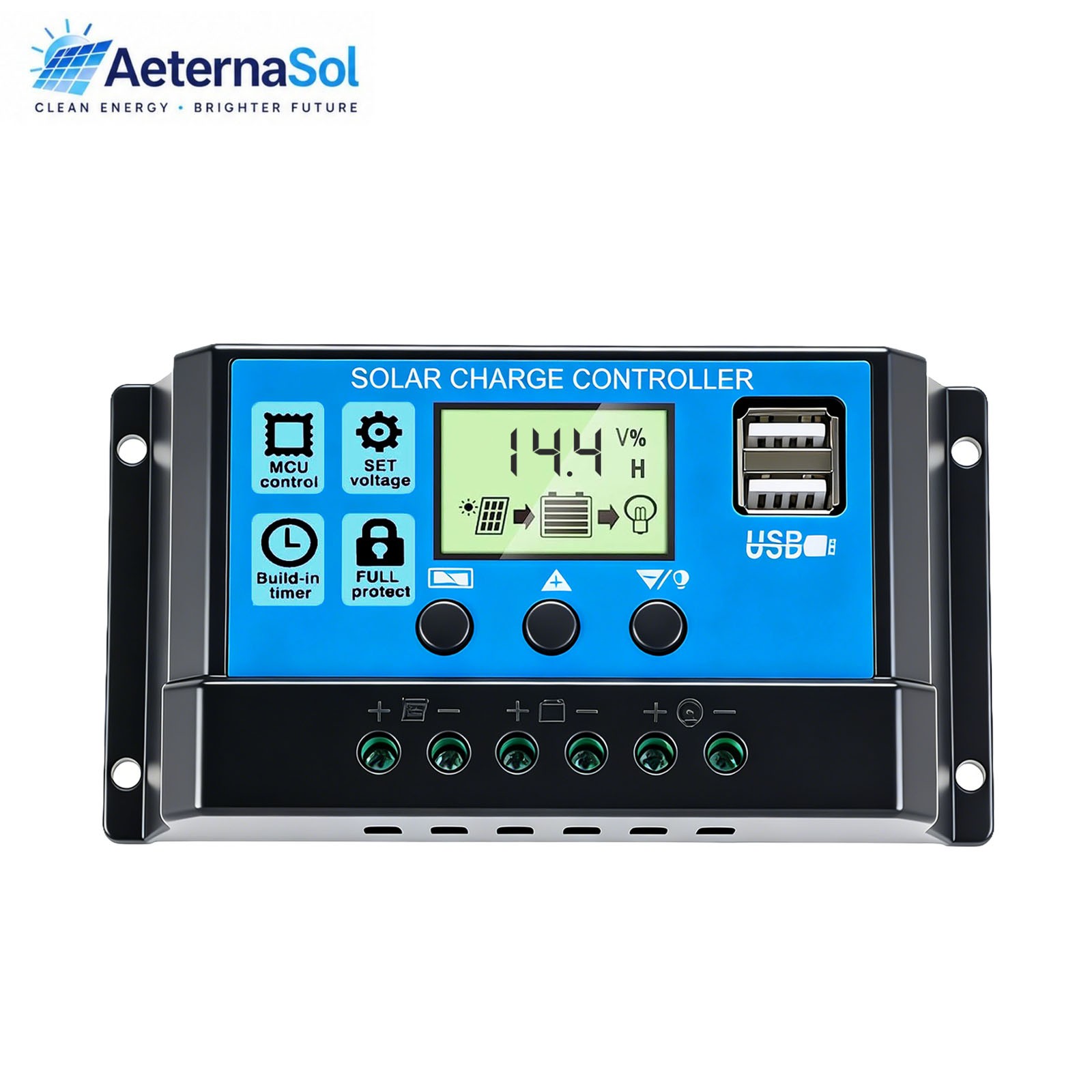
The 10A 12V/24V Solar Panel Battery Charge Controller LCD Auto Regulator Dual USB is the entry-level pick that costs just $6.99. It uses PWM regulation to manage voltage and current from solar panels to batteries, with protections against short circuits, open circuits, reverse polarity, and overload. It also stops batteries from back-feeding panels at night, which helps preserve battery power. The built-in dual USB ports let you charge phones or other portable gear directly from the controller, and the LCD screen gives you a clear view of charging status. The obvious limitation is the 10A current rating, which means it suits small solar setups rather than high-wattage arrays. It also uses PWM instead of MPPT, so you won't get the extra energy harvesting of a tracker. For a simple cabin, shed, or small home project, the low price makes it an easy choice.
MPPT 40A Solar Charge Controller 12V 24V Regulator For Lead-Acid/Lithium Battery
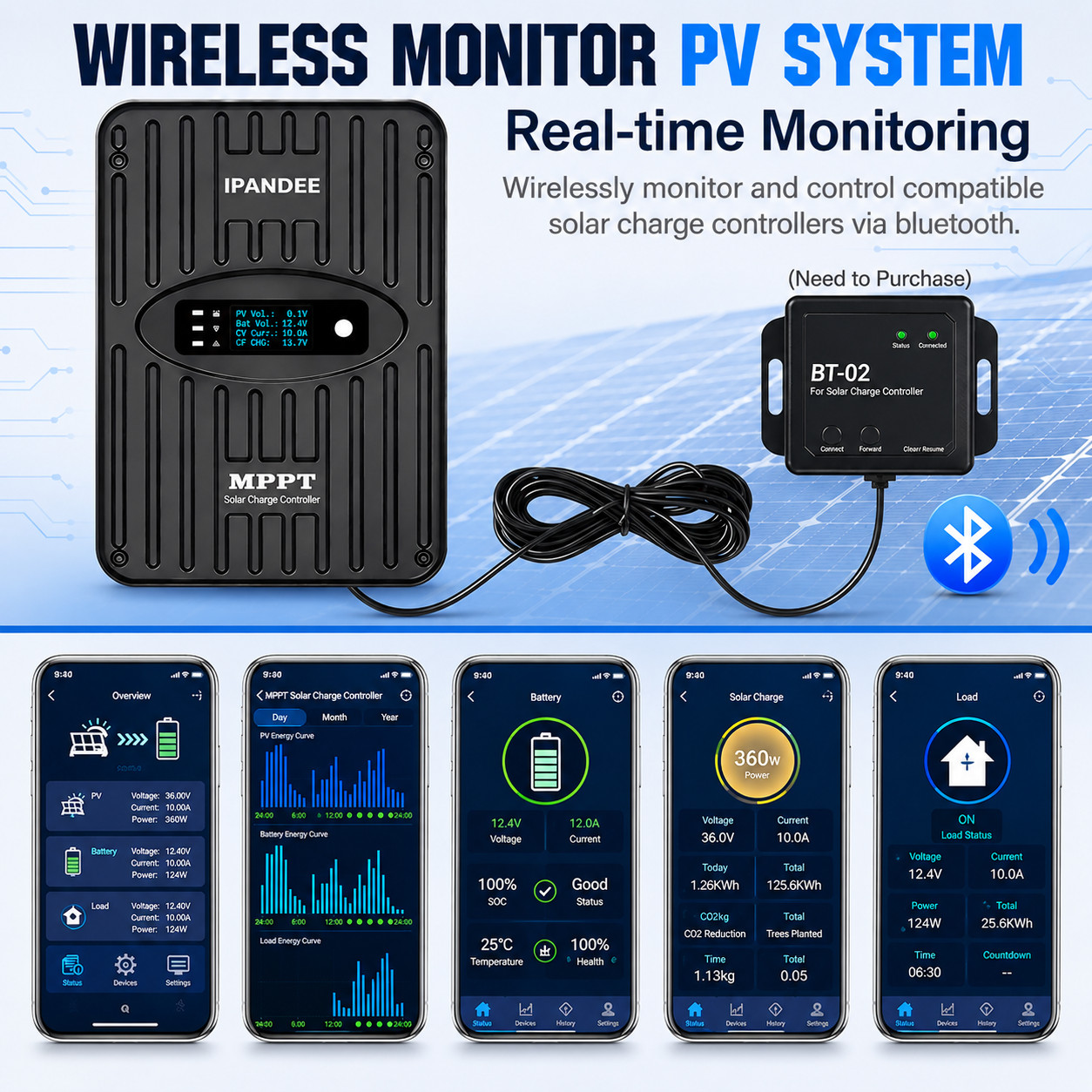
The MPPT 40A Solar Charge Controller 12V 24V Regulator For Lead-Acid/Lithium Battery costs $105.99 and is built for larger off-grid systems. It supports both lead-acid and lithium batteries, which gives you more flexibility if you change battery types. The MPPT charging mode is designed to track the true maximum power point of your panels, and the manufacturer says it can capture up to 35% more usable energy than conventional controllers. It also runs cooler and delivers a full 40A output, making it a better match for bigger arrays and 24V setups. The aluminum housing and OLED display add durability and readability in outdoor or utility environments. The catch is the price: you're paying significantly more than the 10A PWM model, so it's only worth it if your system actually needs that higher current and tracking efficiency.
Final Choice by Use Case
Go with the 10A PWM controller when your solar setup is small: a single panel feeding a 12V or 24V battery, a weekend camp, or a basic shed light. The dual USB ports and LCD make it practical for light use.
Choose the 40A MPPT controller when you're running a bigger panel array, need to charge faster, or want to future-proof your system for lithium batteries. The higher investment pays off when every watt from your panels counts.
The real question is what your off-grid setup demands. A small battery and modest charging needs are perfectly served by the 10A PWM model. An ambitious system with more panels and higher capacity batteries will be happier with the 40A MPPT tracker.