Choosing a charge controller for your solar BOS is the difference between a system that quietly keeps your batteries topped up and one that leaves energy on the table. The market spans from a compact budget regulator to a feature-rich unit built for larger arrays. This head-to-head compares two charge controllers that sit at opposite ends of the price scale, helping you see which one fits your setup before you spend.
Quick Verdict
The right controller for you depends on the size of your system. For a small setup, the simpler option keeps things reliable without extra cost. For a larger system, the more advanced option delivers more charging power and better efficiency. Choose based on how much current you need to move, not just the price tag.
At a Glance
| Feature | PWM Controller | MPPT Controller |
|---|---|---|
| Price | $6.99 | $92.99 |
| Price bar | ||
| Charging mode | PWM | MPPT |
| System voltage | 12V/24V | 12V/24V/48V |
| Rated current | 10A | 60A |
| Display | LCD | LCD |
| Extras | Dual USB | 1-year warranty |
Where Each Product Wins
Both will charge a battery, but they go about it differently. The budget option is simpler and cheaper, while the advanced option is more efficient and powerful. Here's how that plays out.
The $6.99 option wins if: you want the lowest upfront cost and your system is modest. It has the essentials without extra expense, and it's a smart place to start if you're new to solar.
The $92.99 option wins if: your system needs more headroom and you're willing to invest in advanced charging that can keep up with bigger loads. If you plan to add panels later, its extra current capacity gives you room to grow.
Product Notes
PWM Solar Charge Controller
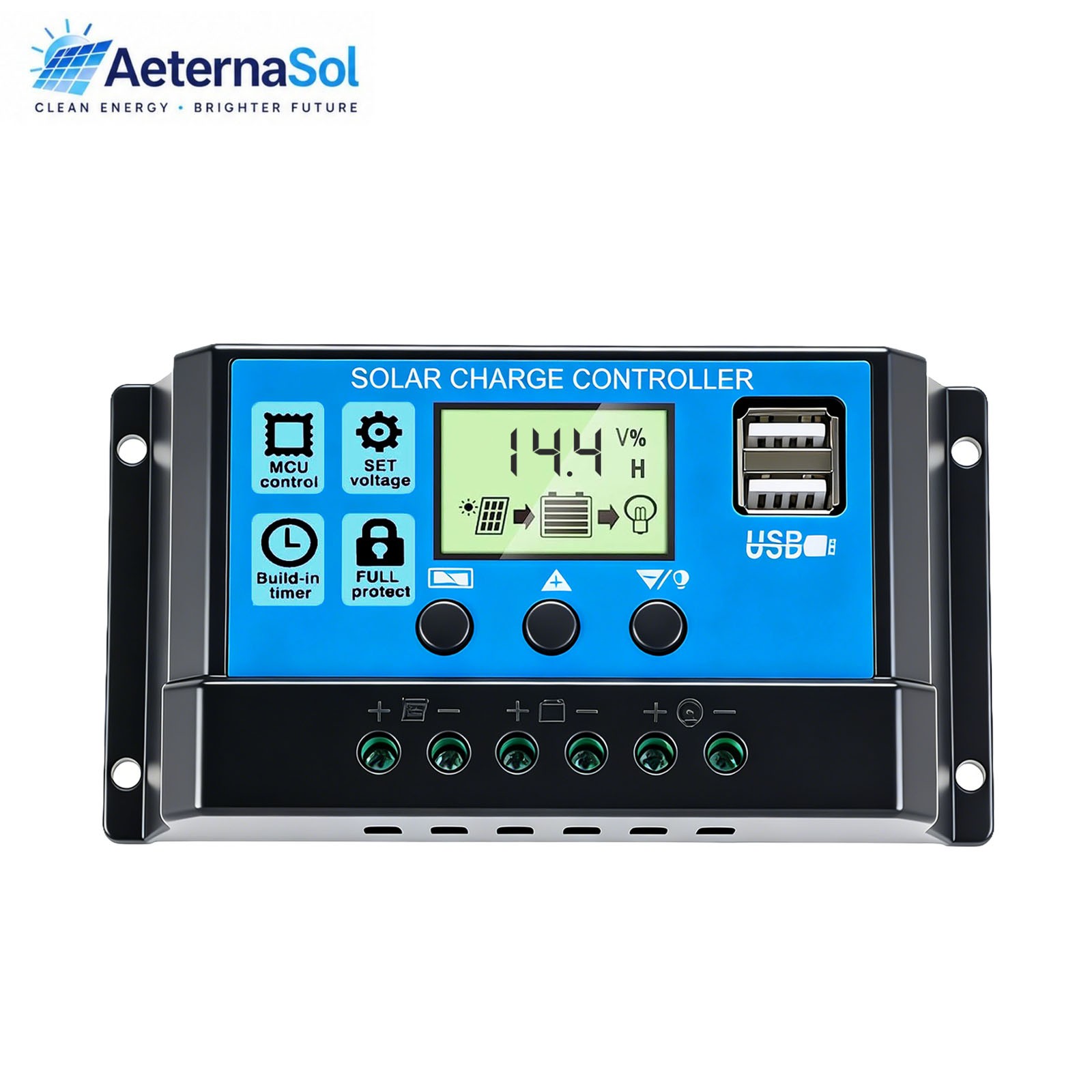
The PWM controller is a straightforward regulator for small off-grid builds. It automatically adjusts the voltage and current coming from your solar panel to charge a 12V or 24V battery, and it stops reverse discharge at night. The integrated readout shows charging status, and the dual USB ports let you plug in a phone or small device directly. The blue case includes essential protections like short-circuit, open-circuit, reverse polarity, and overload. The main limitation is its 10A rating: if your panel array can push more than that, you'll outgrow this unit quickly. It's best suited to a single panel or a small battery bank, and it's an affordable gateway into solar power for beginners.
MPPT Solar Charge Controller
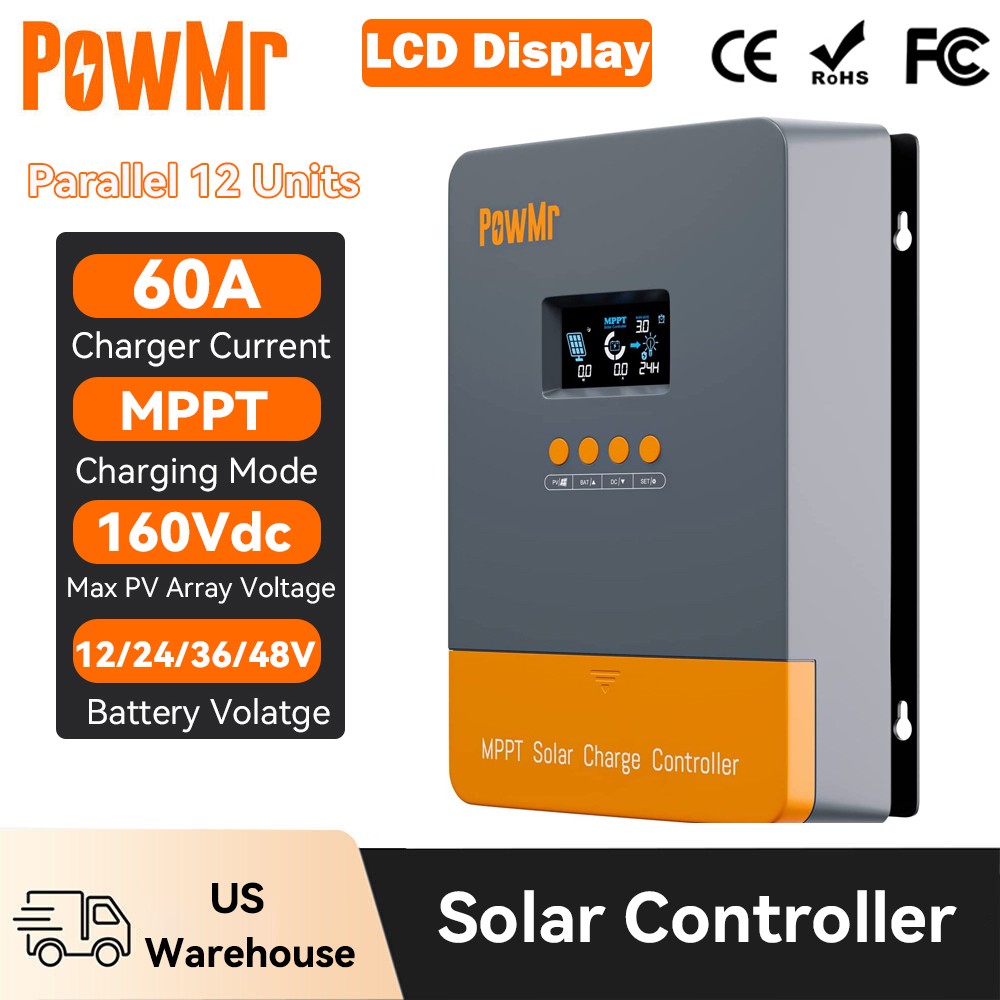
This MPPT controller takes a more advanced approach. Instead of simply connecting the panel to the battery, its maximum power point tracking seeks the panel's optimal operating point, delivering more usable current in changing light. The selectable output levels let you match the charger to your battery bank's needs, and the LCD readout keeps you informed. It accepts 12V, 24V, and 48V battery systems, handles up to 60A, and supports lithium batteries. The 1-year warranty and technical support add confidence for a larger installation. The trade-off is that it's a bigger, higher-cost unit that offers far more capability than a single-panel setup needs. If you're scaling up an off-grid home or running heavier loads, the extra cost pays off in both capacity and efficiency.
Final Choice by Use Case
For a small RV, shed, or starter solar setup with a single panel, the lower-priced option is the rational choice. It covers the basics without extra expense and gets the job done reliably. For a home backup, off-grid cabin, or any system that demands more charging power, the higher-priced option is the more capable choice. The $86 gap between them buys more current handling, better energy harvesting, and added peace of mind. If you expect your energy needs to grow, the higher-priced model is a smarter long-term investment.