Choosing a solar combiner box can feel like a small detail until your array is live and you realize the amp ratings don't match your strings. On the charge-controller and balance-of-system side of a solar build, the combiner needs to group panel inputs, provide a safe disconnect, and protect wiring from overcurrent and surges. Two very different options show how much that decision matters: the 2-in/2-out solar combiner with a 20A fuse and breaker, and the 4-string 63A solar combiner.
Quick Verdict
Pick the 2-in/2-out box at USD 125.82 if you want a compact two-circuit combiner with layered protection. Pick the 4-string box at USD 62.54 if you want a four-string layout with a strong main breaker.
Side-by-Side Comparison
| Feature | 2-in/2-Out Solar Combiner | 4-String 63A Solar Combiner |
|---|---|---|
| Price | USD 125.82 | USD 62.54 |
| Inputs / outputs | 2 PV inputs, 2 outputs | 4 string inputs |
| Circuit breaker | 20A DC | 63A, 550V |
| Fusing | 20A DC500V fuse | 10A fuse per string |
| Surge protection | DC500V 40KA Class T2 SPD | 2 surge protection devices |
| Housing | ABS and polycarbonate | ABS and polycarbonate |
| System rating | Up to 20kW in a 500V system | 550V system, 63A breaker |
Where Each Product Wins
The 2-in/2-out model is the tidy, protection-heavy choice. It keeps the PV side organized while handling surge and overcurrent duties in one enclosure. The 4-string model is the high-capacity branch-gathering choice, built to bring more panel strings together and take on heavier combined current with a larger breaker.
Product Notes
2-in/2-Out Solar Combiner with 20A PV Fuse
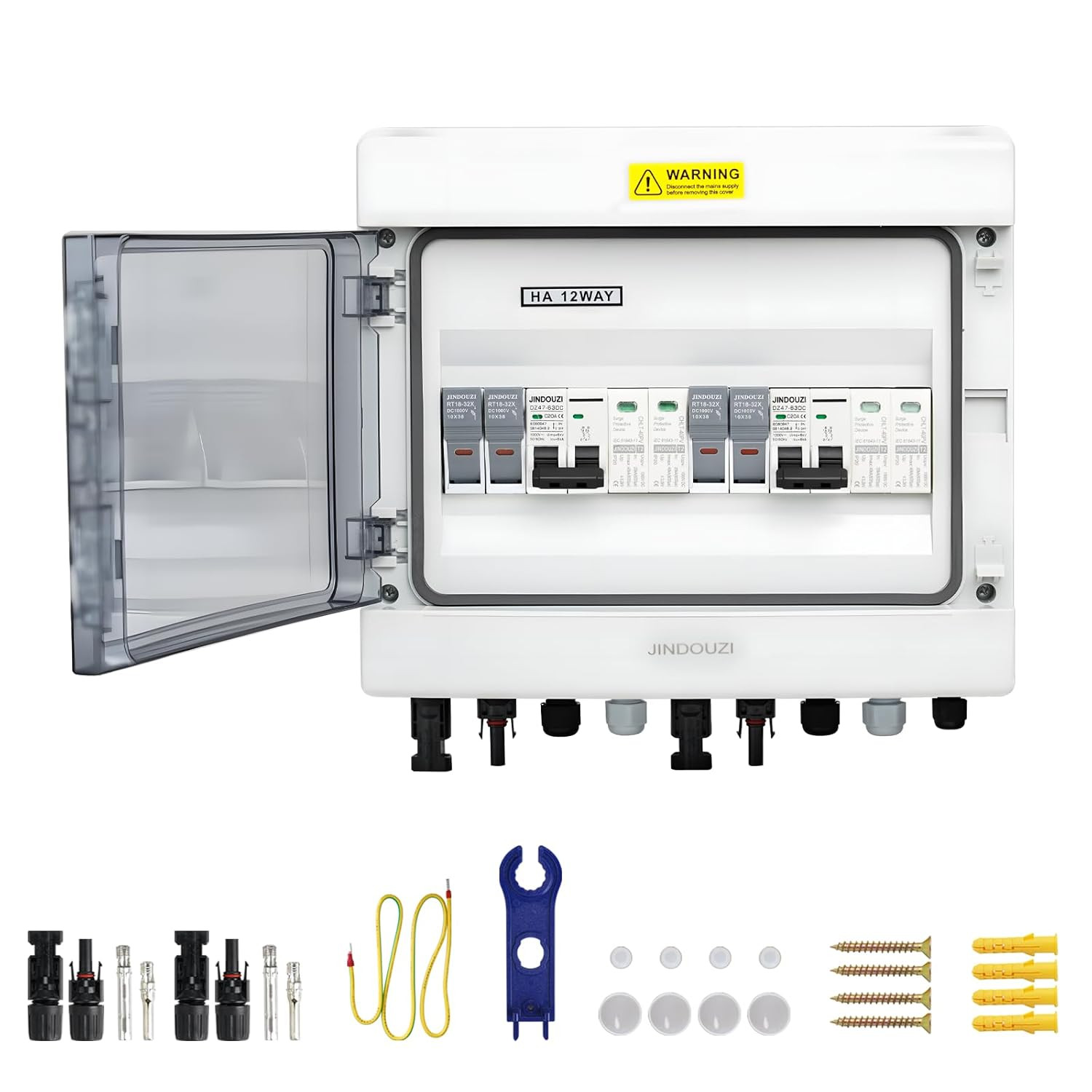
What stands out about this box is the completeness of its protection. It supports a 500V system and up to 20kW, and the built-in 20A DC miniature circuit breaker, 20A DC500V fuse, and 40KA class T2 surge protective device work together to guard against short circuits, overcurrent, overvoltage, and lightning. That makes it a very self-contained option for a smaller array. The trade-off is its capacity: both inputs and outputs are designed around a 20A per-string maximum, and there are only two input circuits. If your array uses strings above 20A or you need to combine more than two strings, this enclosure will feel restrictive. For a compact system that benefits from layered protection in a single box, it is the better match.
4-String 63A Solar Combiner Box
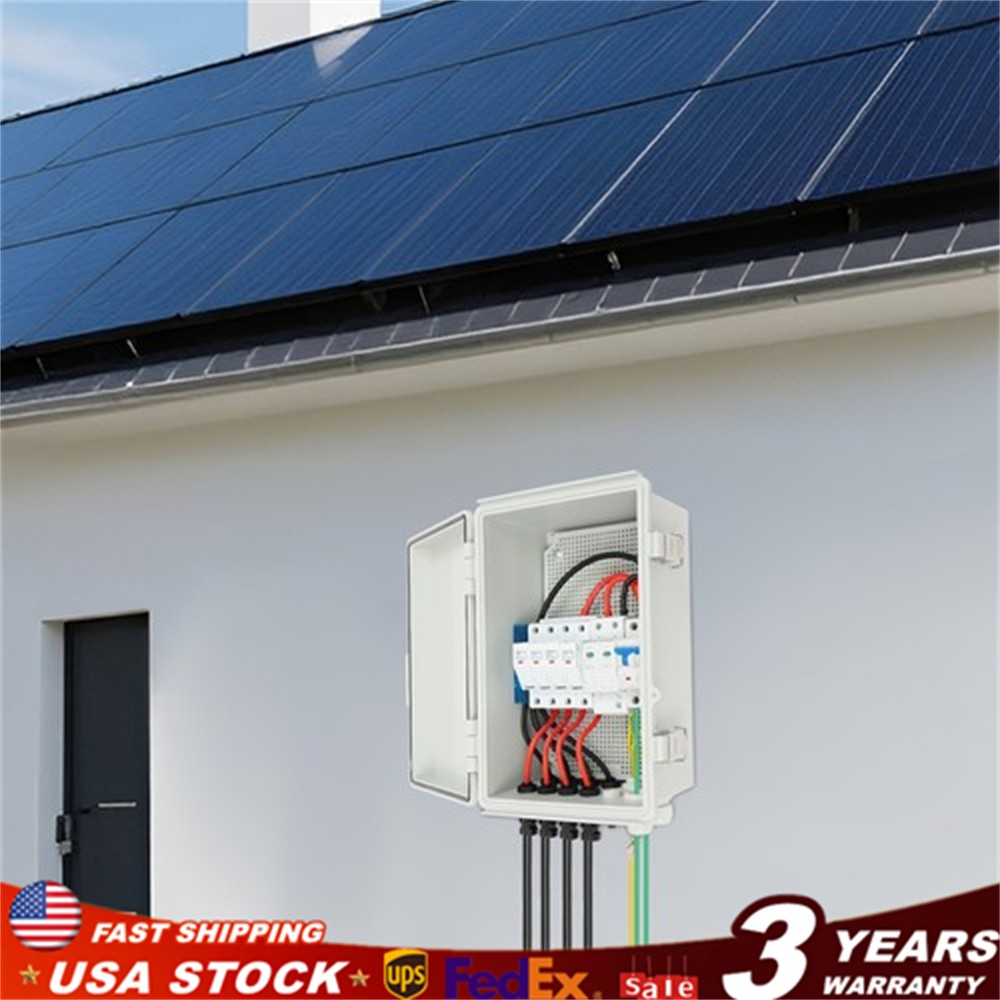
Pick the 4-string version when you have four PV strings that need to converge in one place. It uses a 10A fuse per string, so each circuit can be fused individually, and the 63A, 550V circuit breaker gives you a single point to disconnect the combined output. It also includes two surge protection devices and a high-voltage lightning arrester. The limitation to keep in mind is the per-string fuse rating: 10A per string means this box fits arrays where individual strings stay within that range. If your panels produce more current per string, the 10A fuse becomes the bottleneck rather than the breaker. For a direct way to handle a four-string configuration with substantial breaker capacity, this is the practical pick.
Final Choice by Use Case
Choose the higher-priced 2-in/2-out combiner if your solar kit needs robust three-layer protection in a compact unit and you have a small number of inputs. Choose the lower-priced 4-string combiner if you need to merge multiple panel strings into one enclosure and want a bigger breaker to manage the combined output.