Before your solar panels can feed a charge controller, all of their strings need to land in a combiner box. That's where the decision gets real: choose one with too few inputs and you can't connect the array; choose one with far more inputs and you're carrying unneeded size and cost. For a charge controller solar balance-of-system setup, the 2-in/2-out model and the 4-string model solve that problem differently.
Quick verdict
For a two-string system, the 2-in/2-out PV combiner box is the cleaner fit. For a four-string array, the 4-string PV combiner box is the better fit. The two listings also sit at different price points: the 2-in/2-out model is USD 125.82 and the 4-string model is USD 62.54, so the budget impact is real.
| Feature | 2-in/2-Out Combiner Box | 4-String Combiner Box |
|---|---|---|
| Price | USD 125.82 | USD 62.54 |
| Inputs | 2 sets in | 4 strings in |
| Outputs | 2 sets out | 1 string out |
| Max input per string | 20A | 10A |
| Voltage ceiling | 500V system, up to 20kW | 1000V per array input; 600V max output |
| Protection devices | 20A MCB, SPD, fuse | 63A/550V breaker and 2 SPDs |
| Package extras | Combiner box only | Lock and 4 mounting plates |
Where each product wins
The 2-in/2-out model wins if your array is already divided into two strings and you want dedicated per-string protection. Its split output also makes routing power through a charge controller and a secondary load easier.
The 4-string model wins if you need to consolidate four panel strings into one output. The higher voltage ceiling on each input and the wall-mounting package make it the more fitting enclosure for a larger array.
2-in/2-Out Solar Combiner Box with 20A Fuse
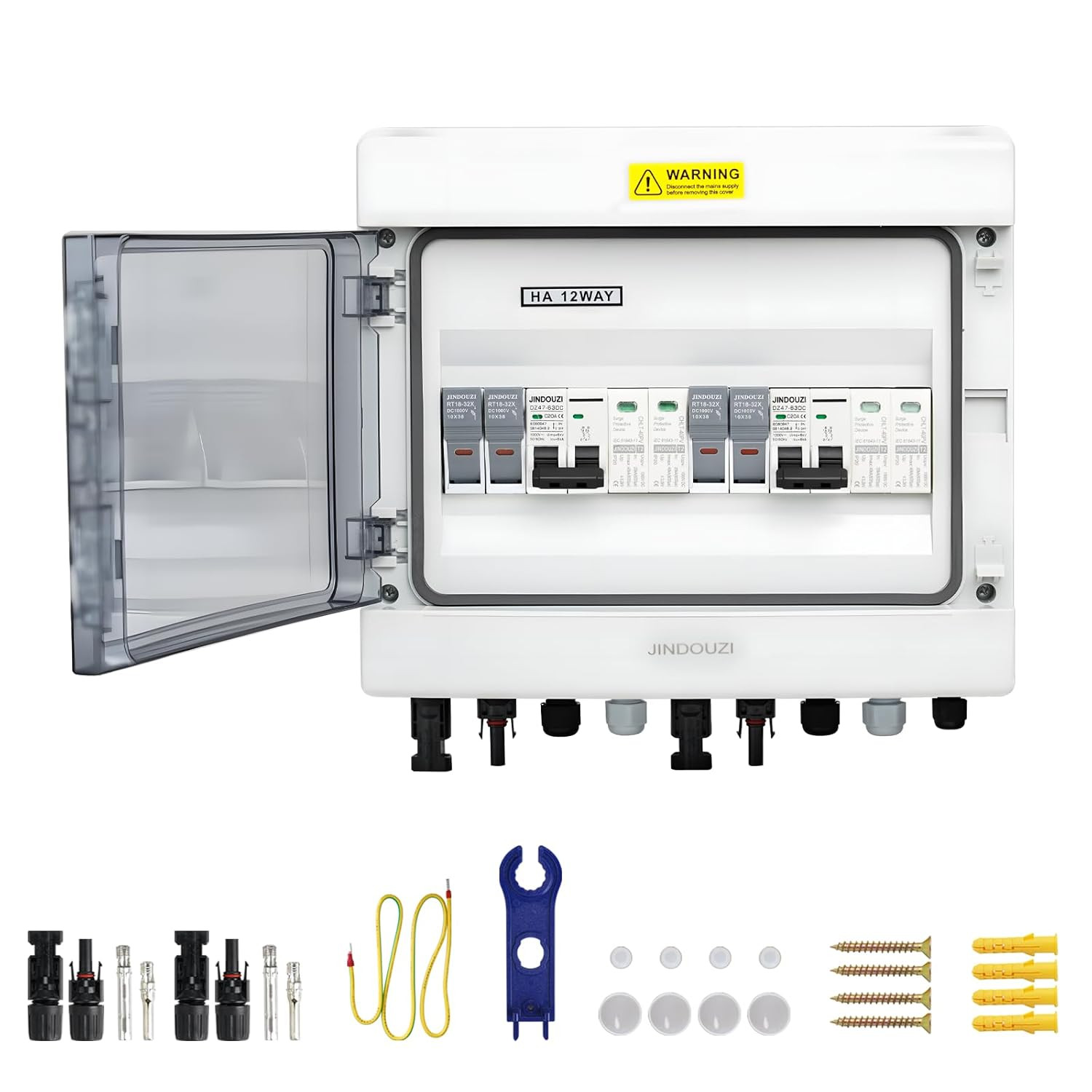
The strongest case for this box is a two-string array. It steps the protection up with a 20A DC500V miniature circuit breaker, a 20A DC500V fuse, and a DC500V 40kA Class T2 surge protective device all in one housing. That triple barrier covers short circuits, overvoltage, overcurrent, and lightning-related surges, which is useful when a charge controller is on the receiving end. On the other side, the input capacity is fixed at two strings, and what comes in the box is the combiner box only. If you need four inputs or want a lock and mounting plates in the package, this model won't give you those.
4-String Solar Combiner Box with 63A Breaker
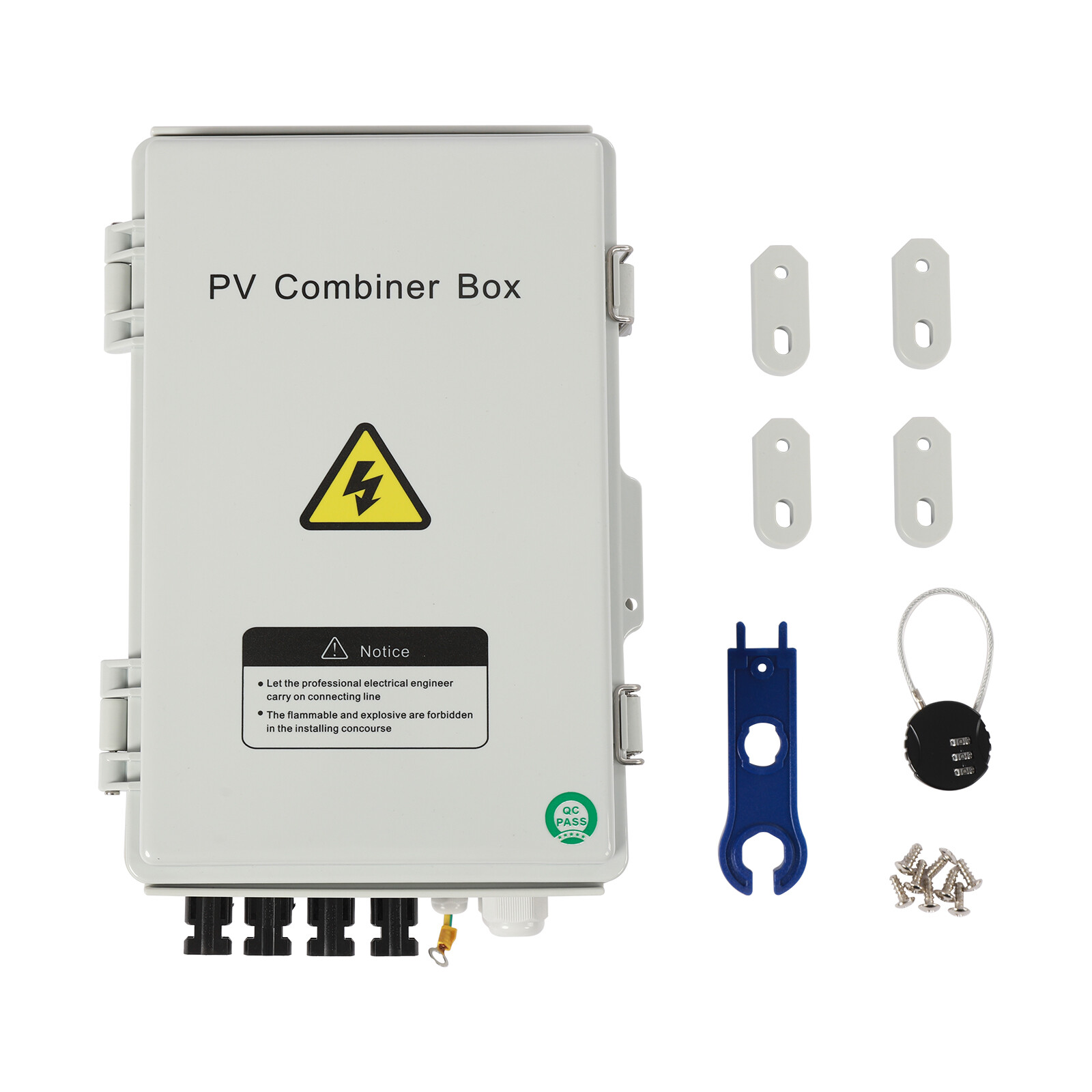
The best fit for this one is a four-string array where each string stays at or below 10A. Up to four PV arrays can feed into one output while the 63A, 550V circuit breaker and two 40kA surge protection devices handle the main switching and surge duty. The 1000V max input per array is the big ceiling for high-voltage strings, and the IP65-rated housing plus included lock and four mounting plates help with wall installation. The limitation is the single output string and the 10A per-string input cap; a two-string system with higher-current strings is outside its range.
Final choice by use case
- Two strings: choose the 2-in/2-out combiner box. You get fuse, breaker, and surge protection in one unit.
- Four strings with up to 10A per string: choose the 4-string combiner box. You get more inputs and wall-mounting hardware.
In short, match the box to the number of strings you actually have, and let the voltage and current ratings confirm your wiring.