When you're comparing charge controllers for solar BOS, the first fork in the road is battery voltage. Lower-voltage banks are common in cabins, RVs, and small off-grid builds, while higher-voltage banks handle bigger loads and longer runs. The second fork is price: these two MPPT controllers sit at very different price points. Both use maximum power point tracking and have LCD displays, so the real decision comes down to voltage range and what you're willing to spend.
Quick Verdict
- Choose the 30-100A MPPT Solar Panel Regulator Charge Controller if your battery bank is a lower-voltage setup and you want a low-cost MPPT unit with a dual USB output.
- Choose the PowMr 12V/24V/48V MPPT Solar Charge Controller if you need higher-voltage support, lithium battery charging, or a controller designed for larger off-grid systems.
Comparison
| Feature | 30-100A MPPT Solar Regulator | PowMr 12V/24V/48V MPPT |
|---|---|---|
| Price | USD 18.89 | USD 92.99 |
| System voltage | 12V and 24V | 12V, 24V, and 48V |
| Charging mode | MPPT | MPPT |
| Display | LCD | LCD |
| Extras | Dual USB output 5V/2.5A, AGM/GEL lead-acid support | 150VDC max PV input, lithium support, 3-stage charging, 98.1% efficiency |
Where Each Product Wins
Budget and convenience: The 30-100A MPPT Solar Panel Regulator wins on price and gives you practical extras that make a small off-grid setup easier. It also covers the common lower-voltage lead-acid battery types.
Voltage flexibility and system growth: The PowMr controller wins for larger systems because it supports a wider voltage range, accepts up to 150VDC from the panels, and includes 3-stage charging and lithium battery support.
Product Notes
30-100A MPPT Solar Panel Regulator Charge Controller
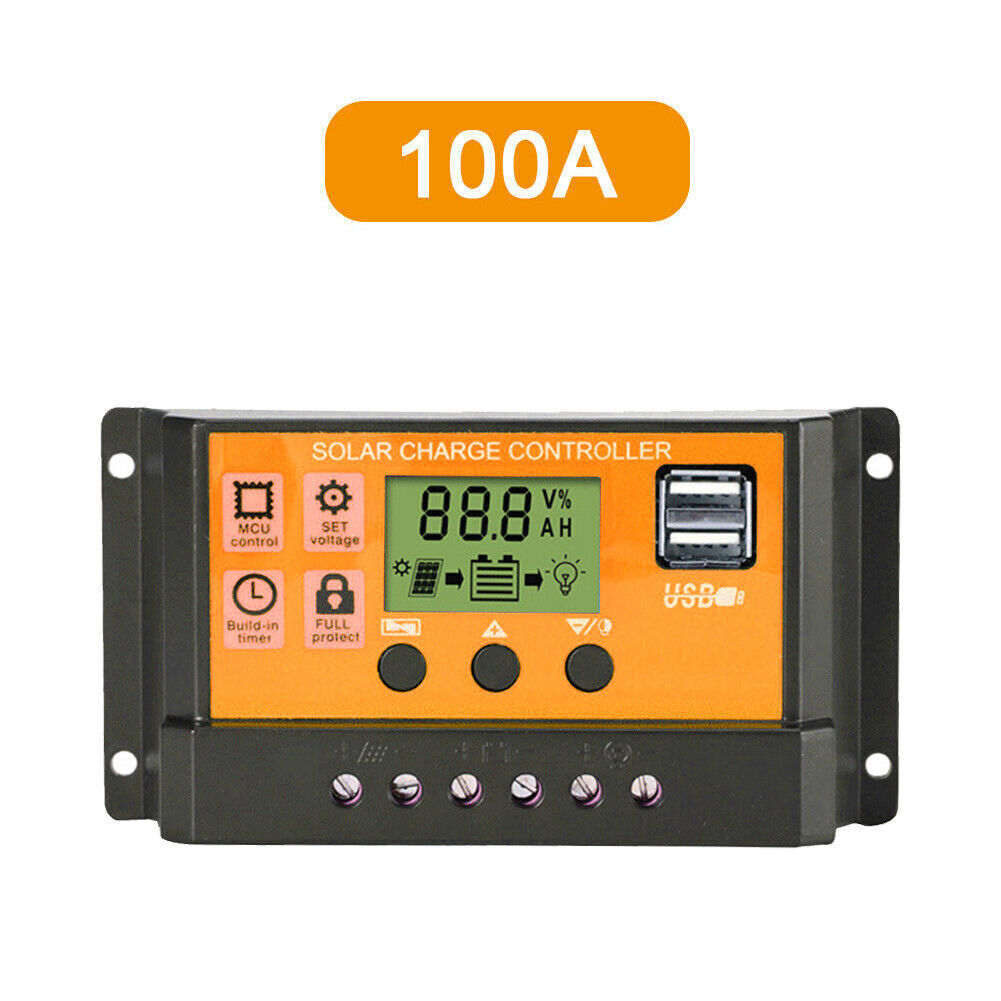
The 30-100A MPPT Solar Panel Regulator Charge Controller is the entry point to MPPT charging for lower-voltage systems. Its compatibility with AGM and GEL lead-acid batteries means you don't have to swap controllers when you change battery type, and the LCD display makes it easy to see charging status and adjust parameters. The dual USB output at 5V/2.5A is a convenient way to top up a phone or small device directly from the controller. The main limitation is system voltage: it is built for lower-voltage systems only, so a higher-voltage battery bank is out of its range. Its discharge current is rated at 30A, 60A, or 100A, so choose the actual rating that matches your loads rather than assuming the highest number always applies.
PowMr 12V/24V/48V MPPT Solar Charge Controller
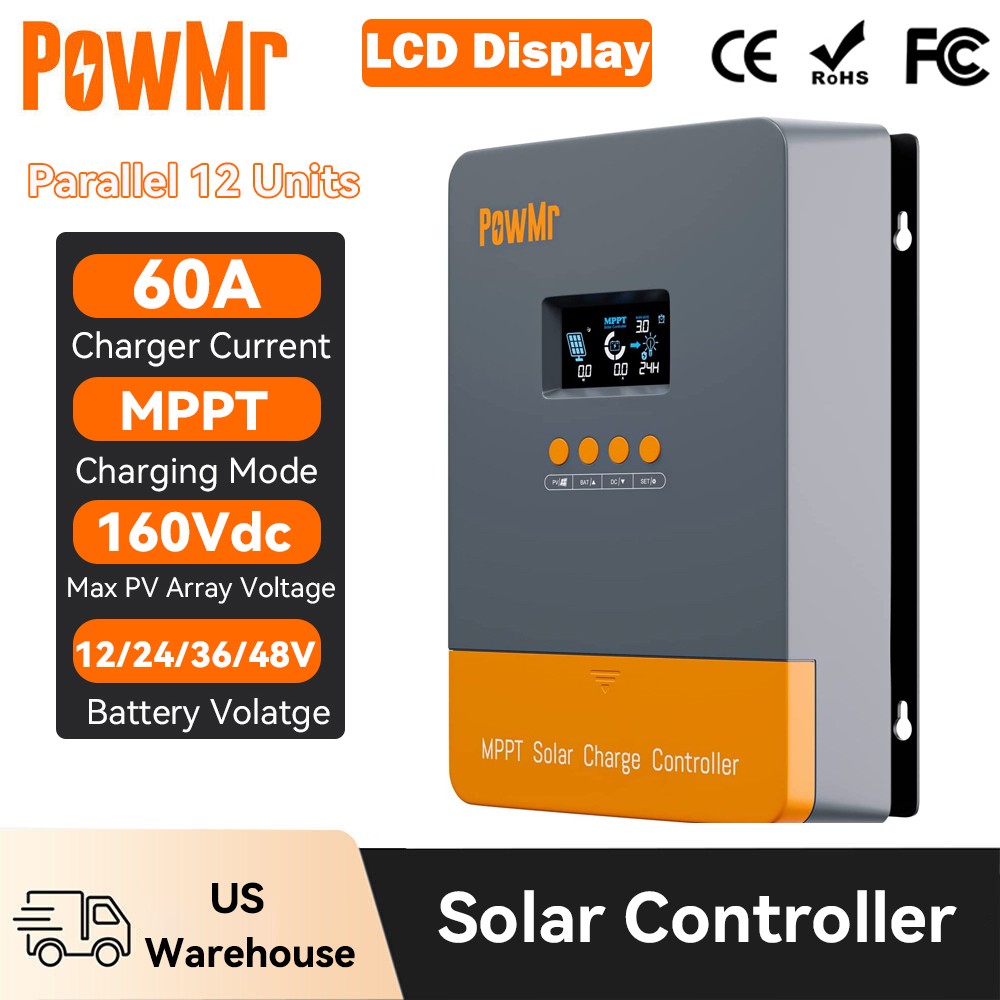
The PowMr 12V/24V/48V MPPT Solar Charge Controller is aimed at systems that need room to grow. It handles a wide system voltage range, and its 150VDC max PV input lets you run solar strings at higher voltages without stepping down early. The 3-stage charging process plus lithium battery support makes it a better match for modern battery chemistry, and the 98.1% conversion efficiency means you lose less power between the panels and the battery. The catch is price: it costs substantially more than the lower-priced unit, and if your whole setup runs on a lower voltage, you're paying for flexibility you may never need. For a larger home or garden system, that higher price buys real capability.
Final Choice by Use Case
- Lower-voltage cabin, RV, or small off-grid build: Choose the 30-100A MPPT Solar Panel Regulator Charge Controller. The USD 18.89 price makes it the practical low-cost way to get a working solar BOS.
- Higher-voltage home/garden system or battery bank that needs room to grow: Choose the PowMr 12V/24V/48V MPPT Solar Charge Controller. The USD 92.99 price buys 48V support, 150VDC input, and a controller built for larger off-grid setups.