When you're putting together a solar power system, the charge controller is the piece that decides how your panels feed your battery bank. Get this wrong and you risk undercharging or overcharging your batteries; get it right and your system works reliably for years. Two MPPT controllers sit at opposite ends of the price scale: the 30-100A MPPT Solar Panel Regulator and the Renogy Rover Lite 60A MPPT Solar Charge Controller. Both use Maximum Power Point Tracking, but they're designed for different jobs. This comparison looks at price, compatibility, and real-world usefulness to help you pick the right one.
Quick verdict
The 30-100A MPPT is the straightforward choice for smaller setups where budget matters most. The Renogy Rover Lite 60A is the more capable option for larger systems that need extra headroom. Pick the one that matches the scale of your installation, and you'll get solid MPPT performance without paying for features you won't use.
Comparison table
| | 30-100A MPPT Solar Panel Regulator | Renogy Rover Lite 60A MPPT |
| Price | $18.89 | $179.99 |
| System voltage | 12V/24V | 12V/24V/36V/48V |
| Battery presets | Lead-acid, AGM, GEL | AGM, Gel, Flooded, LiFePO4, User Custom |
| Standout features | LCD display, dual USB output | 150V max solar input, RS485, >97% conversion efficiency |
Where each product wins
The 30-100A MPPT wins for simpler installations where the priority is getting MPPT charging without a large cash outlay. It's a no-frills option that covers the basics and keeps the entry cost low. The Renogy Rover Lite 60A wins for larger, more demanding installations where flexibility and connectivity are priorities. It's the controller you buy when you know your system will grow or already handles a bigger load.
Product notes
30-100A MPPT Solar Panel Regulator
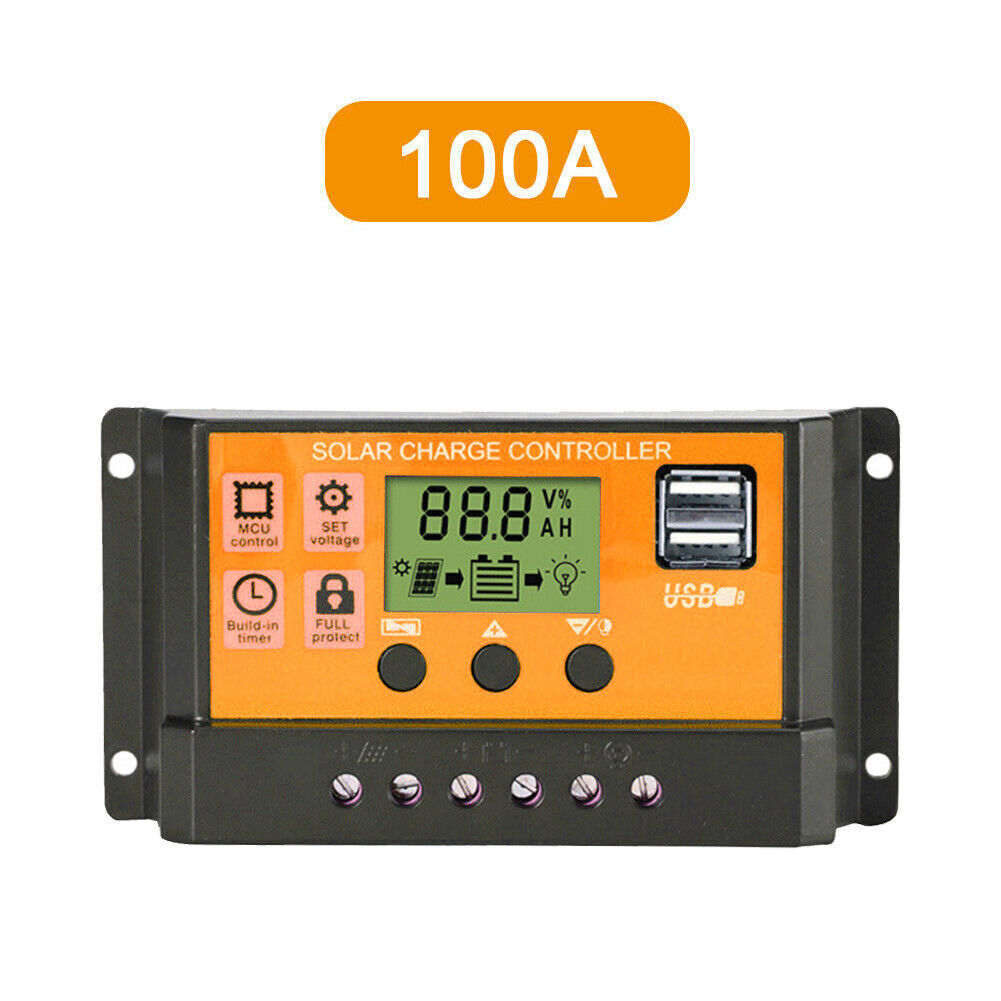
This controller is the low-cost route into MPPT charging. It's built for 12V and 24V battery systems and works with lead-acid, AGM, and GEL batteries. The LCD screen shows charging status and lets you switch modes and set parameters, and the dual USB output delivers 5V/2.5A for small devices. It also memorizes settings when the battery runs down, which is convenient for seasonal use. The main limitation is the narrower voltage range: only 12V and 24V systems are supported, so a 48V battery bank won't work. The listed discharge current range (30A/60A/100A) also depends on your system setup, so match it to your load before buying.
Renogy Rover Lite 60A MPPT Solar Charge Controller
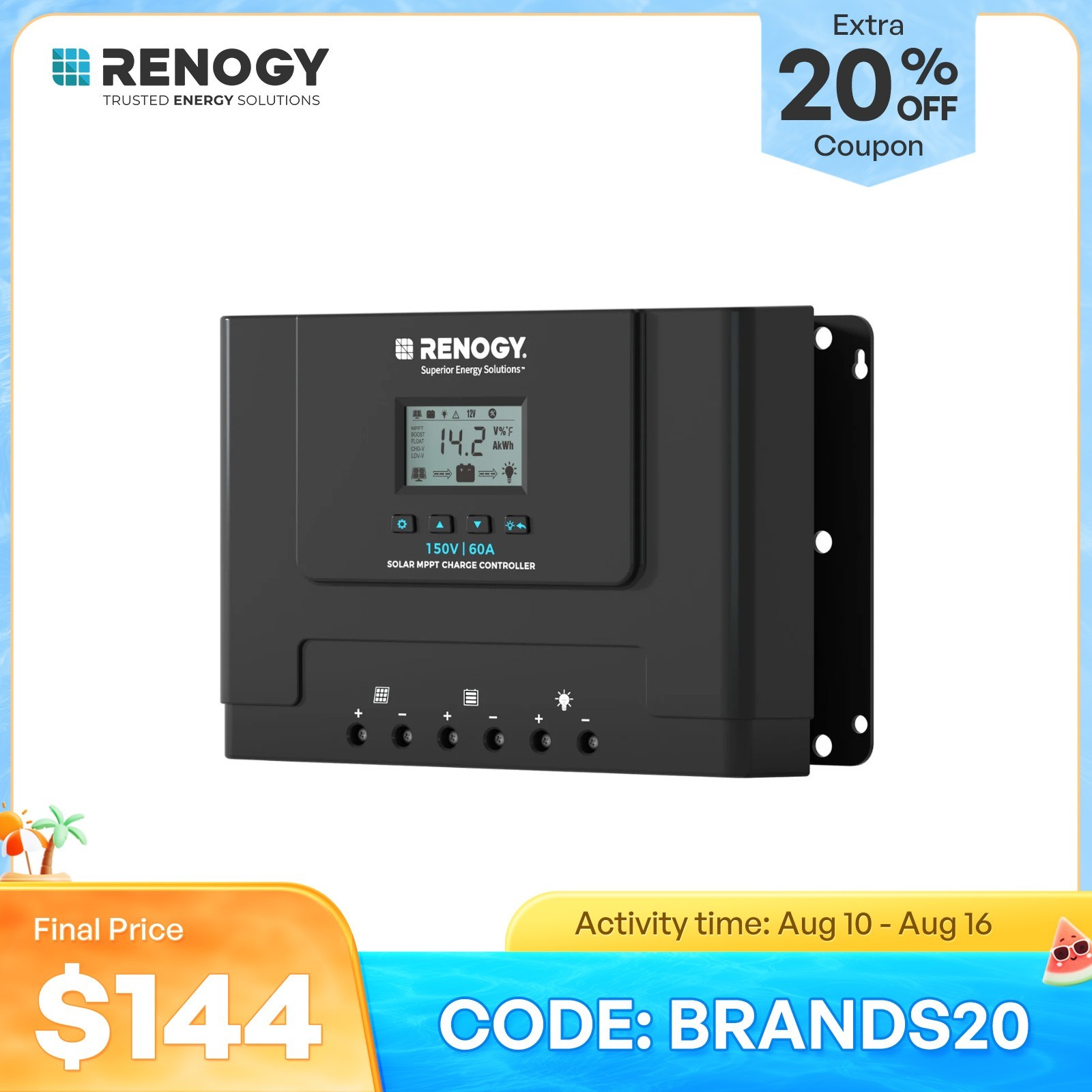
The Renogy Rover Lite 60A is the higher-priced controller, but it brings a lot more headroom. It auto-detects 12V, 24V, 36V, and 48V systems, accepts up to 150V solar input, and can connect six 200W panels in series to reduce wiring. Battery presets include AGM, Gel, Flooded, Lithium-iron Phosphate, and User Custom, and RS485 communication makes external monitoring or integration possible. The conversion efficiency is rated above 97%, and the heat-sink cooling plus 31°F to 113°F full-load operating range helps in harsh climates. The limitation is cost: it's a significant step up from the other controller, so it makes sense only if your system actually uses the wider voltage range, lithium support, or communication features.
Final choice by use case
Go with the 30-100A MPPT for a smaller, simpler system where price matters most. It's a low-cost way to get MPPT charging without overbuilding your setup. Go with the Renogy Rover Lite 60A for a larger, more complex system that needs more capacity, more control, and the ability to handle a wider range of batteries. The higher price buys a controller that can grow with you and handle harsher conditions.