Choosing a solar charge controller usually comes down to a capacity-versus-cost trade-off. On one side is a compact 30A PWM controller that runs basic 12V or 24V battery systems; on the other is a 100A MPPT controller that supports larger arrays and higher-voltage banks up to 48V. The right pick depends less on brand and more on how much power your panels actually produce and how much battery you need to keep charged.
Quick Verdict
If your project is a small panel charging a 12V or 24V battery and you want a working controller without spending much, the 30A PWM controller is the easy choice. If you're building a bigger off-grid setup, need 36V or 48V support, or want maximum power tracking from your solar array, the 100A MPPT controller is the one that can grow with you.
Comparison at a Glance
| Feature | 30A PWM Controller | 100A MPPT Controller |
|---|---|---|
| Listed price | $6.99 | $151.99 |
| Charging mode | PWM | MPPT |
| Current rating | 30A | 100A |
| System voltage | 12V / 24V | 12V / 24V / 36V / 48V |
| Display | LCD | LCD |
Where Each Controller Wins
The 30A PWM controller wins where budget and simplicity matter. It handles everyday 12V/24V charging, includes dual USB ports for small devices, and gives you an LCD screen to check system status. The 100A MPPT controller wins where raw capacity matters. With 100A of output and 5200W of PV support, it can manage much larger solar arrays and accepts a wider range of lead-acid and lithium batteries.
Product Notes
30A Solar Panel Battery Charge Controller 12V/24V LCD Regulator Dual USB
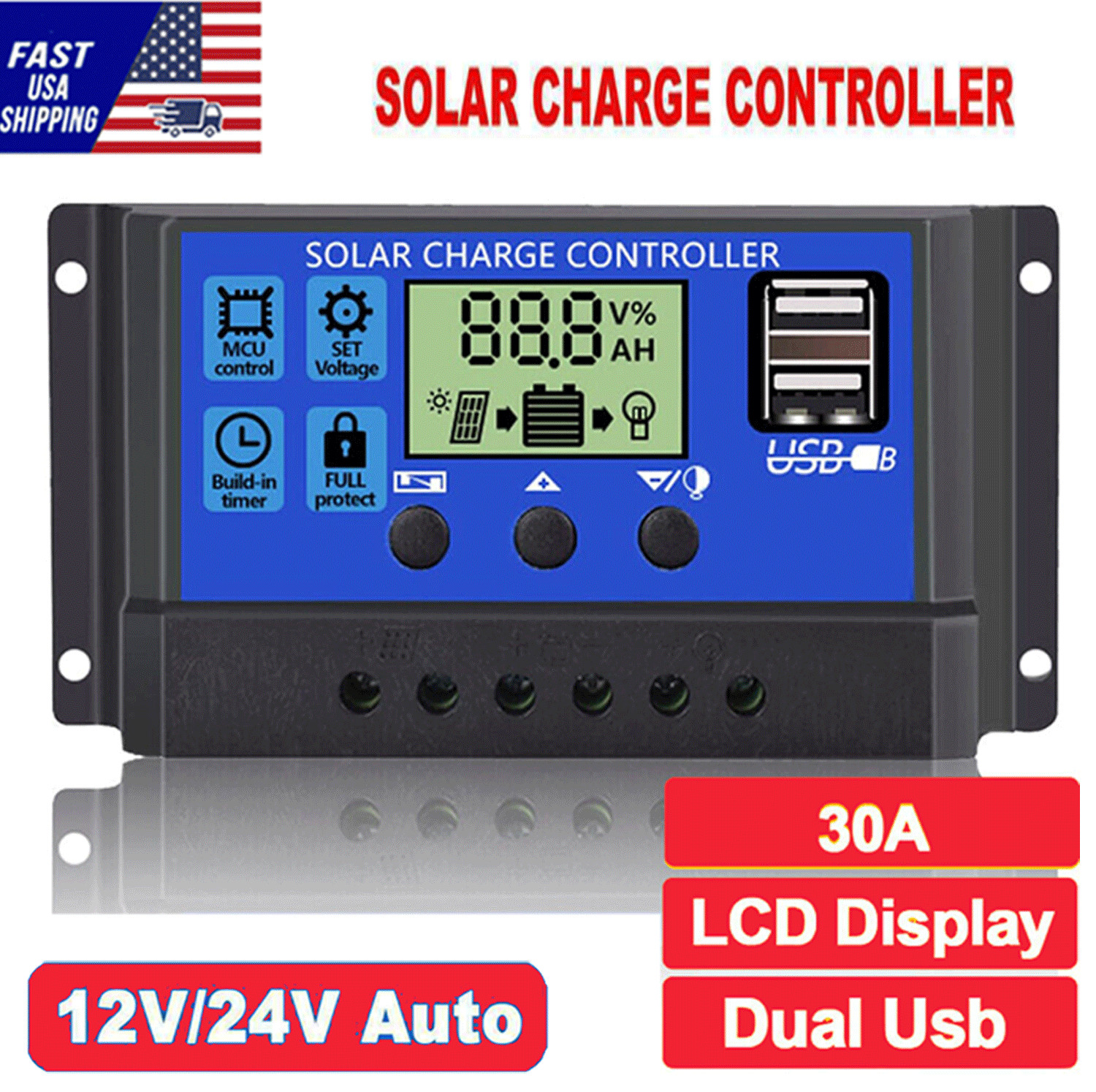
The 30A controller is a no-fuss entry point into solar charging. It uses PWM charging, a proven method for smaller systems, and the LCD display lets you see battery status without guesswork. The dual USB ports add a handy way to charge a phone or small device directly from the controller. Protection circuits guard against short circuits, open circuits, reverse polarity, and overloads, which is reassuring for a first-time solar builder. The trade-off is capacity: 30A is enough for a modest panel and a 12V or 24V battery, but it won't feed a large bank. If you add more panels later, you'll likely outgrow this controller. That's fine if your goal is a simple, low-cost solar setup.
5200W 100A MPPT Solar Charge Controller 12V/24V/36V/48V
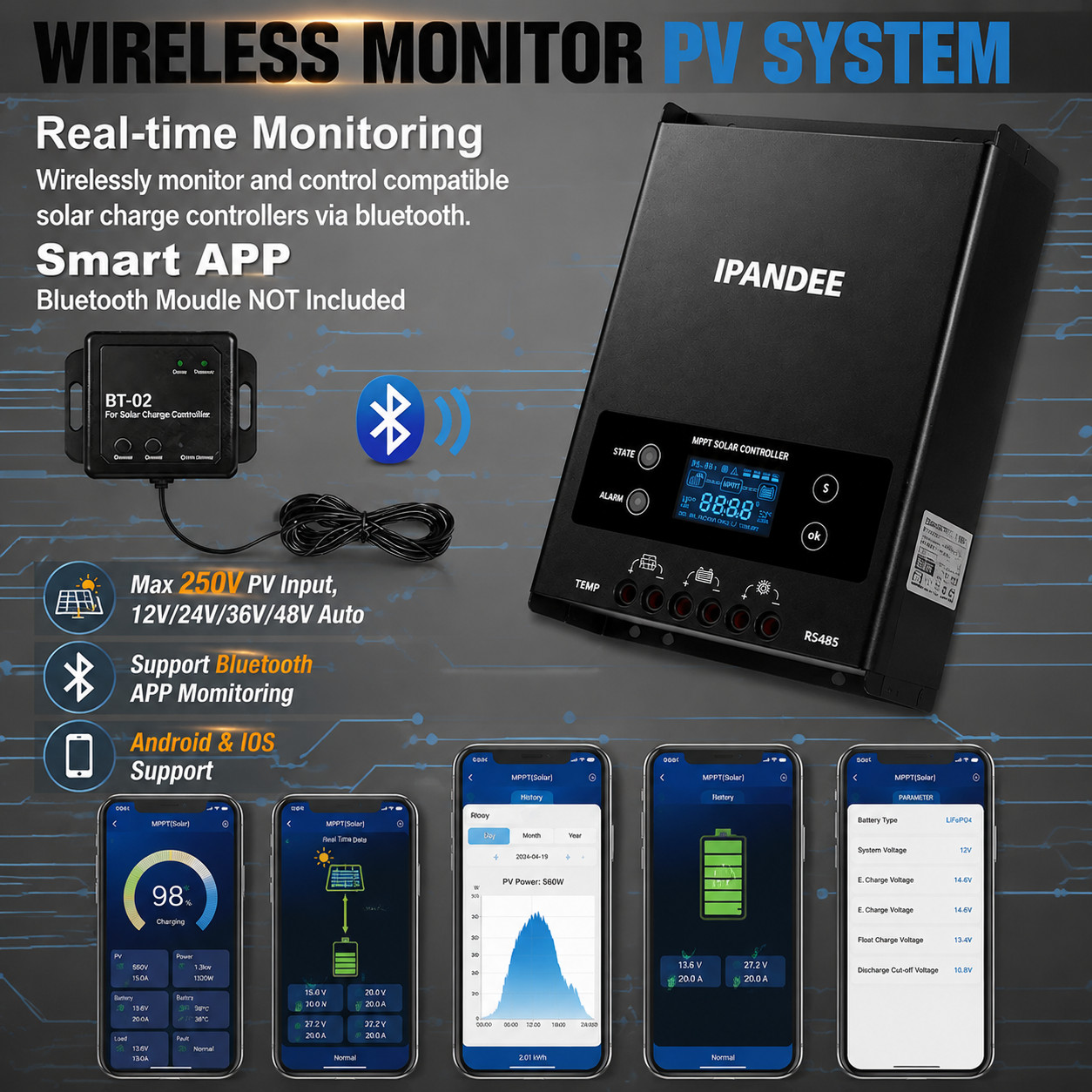
The 100A MPPT controller is built for people who want their controller to be the reliable center of a larger power system. MPPT charging gets more usable energy from your panels, and the 100A output rating supports continuous-load environments like off-grid homes, workshops, marine vessels, and mobile power stations. It works with 12V, 24V, 36V, and 48V batteries, and the listed compatibility covers lead-acid and lithium chemistry, including LiFePO4, gel, and AGM. The LCD display keeps the details visible. The main drawback is the much higher price, and the controller's full capability only pays off when your solar array and battery bank are large enough to feed it. For a small weekend setup, this is more controller than you need.
Final Choice by Use Case
Choose the 30A PWM controller if you want a straightforward 12V/24V controller for a small panel and modest battery, and you want to keep the cost around $7. Choose the 100A MPPT controller if you need serious capacity, 36V/48V battery support, lithium compatibility, and you're ready to invest about $152 in a controller that can run a full-scale off-grid system.