When you're assembling the balance-of-system (BOS) for a solar array, the combiner box sits between your panel strings and your charge controller or inverter. It collects power from multiple strings, adds protection, and sends a combined output onward. The decision feels straightforward until you compare a compact 4-string unit with a fully loaded 6-string enclosure-and the two listings sit at very different price points.
The number of strings you need to combine is the first fork in the road. A four-input box can handle four panel strings and output one combined feed. A six-input box gives you two more inputs, which matters if you have a larger array or plan to expand. If you only have four strings, extra inputs are unnecessary; if you plan to grow, they're valuable. Because the 6-string model also offers a more robust protection layout and a sturdier housing, it commands a much higher price.
Protection design is the second fork, and it goes beyond just the number of strings. The 4-string model's protection layout is not the same as the 6-string model's, and that difference is a big part of why the prices diverge.
Quick verdict
If you need to combine four panel strings and want the lower-priced option, the 4-string box is the clear choice. If your array has six strings and you want the more capable enclosure, the 6-string box earns its higher price.
Price and feature comparison
| Product | Listed price | String capacity | Protection features | Price bar |
|---|---|---|---|---|
| 4 String Solar Combiner Box (63A Breaker) | USD 62.54 | 4 | Standard 63A breaker, 2 surge protection devices (40KA, 600V) | |
| 6 String Solar Combiner Box (20A Fuse, 63A Breaker) | USD 219.99 | 6 | 20A rated fuses, surge and short circuit protection, 63A breaker |
Where each product wins
- The 4-string box wins on price and simpler setup.
- The 6-string box wins on input capacity.
Product notes
4 String Solar Combiner Box PV Combiner Circuit Breaker 63A
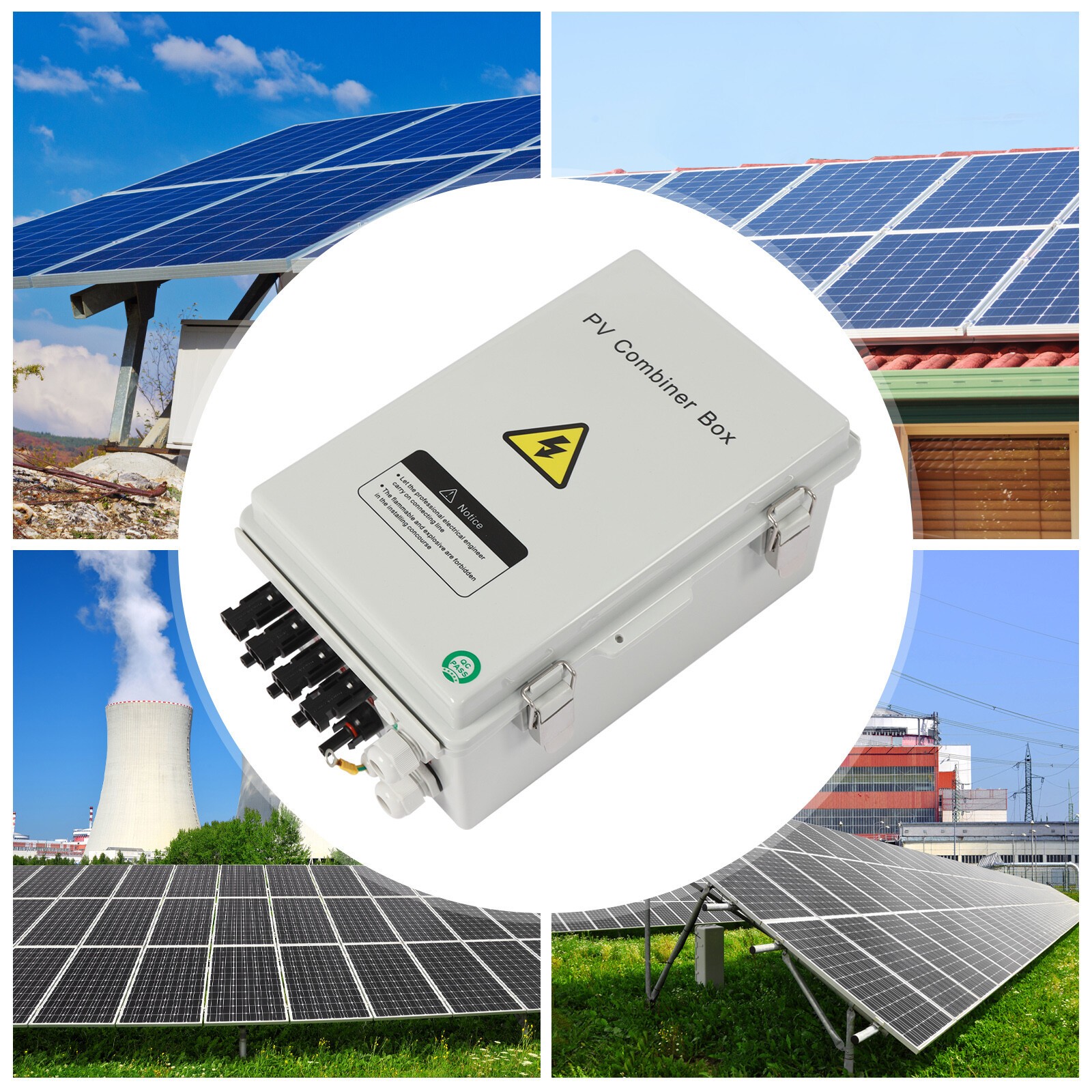
If you're running four PV strings into one output, this NaMaSyo combiner box keeps the price low. Its white ABS/PC housing is wall-mountable, rated IP65, and includes a combination lock plus four mounting plates, so installation is straightforward. With four inputs and one output, it's sized for a smaller array. The protection package pairs a circuit breaker with two surge protection devices, which suits a straightforward four-string setup. The tradeoff is future flexibility: if you add more panels, you'll need another combiner or a different unit. For a modest four-string array that needs a simple, weather-resistant connection point, this is the lower-priced route.
6 String Solar Combiner Box with 20A Fuse, Surge Protection & 63A Breaker
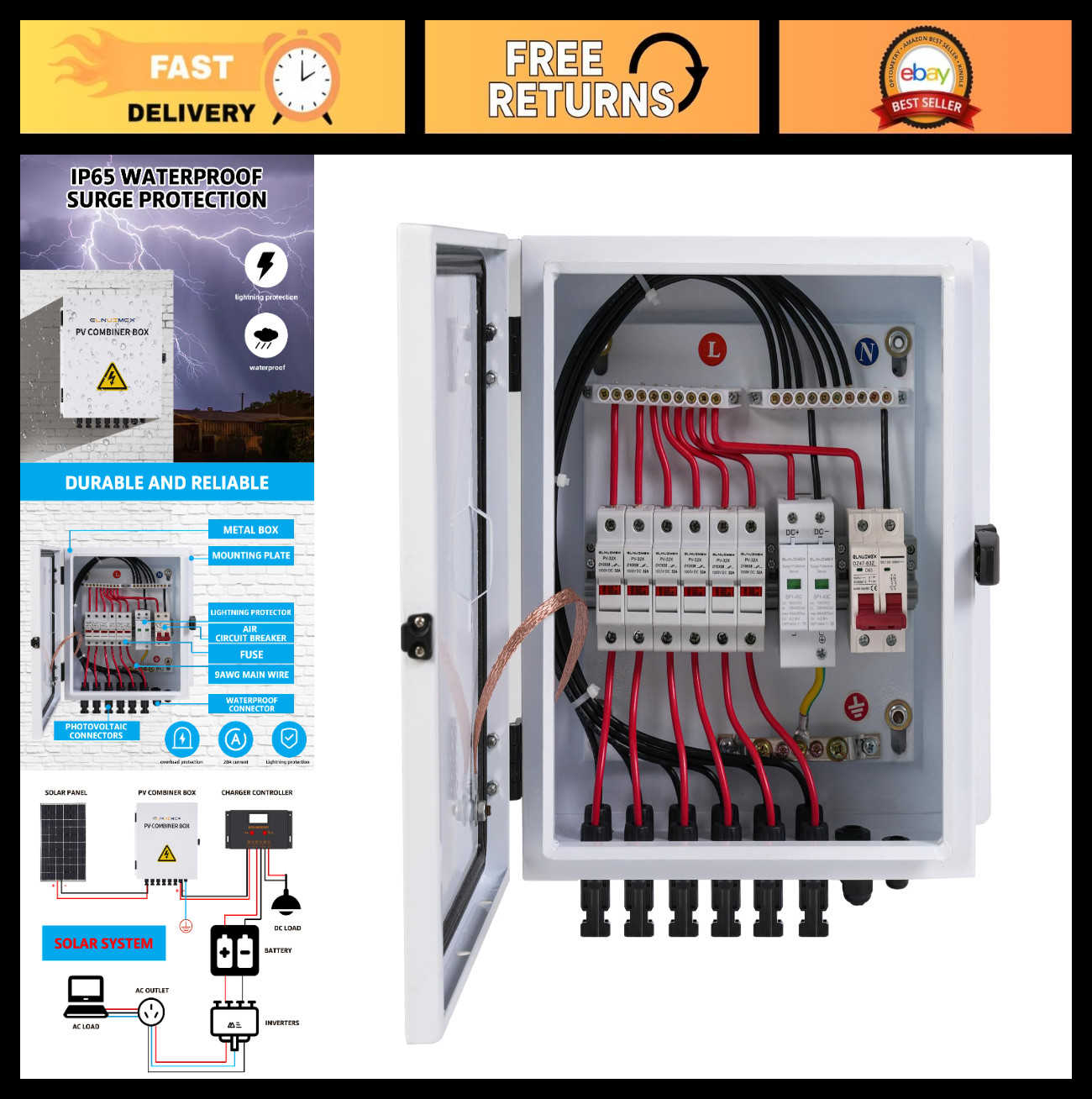
This six-string combiner is built for arrays that need more capacity. The pre-wired interior and built-in ground connector reduce setup time, while the metal spray housing with a lock and key provides a secure enclosure. It's rated IP65, so outdoor mounting is covered. The unit is also described for three-phase system configurations, which may matter for larger or commercial builds. The protection layout includes 20A rated fuses and a 63A breaker. The catch is the listed price of USD 219.99, far above the 4-string box. If your array only has four strings, you're paying for two extra inputs and fuse protection you might not use. Still, for six strings with a pre-wired, lockable metal enclosure, this is the six-input choice.
Final choice by use case
Choose the 4-string combiner when your solar array has exactly four strings and you want a lower-priced way to bring them together. Choose the 6-string combiner when you need six inputs and a pre-wired, lockable metal enclosure for a larger or more complex BOS setup.