Choosing a solar charge controller is a balancing act between price and power. The smaller option is a 40A regulator aimed at 12V/24V battery banks and modest solar arrays. The larger option is a 100A unit that also works with 36V and 48V systems, so it can pull more from a bigger PV array. The right choice depends on how much current your batteries can accept and how much room you'll need to grow.
Quick Verdict
For smaller off-grid setups, the lower-priced controller is the sensible pick, especially if you want to keep the initial spend down. For larger installations that need more current and multi-voltage flexibility, the bigger controller is the better fit. In short, match the size of the controller to the size of your battery bank. The lower-cost model is easier on the wallet; the bigger model is easier on growth plans.
Comparison Table
| Feature | MPPT 40A Solar Charge Controller | 5200W 100A MPPT Solar Charge Controller |
| Price | USD 105.99 | USD 151.99 |
| Current Output | 40A | 100A |
| Battery Voltage | 12V / 24V | 12V / 24V / 36V / 48V |
| Battery Types | Lead-Acid/Lithium | FLD, LiFePO4, SLD, Gel, AGM, etc. |
| Display | OLED | LCD |
Where Each Product Wins
The smaller controller wins when your priority is keeping the upfront cost low and getting a clear display readout. The larger controller wins when you need sustained high current, support for higher-voltage battery banks, and compatibility with a wider range of lithium and lead-acid chemistries. Neither controller is a bad choice; they simply sit at different points on the power scale.
Product Notes
MPPT 40A Solar Charge Controller
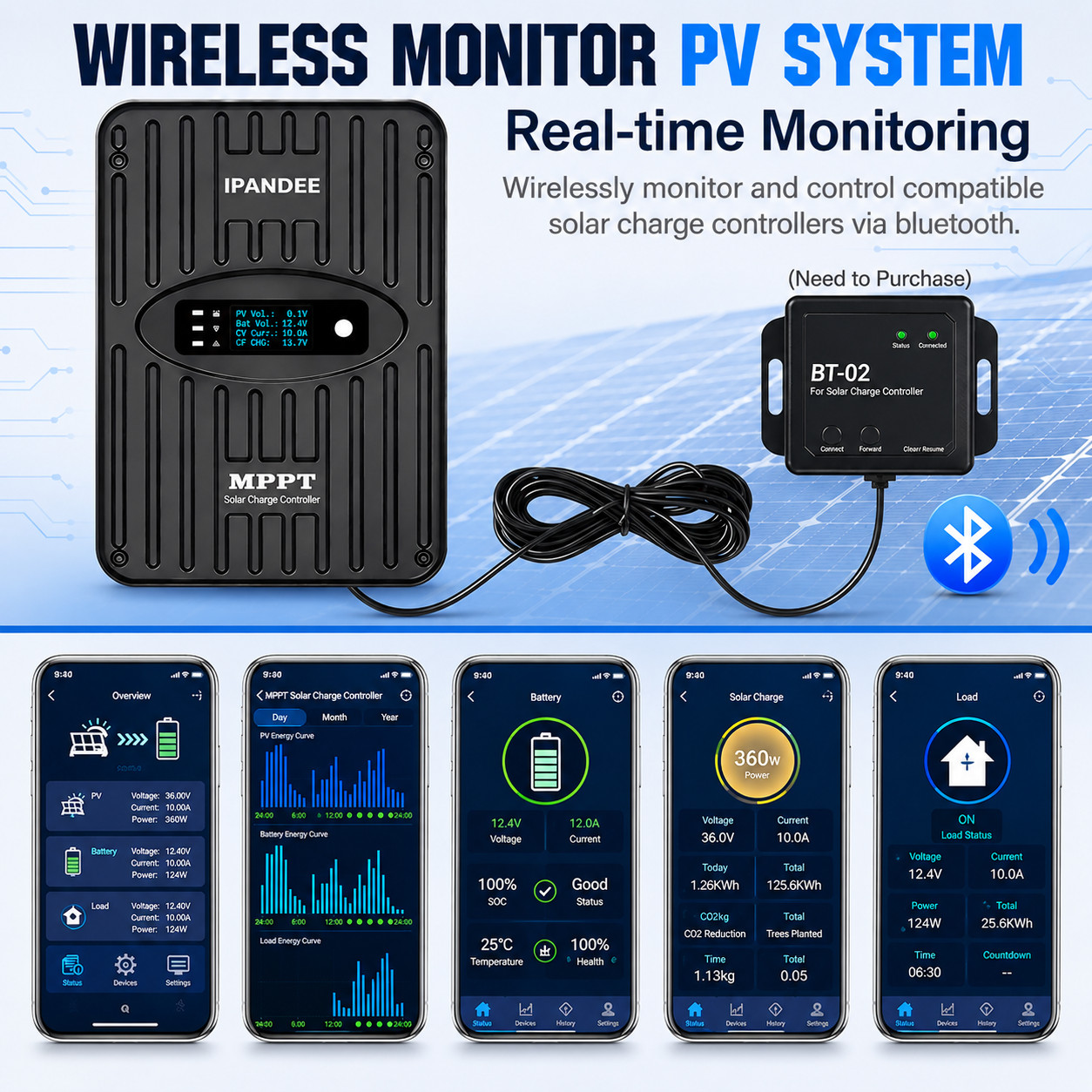
The MPPT 40A Solar Charge Controller is a solid match for a modest off-grid setup. It brings an OLED display and an industrial-grade aluminum housing. The OLED screen gives you a clear readout of system status, which is genuinely useful when setting up a cabin or RV. The 40A current rating is enough for a small battery bank charging from a moderate solar array. The headroom ends there: if you later expand to a larger array or need more charging current, this controller becomes the limiting factor. It's a reasonable starting point for a compact solar build. For many smaller systems, this is the right-sized controller that won't leave you paying for capacity you can't use.
5200W 100A MPPT Solar Charge Controller
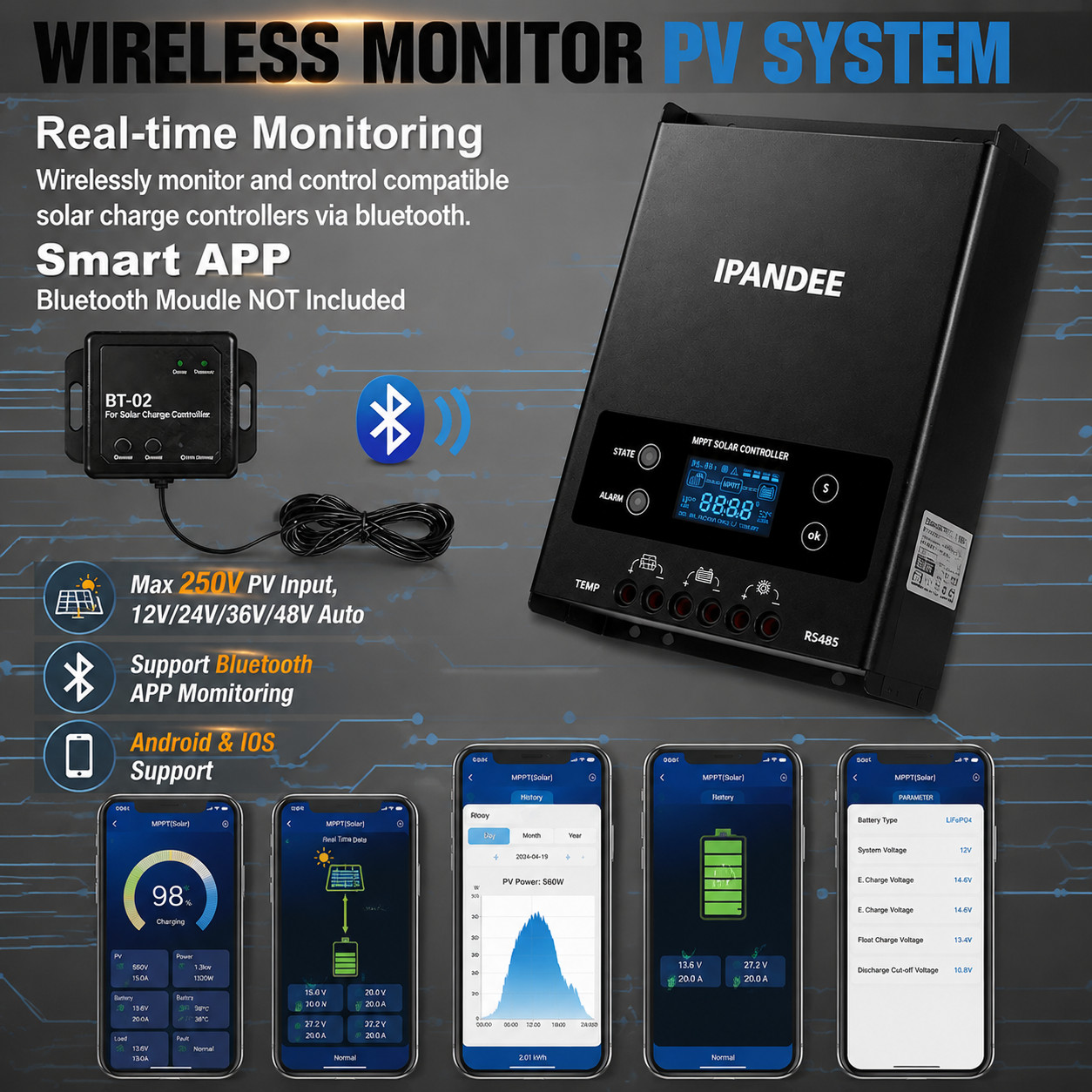
The 5200W 100A MPPT Solar Charge Controller is built for bigger loads. It delivers a true 100A continuous output, making it suitable for 24/7 off-grid homes, marine setups, workshops, or mobile power stations. The 250V max PV input and up to 5200W of solar power give it enough headroom for large arrays. It also works with lead-acid and lithium batteries, including FLD, LiFePO4, SLD, Gel, and AGM, and it has an LCD display for system monitoring. The main downside is that this much charging capability is more than a small array needs, so you'd be paying for headroom you may not use. If you think there's a chance you'll expand your system later, this unit gives you room to grow. With that capacity comes the ability to run a wider range of loads and charge more aggressively when sunlight is available.
Final Choice by Use Case
Choose the smaller controller if you have a modest battery bank and want a lower upfront spend. Choose the larger controller if you need high continuous charging current, plan to run high-power appliances, or expect to grow your solar array. The smaller model keeps the system simple and leaves more budget for other components. The larger model gives you room to add panels and upgrade batteries without replacing the charge controller.