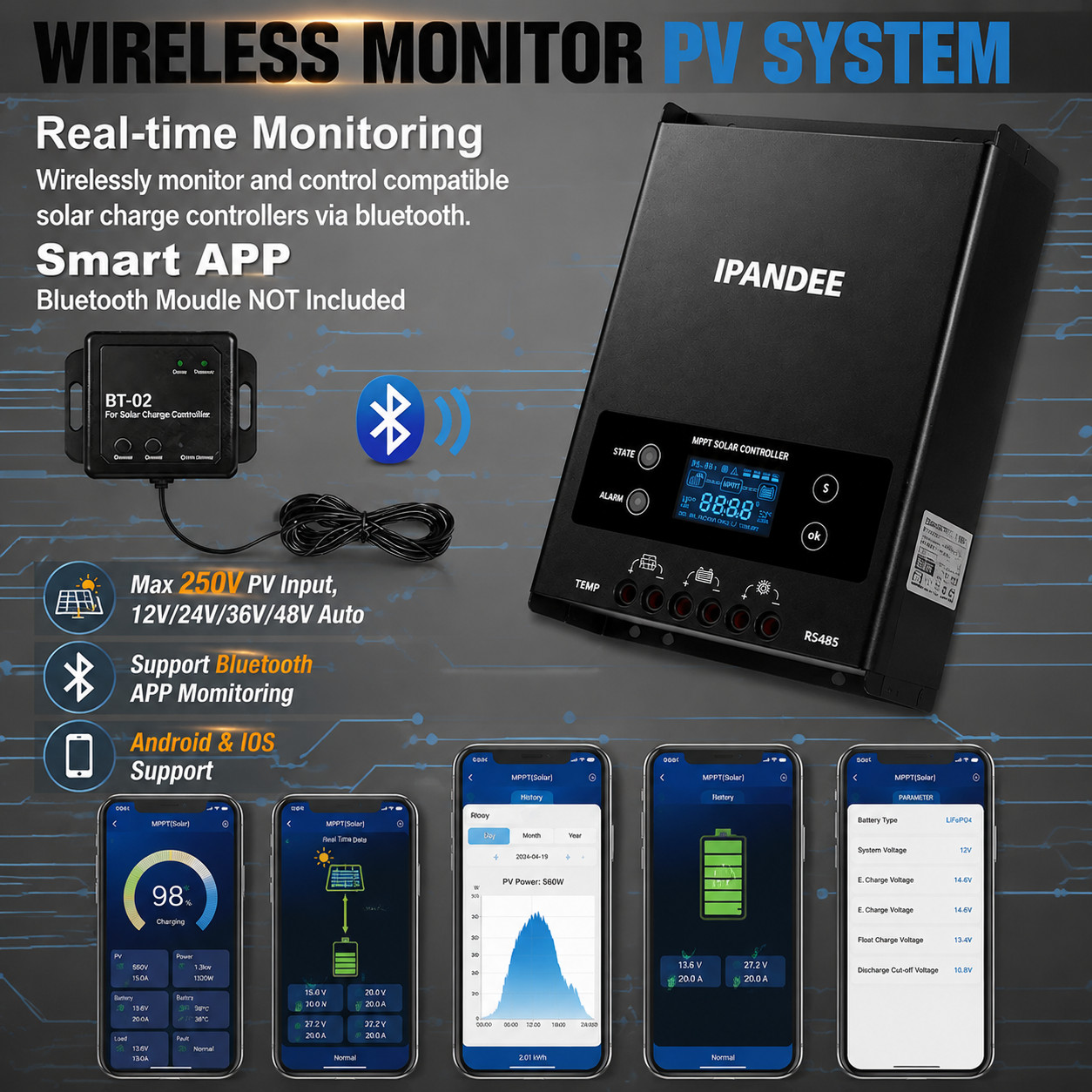
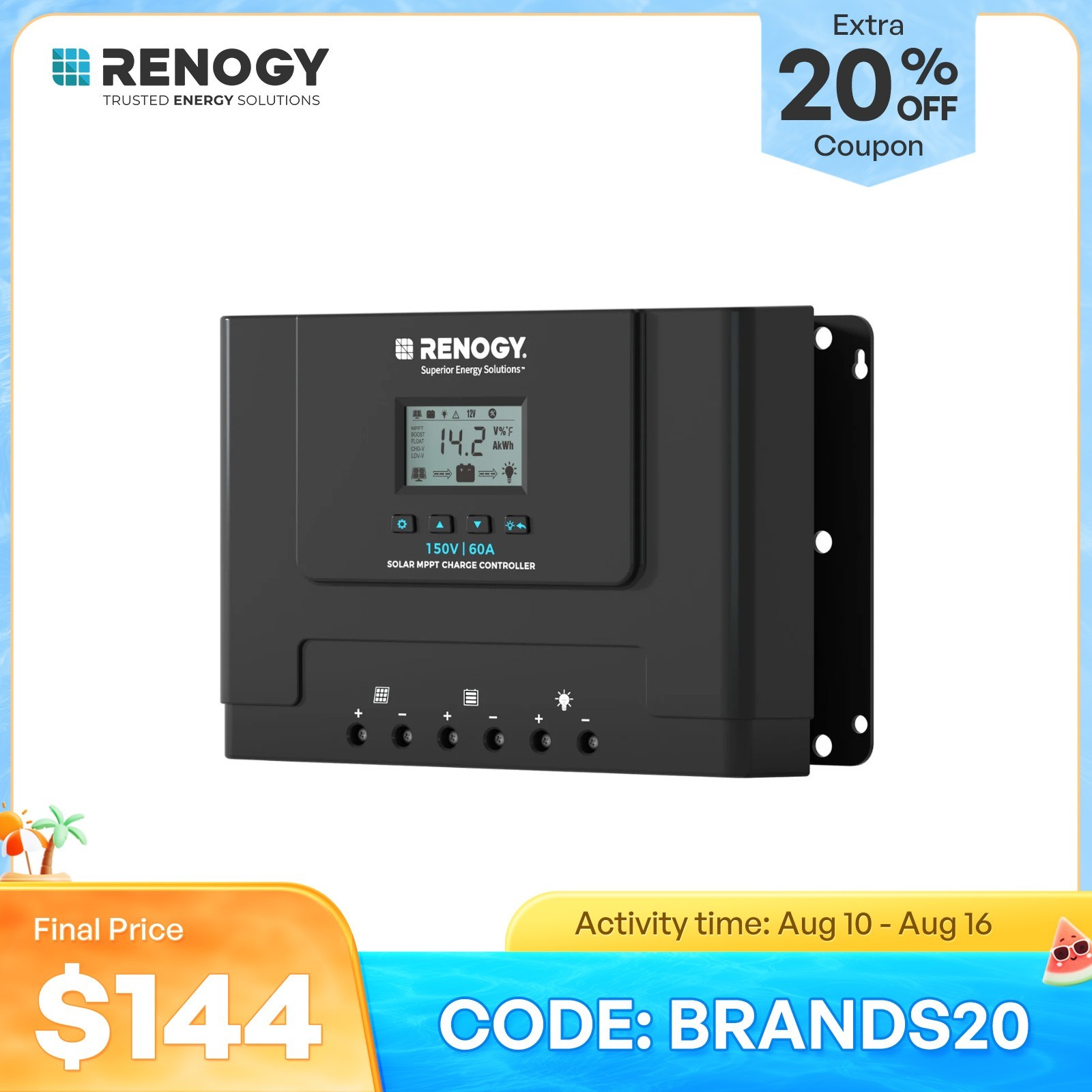
Choosing between a 100A MPPT controller and a Renogy Rover Lite 60A comes down to how much current your battery bank can realistically use and how much solar voltage your array produces. These two charge controllers sit close in price - $151.99 for the 5200W 100A model, $179.99 for the Renogy Rover Lite 60A - so for many builds, the decision isn't about budget; it's about fit.
MPPT tracking squeezes more usable power from your panels than older PWM designs, and both of these controllers do that. The real question is how much charging current they can move and how much control you want over the charge profile.
Quick verdict
If your solar array is large enough to need more than 60A of charging current, the 5200W controller is the clear winner. It delivers a full output and supports up to 250V of PV input, which gives you headroom for a bigger off-grid system. If your setup is smaller and you want preset battery profiles and a user-custom option, the Renogy Rover Lite is the better fit.
Comparison table
| Spec | 5200W 100A MPPT | Renogy Rover Lite 60A |
|---|---|---|
| Price | $151.99 | $179.99 |
| Max Charging Current | 100A | 60A |
| Max PV Input | 250V | 150V |
| Battery Presets | FLD, LiFePO4, SLD, Gel, AGM | AGM, Gel, Flooded, LiFePO4, User Custom |
| Efficiency | 99.9% | >97% |
| Monitoring | LCD display | RS485 |
Where each product wins
The 5200W controller wins for high-wattage off-grid homes, mobile power stations, and any build that expects to grow. Its higher current rating and 250V input give you room to add panels later. The Renogy Rover Lite wins for RVs, cabins, and small systems where you want adjustable charging profiles and a polished fit.
5200W 100A MPPT Solar Charge Controller
This controller is the one to pick when your loads demand a lot of current. It's rated for maximum continuous output and a high PV input voltage, so it can support a larger panel array without hitting a ceiling. The battery compatibility covers common lead-acid and lithium chemistries, so you can pair it with typical AGM, gel, or LiFePO4 packs. The LCD display provides a local readout of system status. The catch is that the maximum PV input recommendation drops to 1300W on a 12V system, so the controller truly stretches its legs only at higher battery voltages. If you're running a 24V or 48V bank, this extra headroom is exactly what you want.
Renogy Rover Lite 60A
The Rover Lite is the controller to choose when you want adjustable charging. It offers presets for AGM, Gel, Flooded, and lithium-iron phosphate, plus a user-custom option, so the charge profile can match your specific battery. The RS485 communication port makes it easy to integrate into a monitoring system, and the heat sink and IP32 enclosure help it handle warmer, dustier locations. The input voltage range covers 9V to 64V. The limitation is output: this unit is built for smaller arrays, so if your charging needs exceed its rating, you'll outgrow it. For a modest RV or cabin, it's the more polished choice.
Final choice by use case
For large battery banks and big solar arrays, the 5200W controller offers the headroom you need. For smaller builds where charging profiles matter more than raw current, the Renogy Rover Lite is the pick. When in doubt, map your expected loads first, then match the controller to the array.