Combining multiple solar panel strings into a single protected feed is a balance-of-system decision that affects wiring, safety, and future expansion. The two combiner boxes here take different approaches to capacity and protection, so the right pick depends on your array size and how much you want to spend.
Quick Verdict
Choose the 6-String Solar Combiner when you want room to grow and prefer a lockable, weather-resistant enclosure. Choose the 4-String PV Combiner when you want a lower-priced breaker box with surge protection for a compact array.
Comparison Table
| Feature | 6 String Solar Combiner Box | Solar Combiner Box PV Combiner 4 String |
|---|---|---|
| Price | USD 197.99 | USD 62.54 |
| Input capacity | 6 strings | 4 strings |
| Fuse rating | 20A | 10A |
| Surge protection | Surge & short circuit safeguards | 2 surge protection devices, lightning arrester |
| Housing / rating | Metal spray with lock & key, IP65 | ABS and PC, natural cooling |
| Breaker | 63A | 63A, 550V |
Where the 6-String Box Wins
The six-input layout means you can combine more panel strings before adding another combiner box. It backs that capacity with heavier fuses and a lockable metal housing rated for outdoor exposure. The description also mentions pre-wired terminations and a built-in ground connector, which simplifies the wiring job for residential off-grid, rural public, and factory grid-tied installations.
Where the 4-String Box Wins
The four-input box costs a good deal less while still providing a circuit breaker, a 550V rating, and two surge protection devices. Its ABS and PC housing resists impact and corrosion, and the white finish blends into most setups. For a fixed array, this is the more economical route.
Product Notes
6 String Solar Combiner Box with 20A Fuse, Surge Protection & 63A Breaker
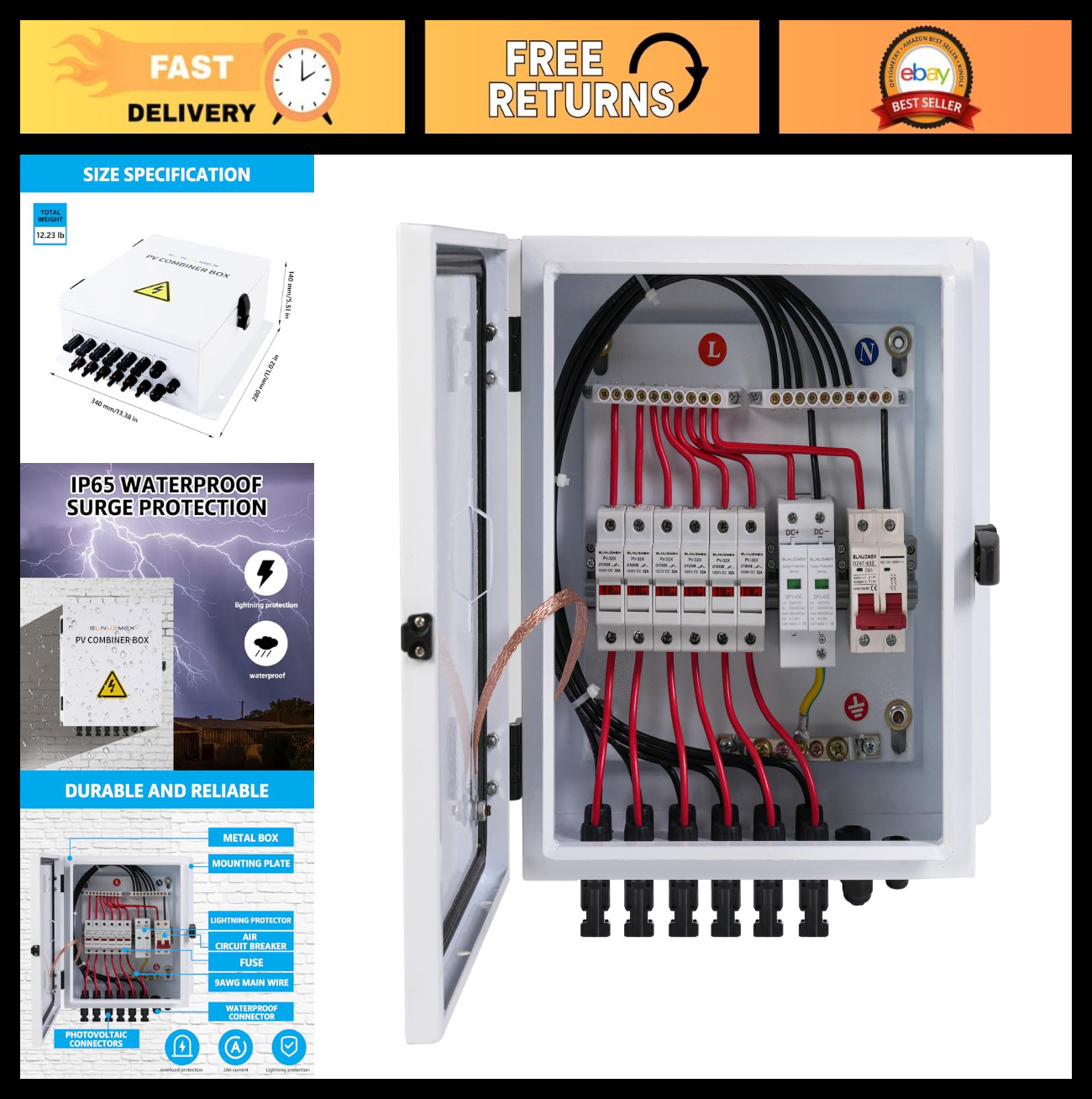
Choose this box when you need more than four inputs or you want protection that keeps pace with higher-current strings. The 20A fuses are heavier than the fuses in the smaller unit, and the lockable IP65-rated metal enclosure handles outdoor exposure well. Pre-wired terminations and a built-in ground connector reduce the amount of extra wiring you have to do. The limitation is price: it is the more expensive option of the two, and if your setup never expands past four inputs, you will be paying for unused capacity.
Solar Combiner Box PV Combiner 63A Circuit Breaker 4 String
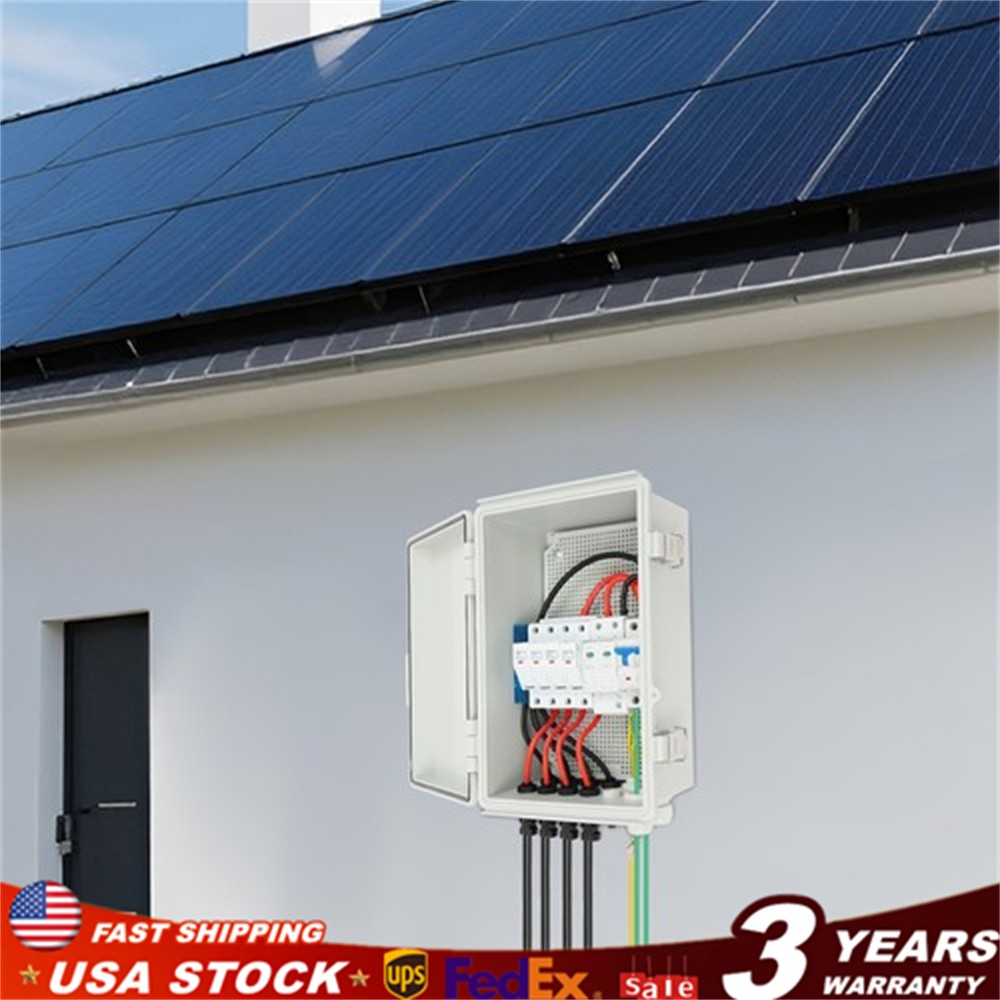
This combiner keeps things simple for a four-input array. It includes a 63A 550V circuit breaker, a high-voltage lightning arrester, and two surge protection devices, plus a 10A fuse for each string. The ABS and PC housing resists impact, corrosion, and wear while offering natural cooling, and the white finish keeps it straightforward. The limitation is expansion: there are only four inputs, so you cannot add a fifth or sixth string without a second combiner. Match it to a fixed array and it handles the job cleanly.
Final Choice by Use Case
If your array needs more capacity and higher-current protection, go with the 6 String Solar Combiner Box. If your array has a fixed, compact set of inputs, the Solar Combiner Box PV Combiner 4 String is the better fit. Both include a circuit breaker, so the real decision is about capacity, housing, and price.