The real question between IPANDEE's two MPPT solar charge controllers isn't whether to use MPPT-it's how big your system really is and how close you want to watch it. Both units target similar home, garden, automotive, and farm applications, but one is built to push more power and the other to keep things simple.
Quick verdict
If you need to feed larger loads and want headroom for growth, the IPANDEE 100A is the clear pick. If your off-grid setup is modest and you value a clean readout and lower spend, the IPANDEE 40A is the sensible pick.
| Product | Listed price | System voltage | Output | Display & monitoring |
|---|---|---|---|---|
| IPANDEE 100A MPPT | USD 326.00 | 12V / 24V / 36V / 48V auto | 100A | LCD, RS485, optional Bluetooth + SolarMate app |
| IPANDEE 40A MPPT | USD 105.99 | 12V / 24V | 40A | OLED, aluminum housing |
Where each product wins
- The IPANDEE 100A wins for larger arrays, higher battery voltages, and remote monitoring through the optional SolarMate app.
- The IPANDEE 40A wins for simpler, lighter-duty installations where a clear OLED display and an aluminum body matter more than extra capacity.
Product notes
IPANDEE 100A MPPT Solar Charge Controller
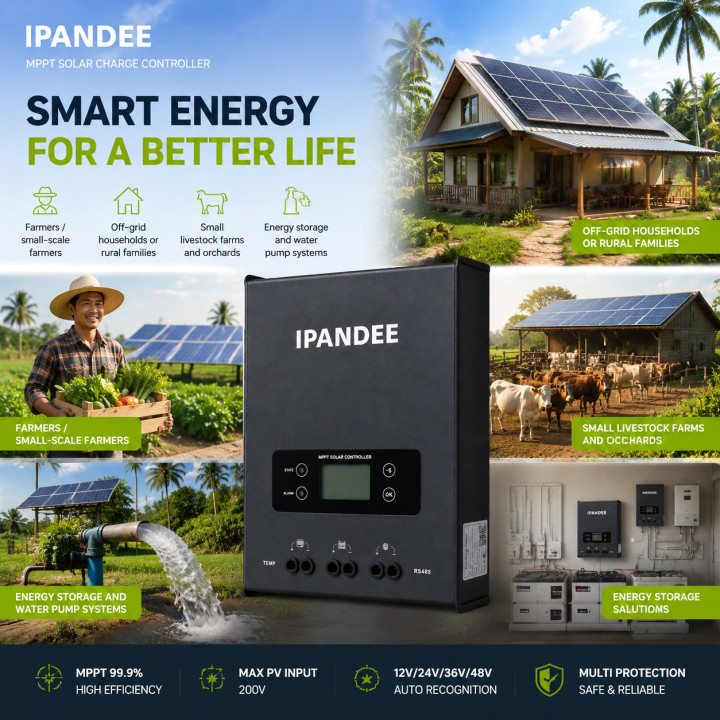
The 100A controller's best reason to choose it is the way it combines high-current output with a full monitoring package-LCD, RS485, and optional Bluetooth for the SolarMate app. The LCD screen shows charging status and battery data at a glance, and the optional module lets you check the same details from a phone instead of walking to the equipment. That makes it a strong fit for a larger off-grid array where remote visibility is worth something. The limitation is that its capacity is meaningful only when your system is big enough; on a small setup, you'd likely leave most of its capability unused.
IPANDEE 40A MPPT Solar Charge Controller
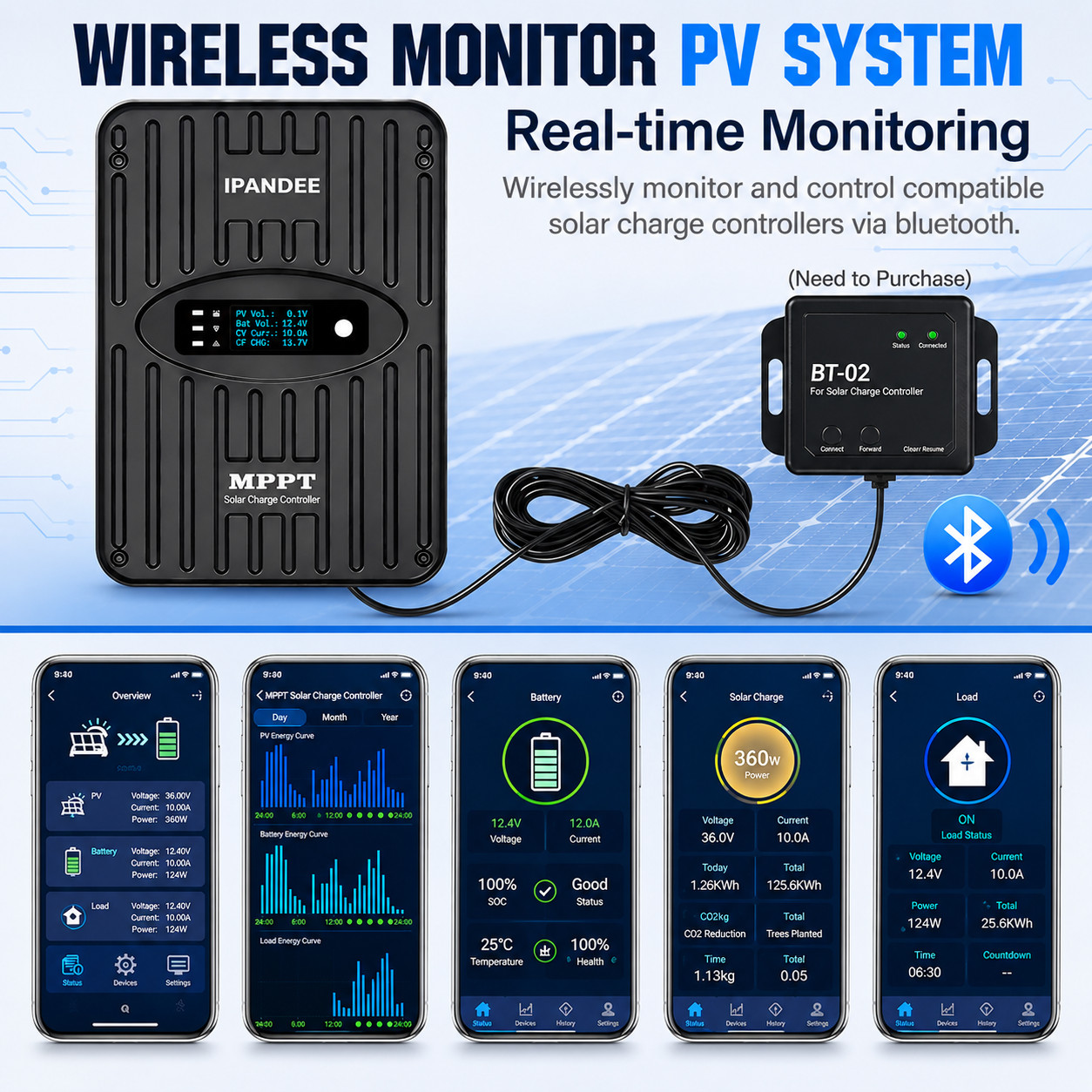
The 40A controller earns its place with a readable OLED display and an aluminum housing designed to run cooler, plus a stated 6-year design life. It's a satisfying choice for straightforward 12V/24V builds where you don't need app connectivity or remote data logging. The OLED gives you clear status readouts, while the aluminum shell suits dusty, warm environments. The real limitation is that it's a 12V/24V unit only; if you later move to a higher battery voltage, you'll be shopping for a new controller anyway.
Final choice by use case
Pick the IPANDEE 100A if you're outfitting an agricultural building or home backup system with heavy daytime loads and a battery bank that could grow. The $326 price earns its keep when you need the extra muscle and monitoring features.
Pick the IPANDEE 40A if you have an off-grid vehicle or smaller home setup with modest loads. At $105.99, it keeps your solar balance-of-system budget in check without forcing you to pay for capacity you won't use.