Choosing between two MPPT charge controllers can feel like a math problem before you even touch a wire. The real question is whether your solar array needs the higher input voltage of the IPANDEE controller, or whether a simpler, lower-priced controller covers what your system actually demands. Both are built to regulate a solar array, but their prices sit $128.20 apart. That gap reflects a meaningful difference in how much PV input each one is built to handle.
Quick verdict
Go with the IPANDEE controller if you have a larger PV array, want to keep the option of different battery chemistries, or need extra voltage headroom. Choose the 4800W model if your solar setup is more modest and you want a lower cost. Both are new, black, LCD-equipped units, so the real decision comes down to system size and cost.
At a glance
| Feature | IPANDEE 5200W 250V | 4800W USB MPPT |
|---|---|---|
| Price | $153.99 | $25.79 |
| Price bar | ||
| Listed power | 5200W | 4800W |
| Current output | 100A | 100A |
| Charging mode | MPPT | MPPT |
| Display | LCD | LCD |
Where each product wins
IPANDEE wins for high-voltage arrays. The 250V input gives this controller more headroom for larger solar arrays. It suits agricultural, automotive, and home/garden use. The 4800W controller is priced well below the IPANDEE and still handles the same 100A output. The built-in USB port is a practical extra.
Product notes
IPANDEE 5200W 250V 100A MPPT Solar Charge Controller
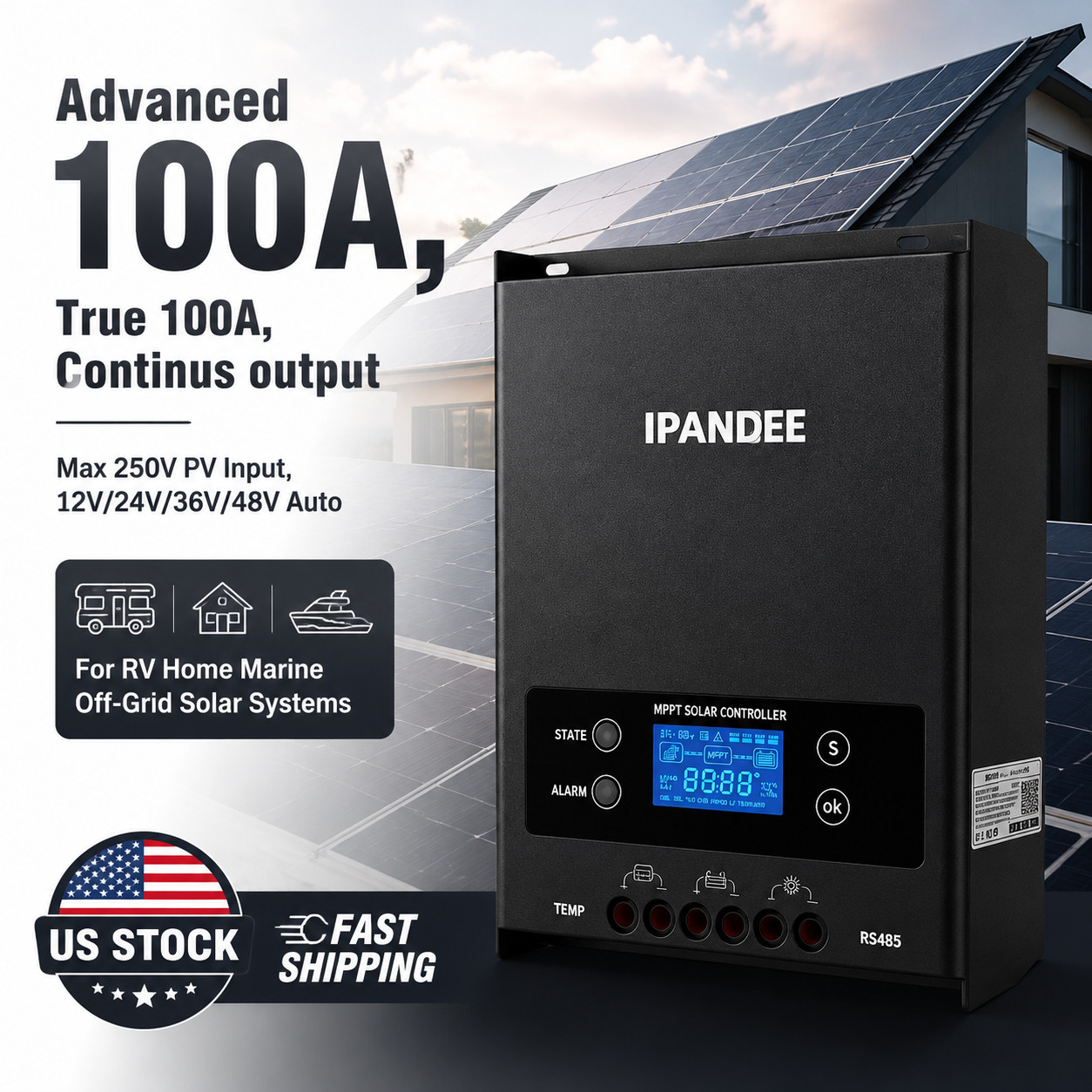
This is the controller to choose when your PV array is built for higher voltage. The 250V input and 5200W listed power support larger strings, and the multi-curve maximum power point tracking is meant to keep pulling energy as sunlight changes. It also works with FLD, LiFePO4, SLD, Gel, AGM, and other lead-acid and lithium batteries, so you are not tied to one chemistry. The flip side is the $153.99 price. That is $128.20 more than the 4800W model, so it makes sense only if you actually need the extra voltage headroom and battery flexibility. For an agricultural, automotive, or home/garden installation with a bigger array, the added cost buys capability you could not get from the lower-priced unit.
4800W 100A MPPT Solar Charge Controller USB 12V 24V 36V 48V PV Battery Regulator
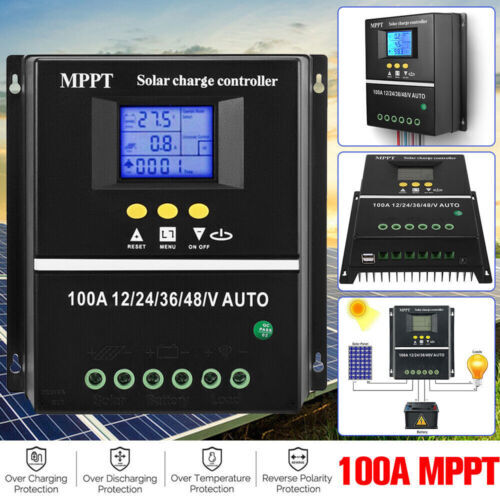
Anyone running a smaller solar array can get a lot of function from this 4800W controller without spending a lot. At $25.79, it includes a backlit display and a USB port for small charging tasks. It offers seven operating modes, including charging, light control, light with time delay, universal control, manual control, timing, and test modes, so you can tailor the behavior to your system. The trade-off is the ceiling: the listed power tops out at 4800W, while the more expensive IPANDEE controller adds a higher input voltage. That makes it a better match for compact PV strings and simpler setups. If you do not need high-voltage input, this controller keeps your upfront cost low while still tracking maximum power.
Final choice by use case
Choose the IPANDEE 5200W for a big solar array, a battery bank that may include lithium, or any setup where the higher voltage keeps your wiring options open. Choose the 4800W model for a smaller PV array, a lower upfront cost, or a system where flexible operating modes matter more than maximum voltage. This match-up is not about one being universally better; it is about matching the controller to the power your panels can feed it and the battery chemistry you plan to use.