Choosing between two MPPT solar charge controllers usually comes down to output versus price. That's what makes this matchup interesting: the controller with more output is the one with the lower listed price, so the decision shouldn't be driven by budget alone. The real question is what your system needs around voltage, current, and battery compatibility.
Quick verdict
Every off-grid setup is different, but the decision here comes down to whether you need explicit battery chemistry support or more current and voltage flexibility. The IPANDEE MPPT 40A fits the first situation. The 4800W 100A MPPT fits the second.
At a glance
| Consideration | IPANDEE MPPT 40A | 4800W 100A MPPT |
|---|---|---|
| Listed price | USD 105.99 | USD 25.79 |
| Current output | 40A | 100A |
| System voltage | 12V / 24V | 12V / 24V / 36V / 48V |
| Display | OLED | LCD |
| Charging mode | MPPT | MPPT |
Where each product wins
The IPANDEE MPPT 40A wins when your battery chemistry and voltage range are already locked in. The 4800W 100A MPPT wins when your panels and battery bank need to work across a wider range of system voltages and you want more headroom for charging current.
Product notes
IPANDEE MPPT 40A Solar Charge Controller
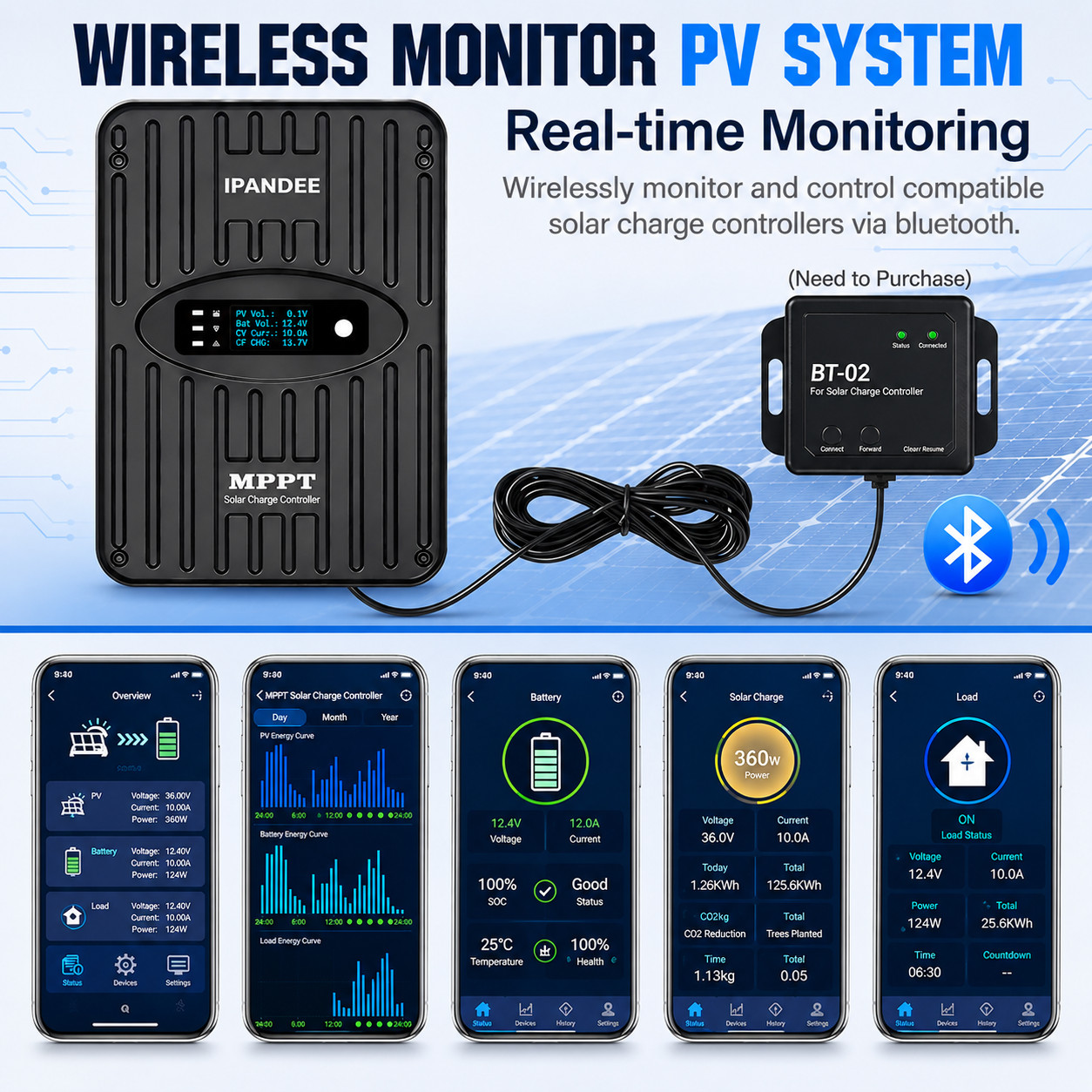
The IPANDEE 40A controller is listed at USD 105.99 and is built for 12V and 24V systems with lead-acid or lithium batteries. That explicit battery compatibility makes it a clean match if you already know your bank chemistry and don't want to guess. The OLED display and industrial-grade aluminum housing are both part of the listed package, so the readout and enclosure are included. The 40A current output is the main spec to keep in mind. If your array is sized so charging current stays at or below 40A, this controller's ceiling won't be the weak link. The limitation is the reverse: when your panels or loads call for more current, the 40A maximum is the first thing you'll hit, and no amount of MPPT tracking changes that.
4800W 100A MPPT Solar Charge Controller
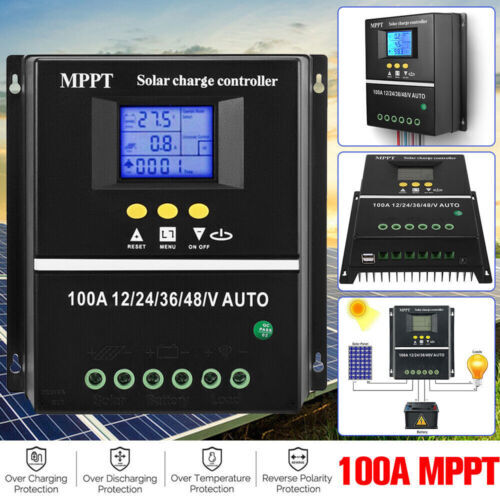
The 4800W controller carries a 100A current output and a listed price of USD 25.79, putting a much higher current ceiling on the table for a lower listed price. It also covers 12V, 24V, 36V, and 48V systems, so it can follow panels and battery banks that a narrower controller can't. The LCD display with backlight and the panel keys are built into the package, and the controller lists seven operating modes, including light control and timing modes. One limitation to note: the test mode is factory-only, so that mode isn't part of daily charging. If you don't need the extra voltage range or the higher current, this controller is more capability than you'll use.
Final choice by use case
For a bank where battery chemistry is already defined, the IPANDEE MPPT 40A is the right mount. For a build that needs a wider range of system voltages and more current headroom, the 4800W 100A MPPT gets the nod.