Choosing a power meter for energy management usually starts with a basic question: how much of your home's electrical system do you want to watch? A single-circuit monitor can tell you what one appliance is doing, while a panel-level monitor with multiple sensors can map individual circuits. The four products below span that range, with listed prices from $17.99 to $221.91. Here's how to match each one to your setup.
Quick take
The SONOFF LCD Smart Power Meter Switch is the least expensive listed option and the one with an on-device LCD readout. The Smart Home Energy Monitor with circuit-level sensors is the most expensive and offers the broadest circuit coverage. The SONOFF POWCT is a Wi-Fi split-CT monitor, while the Smart Home Energy Monitor with dual CTs adds bi-directional tracking for solar and battery setups.
Listed price comparison
| Monitor | Listed price | Price bar |
|---|---|---|
| SONOFF LCD Smart Power Meter Switch | USD 17.99 | |
| SONOFF POWCT Smart Power Meter Switch | USD 34.99 | |
| Smart Home Energy Monitor with dual CTs | USD 61.34 | |
| Smart Home Energy Monitor with circuit-level sensors | USD 221.91 |
Decision matrix
| Monitor | Coverage | App/control | Best use |
|---|---|---|---|
| SONOFF POWCT Smart Power Meter Switch | Split CT with 100A detection | eWelink, Alexa, Google Home | Room or appliance-group tracking |
| SONOFF LCD Smart Power Meter Switch | 20A max circuit monitoring | Wi-Fi plus LCD readout | Direct on-device reading for one appliance |
| Smart Home Energy Monitor with circuit-level sensors | 16 × 50A plus 2 × 200A sensors | Real-time power data | Whole-panel circuit mapping |
| Smart Home Energy Monitor with dual CTs | 2 × 120A CTs | Smart Life app | Solar/battery or two-load tracking |
Product notes
SONOFF POWCT Smart Power Meter Switch Energy Monitor Work with Alexa/Google Home
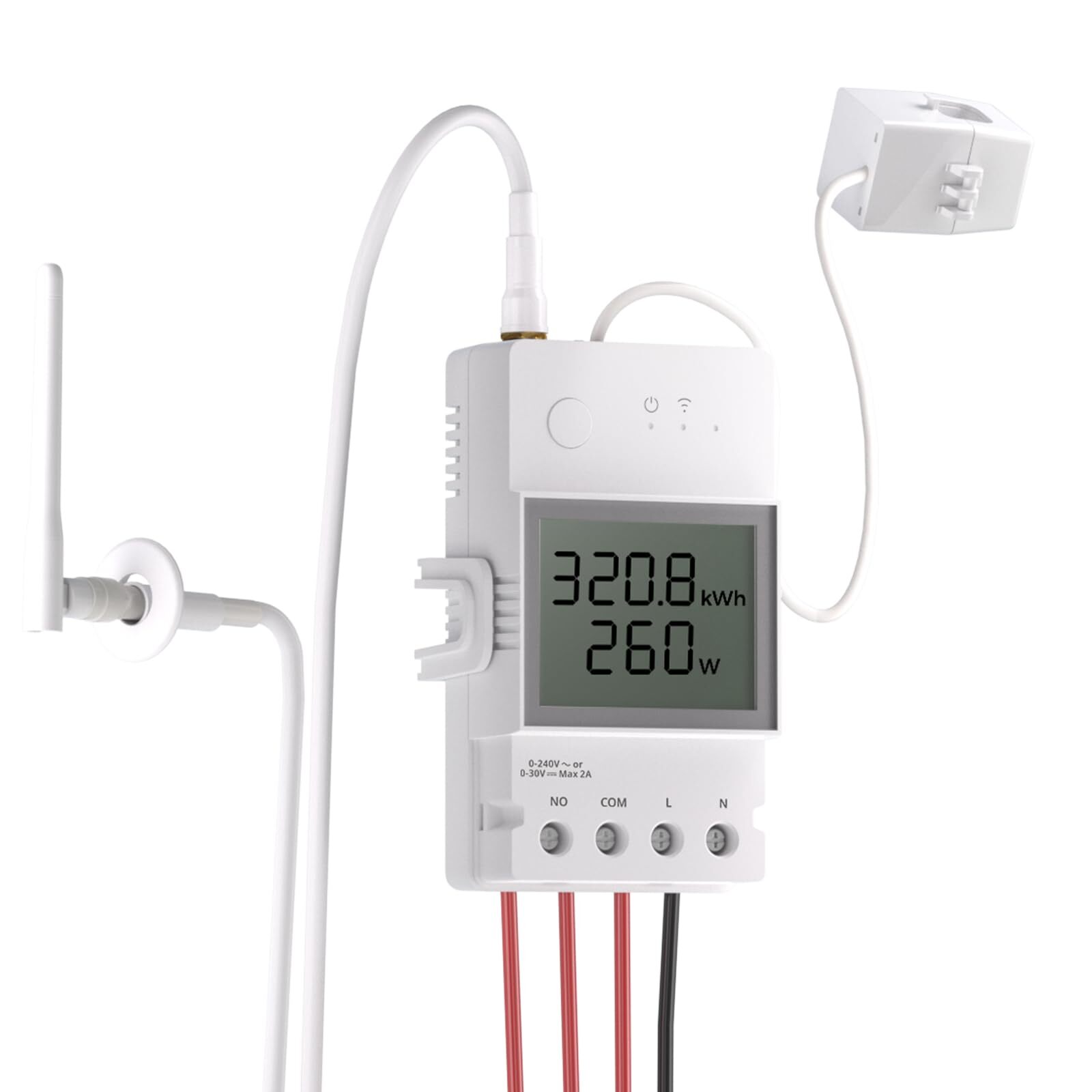
The monitor pairs a smart switch with a current transformer and an antenna. The split CT sensor is a useful fit for an indoor circuit-panel install, and 100A current detection lets you watch a larger appliance or a whole room. Voice control comes through Alexa and Google Home, with the eWelink app handling the connection. The trade-off is that the design gives you one monitoring point, so you won't see individual readings for separate branch circuits. If you need circuit-by-circuit data, the circuit-level monitor is organized around that job.
SONOFF LCD Smart Power Meter Switch 20A Max Power Monitoring Overload Protection
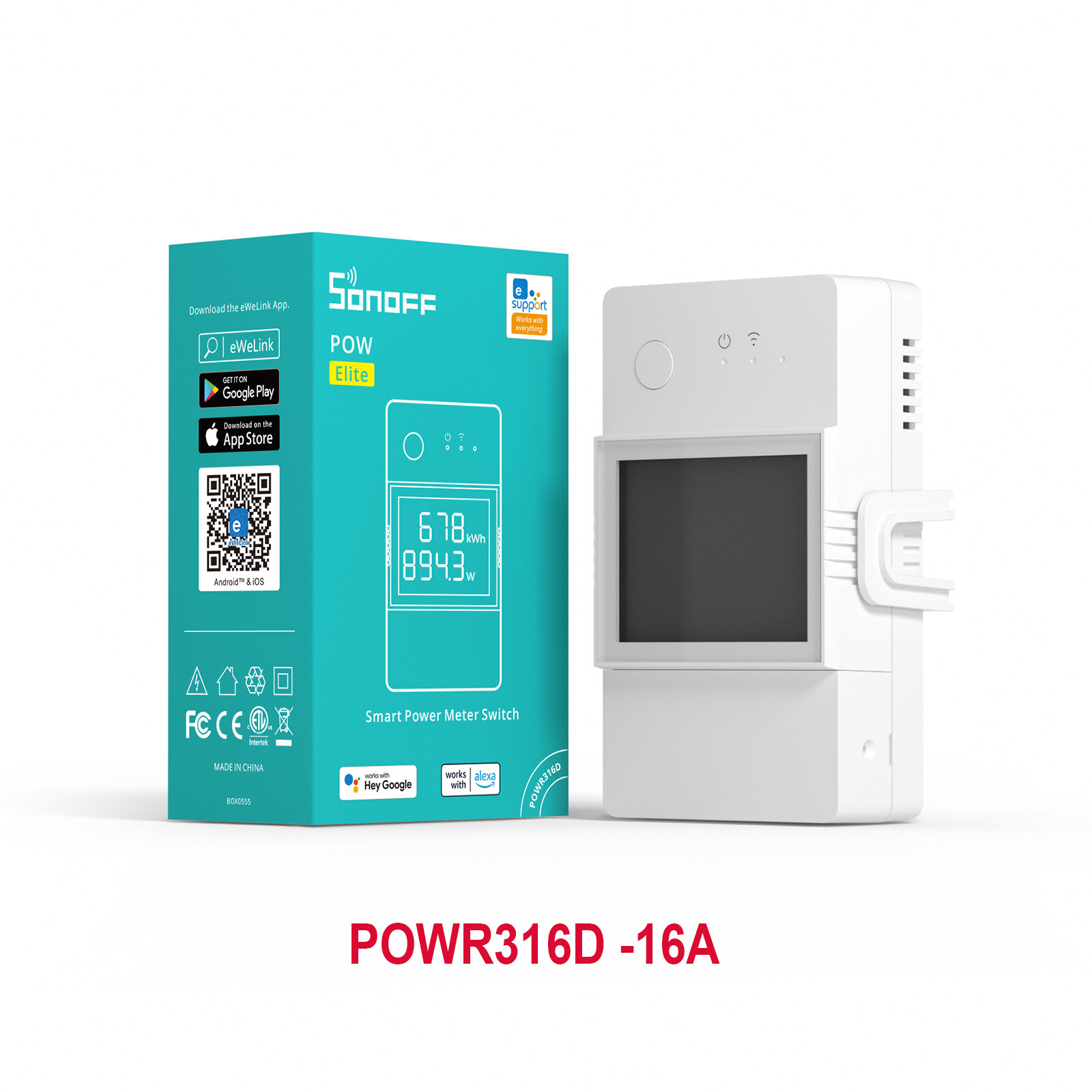
The LCD readout plus Wi-Fi makes it easy to use the monitor without opening an app. The display can show power, voltage, current, and cumulative energy, and the description points to six months of usage history in hourly increments with export to Excel. That makes it a strong choice when you want to check a specific appliance at a glance. The 20A max limit is the key constraint, so the unit is best understood as a single-circuit or single-appliance monitor rather than a whole-panel meter. For an on-device readout of one energy-heavy device, it's a direct option.
Smart Home Energy Monitor with 16 50A Circuit Level Sensors, Real-Time Power Usa
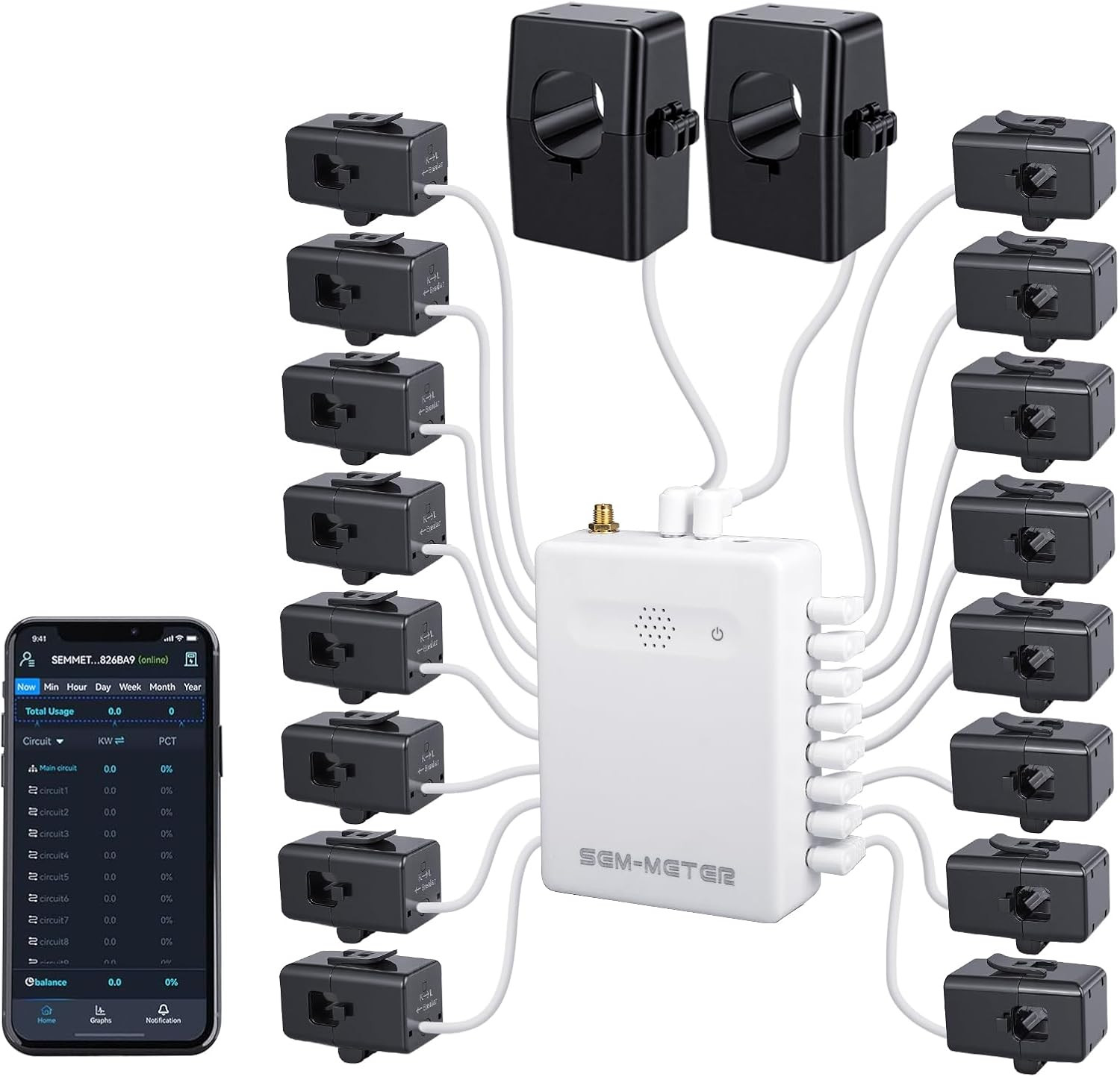
The unit is the most comprehensive listing here. It comes with a SEM-Meter, 16 50A circuit-level sensors, and two 200A sensors, and it is described for single-phase, split-phase, and three-phase setups. For a panel with many branch circuits, that lets you assign a sensor to each one and see real-time power per circuit. The clamp-on sensors are described as easy to install in most panels, which helps keep the job manageable. The obvious trade-off is the price and the degree of detail: if you only need to track one or two loads, this monitor is far more than that task requires. No batteries are included and none are required, so the unit is meant to be powered from the panel side.
Smart Home Energy Monitor with 2 x 120A CTs, Live Electricity Usage White
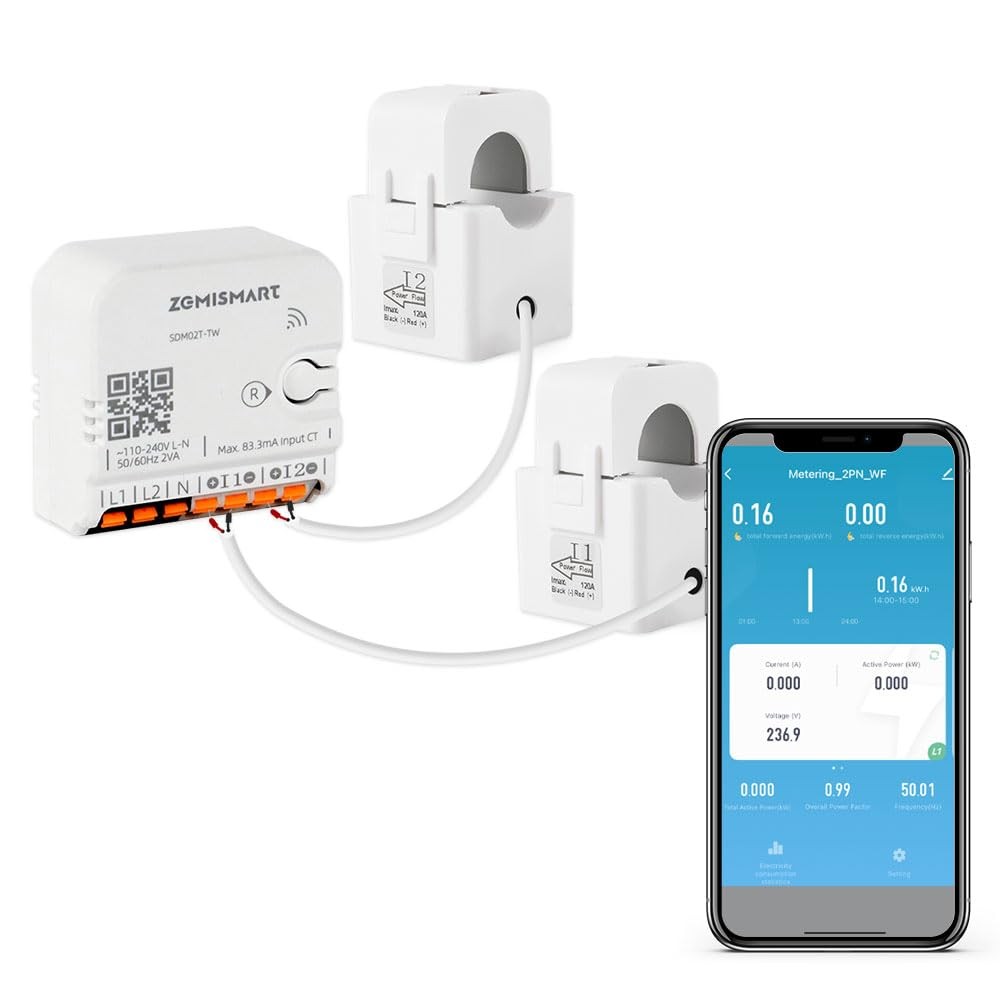
The monitor is oriented toward solar and battery storage setups, with bi-directional power reading built into its design. It ships with two split-core 120A CTs and connects through the Smart Life app, and the description mentions configurable reporting intervals plus real-time voltage, current, power, and total energy data. That makes it a good middle-cost option when you want two loads or a solar import/export view without paying for a multi-sensor panel monitor. The limitation is the two-channel design: you get two independent 120A inputs, not per-breaker visibility across a full panel. If panel-wide circuit mapping is the goal, the multisensor model is the better fit.
Final recommendation by use case
- See one appliance directly: SONOFF LCD Smart Power Meter Switch
- Map every branch circuit from the panel: Smart Home Energy Monitor with circuit-level sensors
- Track solar or battery flow with dual CTs: Smart Home Energy Monitor with dual CTs
- Control a split-CT monitor with Alexa or Google Home: SONOFF POWCT Smart Power Meter Switch