Solar BOS charge controllers are the middlemen of an off-grid power system, and picking the wrong one can leave you with an undercharged battery or a controller with more capacity than you'll ever use. The two PowMr regulators here sit at opposite ends of the price scale: a compact 30A PWM model at $6.99 and an MPPT model at $92.99. Your choice really comes down to charging approach, system size, and whether you need the extra performance MPPT offers.
Quick verdict
Go with the PWM controller for a straightforward solar setup that needs dependable three-stage charging. Choose the MPPT controller for a larger off-grid build where maximum power tracking and broader system voltage support justify the higher price.
At a glance
| 30A PWM Controller | MPPT Controller | |
|---|---|---|
| Price | USD 6.99 | USD 92.99 |
| Charging mode | PWM | MPPT |
| System voltage | 12V / 24V | 12V / 24V / 48V |
| Display | LCD | LCD |
Where each product wins
- The PWM controller is the better match for smaller installations where low price and straightforward charging matter more than high-current capability.
- The MPPT controller wins for larger off-grid systems, especially ones with a 48V battery bank or plans to add more panels later.
PowMr 30A PWM Charge Controller
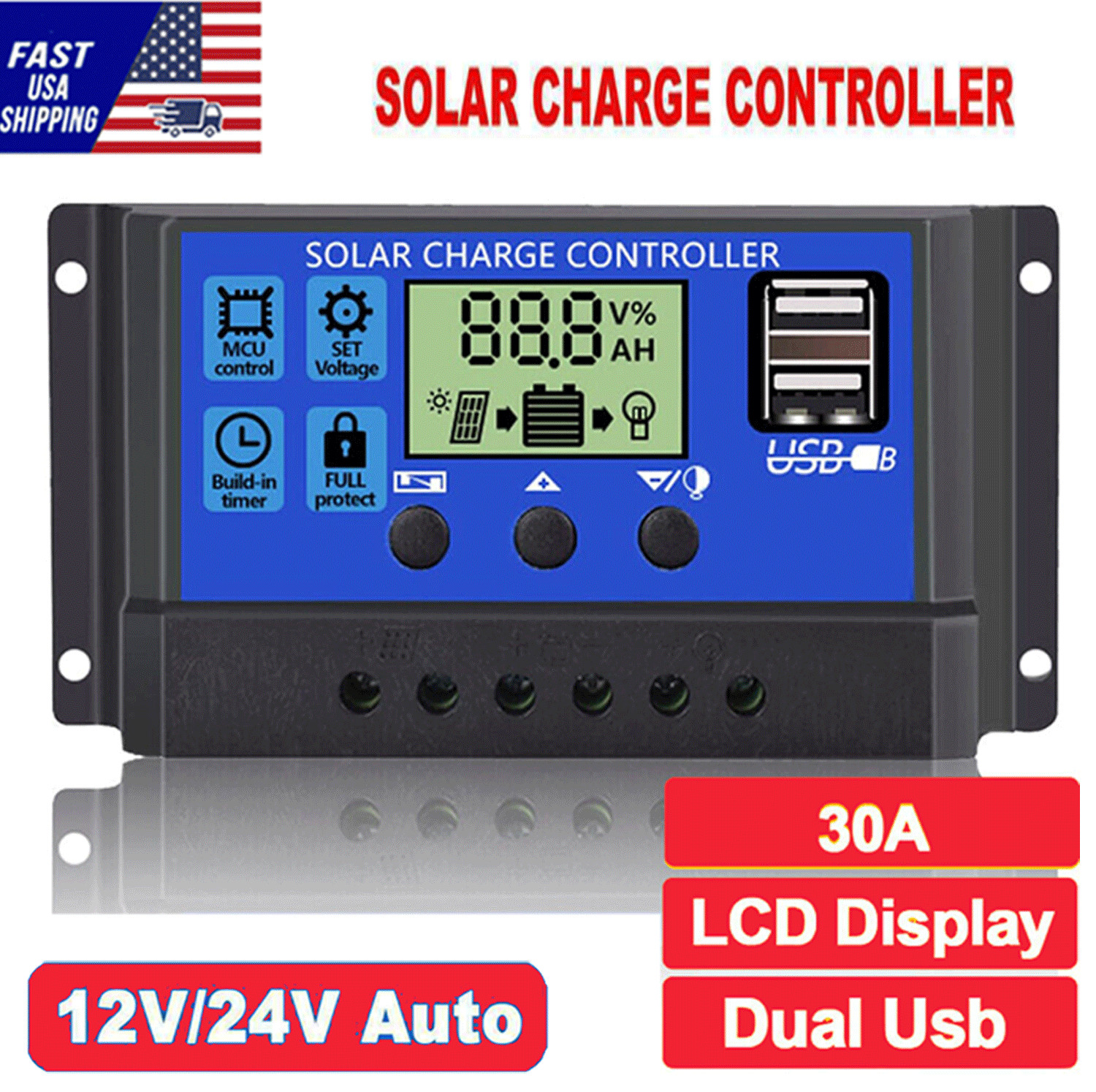
The PWM controller is the simpler, lower-cost option for a modest solar setup. It has an LCD display, three-stage PWM charge management, and built-in protections for short circuits, open circuits, reverse polarity, and overload. The dual USB output is handy for keeping phones or small accessories charged. The clear limitation is the 12V/24V system range and the current cap, so it won't suit a higher-voltage, higher-current bank. For most small home, garden, or commercial applications, that is a fair trade for the price.
PowMr MPPT Charge Controller
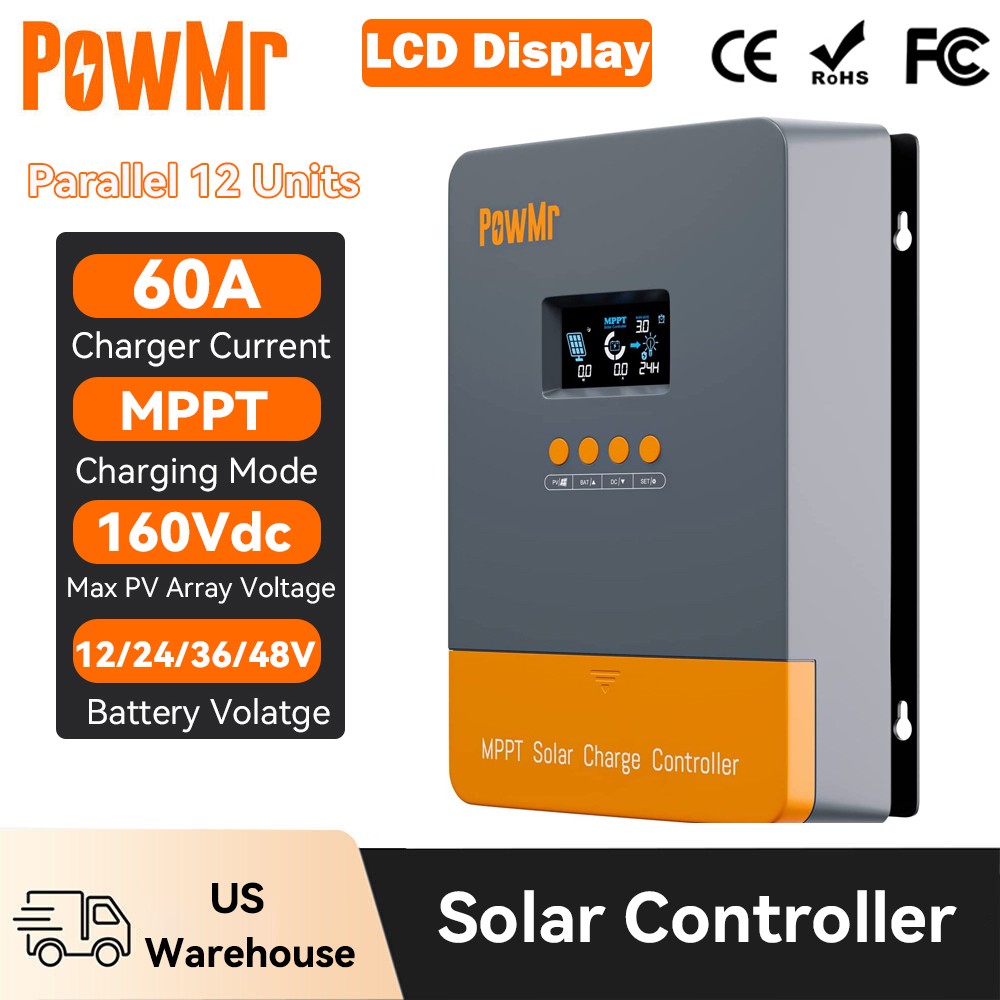
The MPPT controller is meant for installations with more demanding power needs. It tracks the panel's maximum power point and lists conversion efficiency up to 98.1%, which can make a real difference when every watt counts. It also supports lithium batteries and a maximum PV input of 150VDC, giving you more freedom when designing panels and battery banks. The 1-year warranty, 30-day return window, and 24/7 support are useful extras. The main drawback is the higher price, and if your setup stays small, you may not use the extra voltage support or current capacity. Buy it when the system is likely to grow.
Final choice by use case
Choose the PWM controller for a small, budget-minded installation where dual USB and simple charging cover your needs. Choose the MPPT controller for a larger off-grid system where conversion efficiency and room to expand matter more than keeping the upfront cost low.