Choosing a solar charge controller comes down to matching three things: the voltage of your battery bank, the maximum voltage your solar panels can produce, and the current your panels will feed into the system. Both the PowMr and IPANDEE controllers use Maximum Power Point Tracking (MPPT), so both are designed to pull more usable power from a solar array than a basic PWM charger. The real differences are the voltage ranges they support and how much headroom they give you for panel wiring. Let's see which one fits your setup.
Quick verdict
If you want a lower-priced controller that covers the most common residential battery voltages, the PowMr is the straightforward pick. If you need broader battery coverage and more room for panel wiring voltage, the IPANDEE is worth the extra money.
Comparison table
| Feature | PowMr MPPT | IPANDEE 60A MPPT |
|---|---|---|
| Price | $92.99 | $129.99 |
| Battery voltage | 12V / 24V / 48V | 12V / 24V / 36V / 48V |
| Max PV input | 150VDC | 200VDC |
| Current rating | Multiple amp options listed | 60A output |
| Display | LCD | LCD + LED indicator |
| Applications | Home / Garden | Home / Garden / Marine / Shed |
Where each controller wins
The PowMr wins on price and flexibility. It handles the three standard battery voltages and offers several current ratings, making it a single controller for a range of system sizes. If your system is a residential off-grid setup with panels that produce moderate voltage, this is the money-saving option.
The IPANDEE wins on capacity and headroom. Its higher maximum PV input lets you wire more panels in series, and the extra battery voltage option makes it useful for specialized banks. This is the controller to pick when the array is large or when your battery voltage is less common.
Product notes
12V/24V/48V 25/45A/60A/100A MPPT Solar Charge Controller Panel Battery Regulator
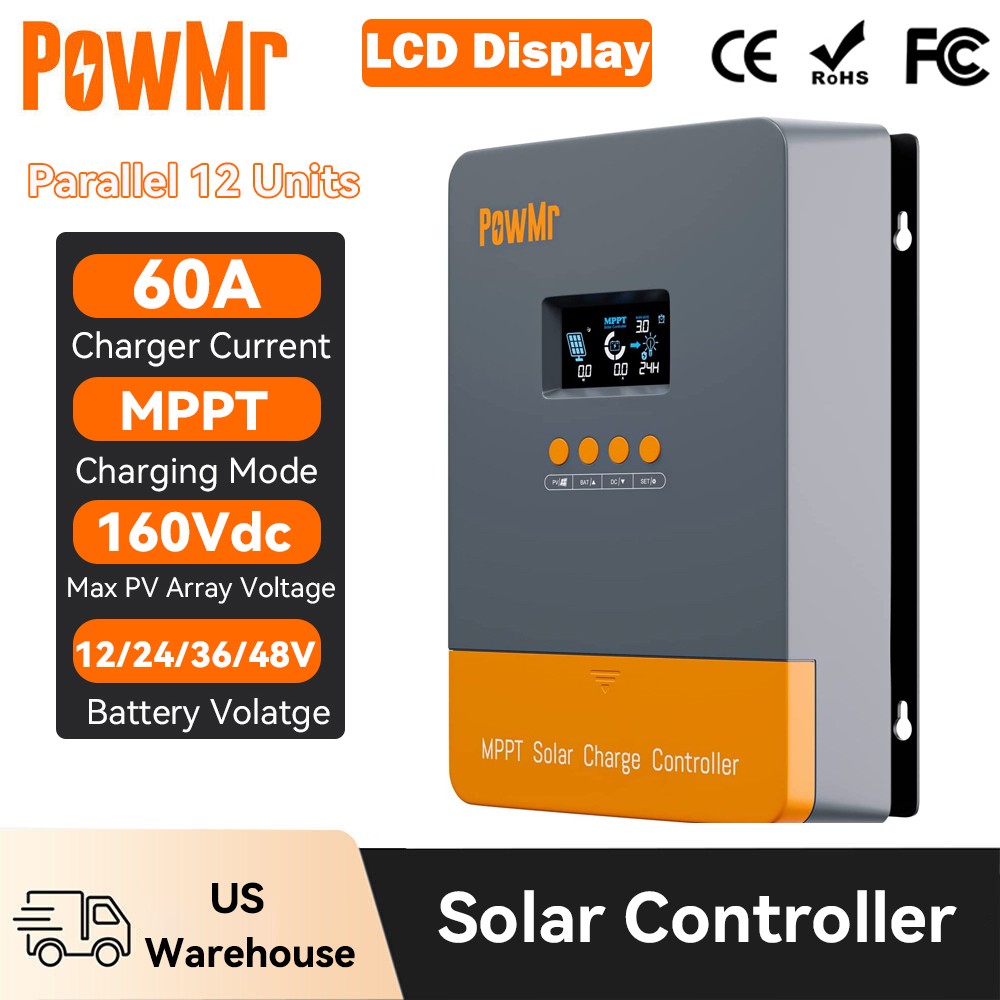
The PowMr is the low-priced, flexible option. Its title lists support for the three common battery voltages and a range of current ratings, so the same controller family can suit a small camper or a larger off-grid home. The LCD display is a nice convenience, and the price is the lower of the two. The main limitation is the maximum PV input voltage, which sits below the IPANDEE's ceiling. If your solar panels are wired to push past that limit, you'll need to change your series configuration. For most standard arrays, though, the PowMr is a simple, direct choice.
60A MPPT Solar Charge Controller for 12V/24/36/48V Battery Regulator Max.PV 200V
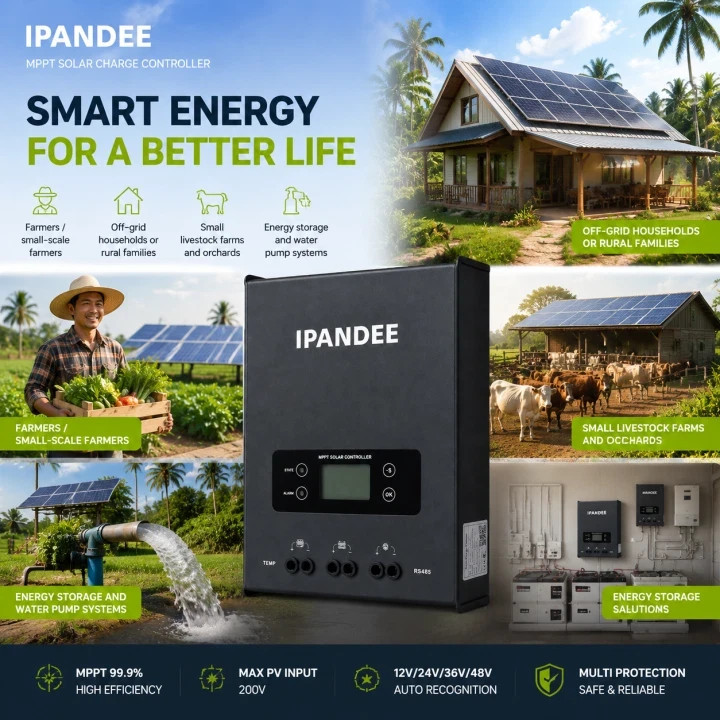
The IPANDEE is the higher-spec alternative. It adds a broader battery voltage lineup and a higher maximum PV input, which gives you more freedom when wiring solar panels in series. It is rated for marine and shed environments, so it's positioned for more demanding installation spots. For a marine installation, the IPANDEE's application coverage is a clear advantage. The trade-offs are the higher price and a single 60A output rating, meaning it's aimed at systems sized around that current. If your array needs the extra input voltage headroom or the added battery coverage, the IPANDEE justifies the cost difference.
Final choice by use case
For a residential setup with a 12V, 24V, or 48V battery and panels that stay within the PowMr's input limit, the PowMr saves you money while covering your charging needs. For a system built around a 36V battery, or one that needs extra panel voltage headroom, the IPANDEE is the controller to pick. Marine installations will also appreciate the IPANDEE's application coverage.