When you're wiring a solar array, the charge controller is the piece of the balance-of-system that decides how much of your panel's energy actually reaches the battery. The two 60A MPPT controllers here both handle 12V, 24V, and 48V banks, but they split on extra voltage support, battery presets, monitoring, and price. The Renogy Rover Lite is listed at $179.99, while the PowMr is listed at $92.99-a difference of $87. This guide compares them so you can pick by your system voltage, chemistry, and budget.
Quick Verdict
Choose the Renogy Rover Lite if you want 36V support, preset profiles for AGM, gel, flooded, and LiFePO4, plus RS485 communication. Choose the PowMr if you want the lower price, a built-in LCD display, and a support/warranty package for a home or garden installation on a 12V, 24V, or 48V battery bank.
Comparison
| Feature | Renogy Rover Lite 60A | PowMr 60A MPPT |
| Price | USD 179.99 | USD 92.99 |
| System voltage | 12V/24V/36V/48V | 12V/24V/48V |
| Max PV input | 150V (six 200W panels in series) | 150VDC |
| Battery presets | AGM, Gel, Flooded, LiFePO4, User Custom | Lithium supported |
| Monitoring/display | RS485; LCD-selectable presets | LCD display |
| Efficiency | >97% | Up to 98.1% |
Where Each Product Wins
Renogy Rover Lite wins for system voltage flexibility and battery presets. It is the only one of the two to list 36V support, and its charger presets cover the common lead-acid and lithium chemistries as well as a user custom profile. RS485 communication is useful if you want to connect the controller to a monitoring setup.
PowMr wins on price and everyday usability. At $92.99, it is $87 less than the Renogy. The LCD display makes local readings easy, and it includes a 1-year warranty, 24/7 technical support, and a 30-day return window-nice when you are setting up a home or garden solar system.
Product Notes
Renogy Rover Lite 12V/24V/36V/48V 60A MPPT
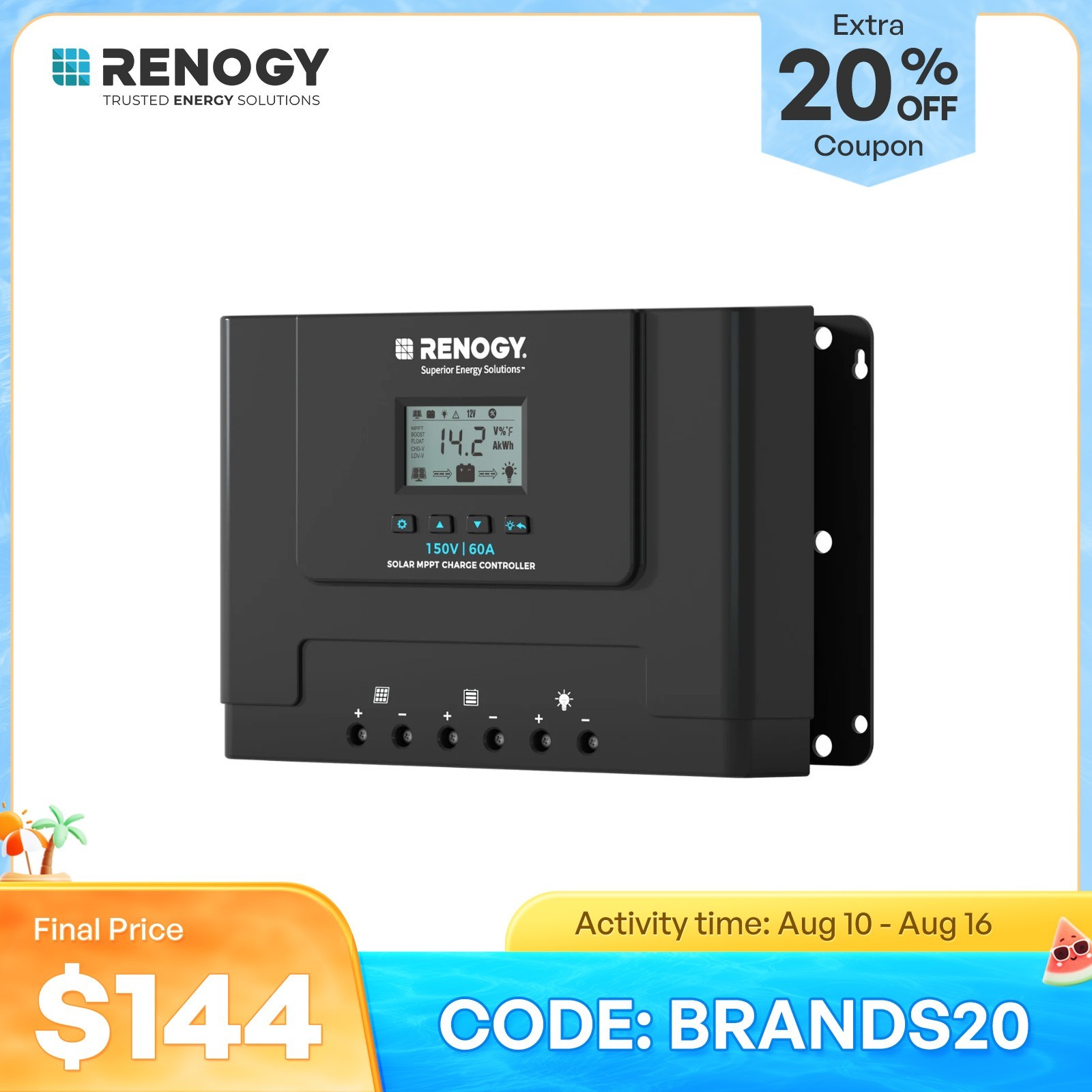
The Renogy Rover Lite is the more flexible voltage platform here. It runs on 12V, 24V, 36V, or 48V battery systems, so it can move with you if you later change bank voltage. The battery preset list is also broad: AGM, gel, flooded, lithium-iron phosphate, and a user custom option. With a 150V max solar input, it can connect six 200W panels in series, which helps reduce wire runs on larger arrays. RS485 communication gives you a serial monitoring link, and conversion efficiency is above 97%. The main limitation is price: at $179.99, it costs $87 more than the PowMr. Its IP32 enclosure and heat-sink cooling are workable, but not a reason to skip weather protection around your controller.
PowMr 12V/24V/48V 60A MPPT Solar Charge Controller
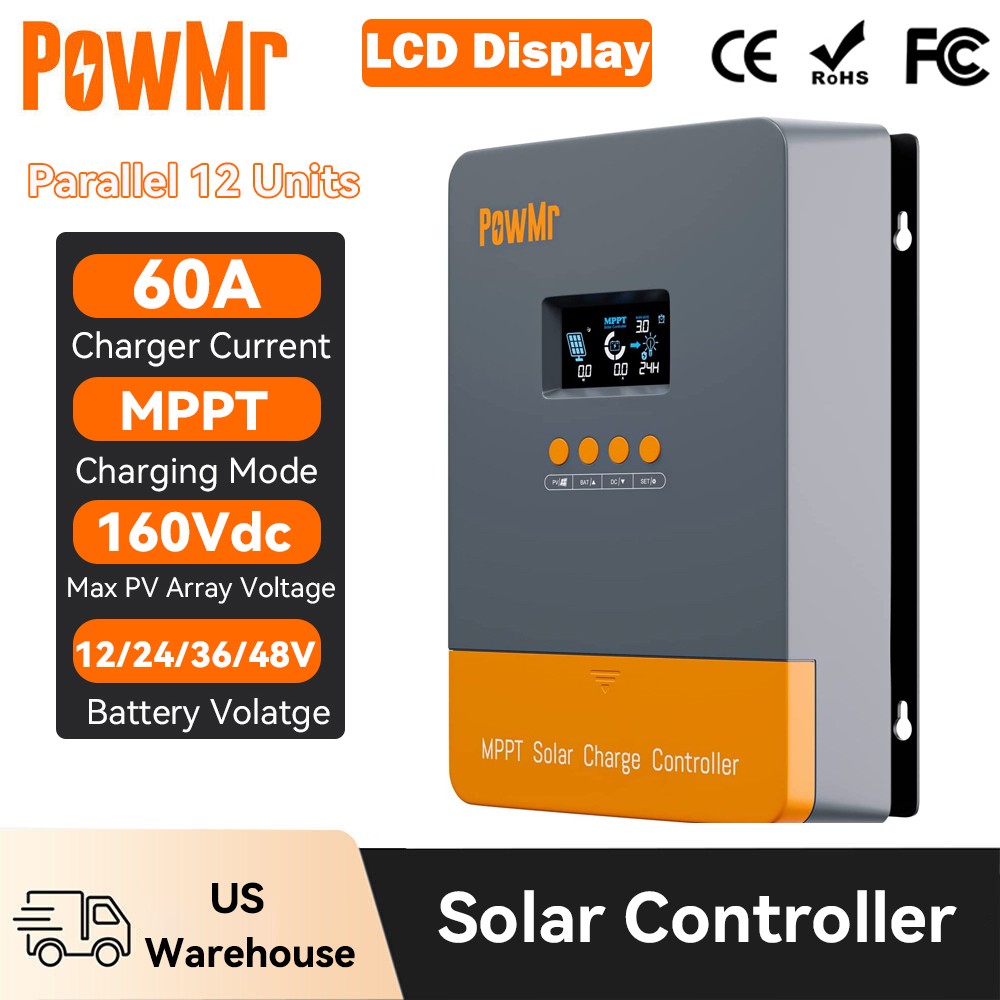
The PowMr costs $92.99, making it the more approachable option for a first-time off-grid build. It uses MPPT charging and lists a home/garden application, so it fits the typical cabin, shed, or RV setup. The LCD display lets you see operating information, and it supports three-stage battery charging, lithium batteries, a 1-year warranty, 24/7 expert support, and a 30-day return window. That support package is a real plus if you are installing solo. The limitation is voltage compatibility: it lists 12V, 24V, and 48V, but not 36V, so mid-voltage users will need to look at the Renogy instead. The quoted efficiency goes up to 98.1%.
Final Choice by Use Case
Pick the Renogy Rover Lite if you need 36V support, want preset charging profiles for AGM, gel, flooded, or LiFePO4, and plan to use RS485 monitoring.
Pick the PowMr if you want to spend $87 less, prefer an LCD display for local readouts, and are running a home or garden setup on 12V, 24V, or 48V with solid support backup.