Choosing between a home energy monitor and a facility-grade power meter can feel like comparing a thermometer to a weather station. Within power meters energy management, both devices measure electricity, but they answer different questions. The Schneider PowerLogic PM8000 is built to uncover power-quality conditions in a critical facility, while the Blindsmart Smart Home Energy Monitor is built to show live power usage in a home and support solar/battery flow. The right choice comes down to where you are monitoring and how deep you need the analysis to go.
Quick verdict: If you need detailed power-quality analysis, disturbance direction detection, and flexible communication in a facility, choose the Schneider PowerLogic PM8000 (METSEPM8240). If you need a lower-cost way to watch live household consumption and solar/battery energy flow from your phone, choose the Blindsmart Smart Home Energy Monitor with 2 x 120A CTs.
| Product | Listed Price | Best Fit |
|---|---|---|
| Schneider PowerLogic PM8000 (METSEPM8240) | USD 1,720.00 | Power-critical facilities needing power-quality analysis, multiple communication ports, and a graphical display |
| Blindsmart Smart Home Energy Monitor with 2 x 120A CTs | USD 61.34 | Homes, solar, and battery setups wanting app-based live energy monitoring |
Where Each Product Wins
- Schneider PowerLogic PM8000: It wins when your facility needs more than a usage readout. The integrated color graphical display, multiple communication ports, onboard power-quality analysis, and patented Disturbance Direction Detection make it a troubleshooting tool as much as a meter. Its revenue-grade accuracy and third-party energy-accuracy certification add confidence for critical infrastructure.
- Blindsmart Smart Home Energy Monitor: It wins for everyday visibility. Bi-directional monitoring for solar and battery storage and Smart Life app integration answer the question "what is my home using right now" without flooding you with facility-level data.
Product Notes
Schneider PowerLogic PM8000 (METSEPM8240)
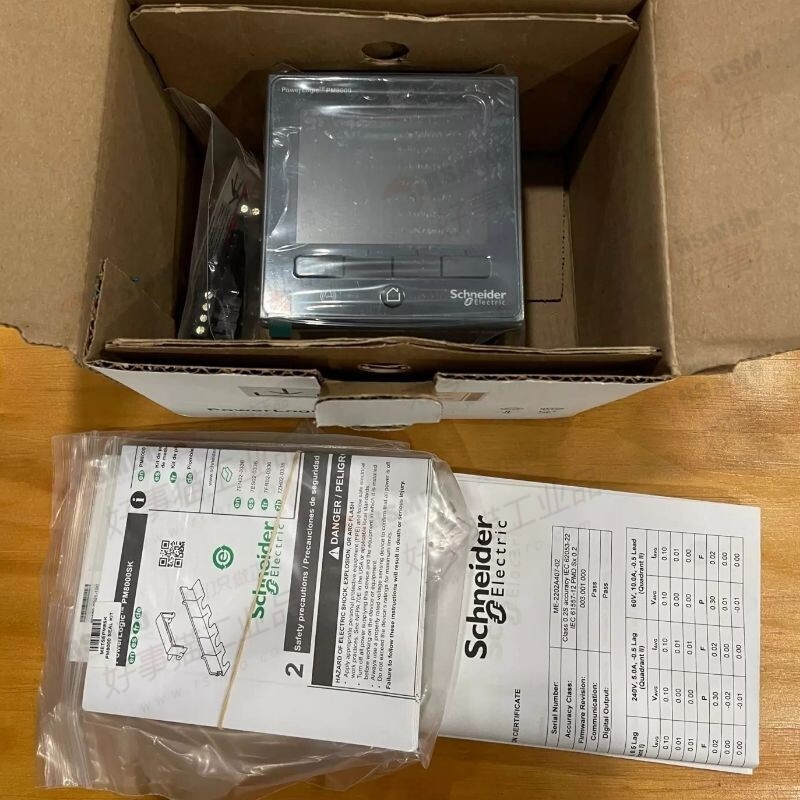
If your job is keeping a power-critical facility reliable, this meter is built to do more than count kilowatt-hours. It reveals complex power-quality conditions and helps you act on them, with an integrated color graphical display, onboard power-quality analysis, and multiple communication ports. The patented Disturbance Direction Detection helps show where a disturbance originates, and the modular ION architecture lets you tailor the meter to nearly any application. Third-party laboratories have certified its energy accuracy, which makes sense for anyone tracking revenue-grade data. The trade-off is scope: this level of detail is intended for facilities where power quality matters, not for a home owner who mainly wants to know what an appliance is drawing.
Blindsmart Smart Home Energy Monitor with 2 x 120A CTs
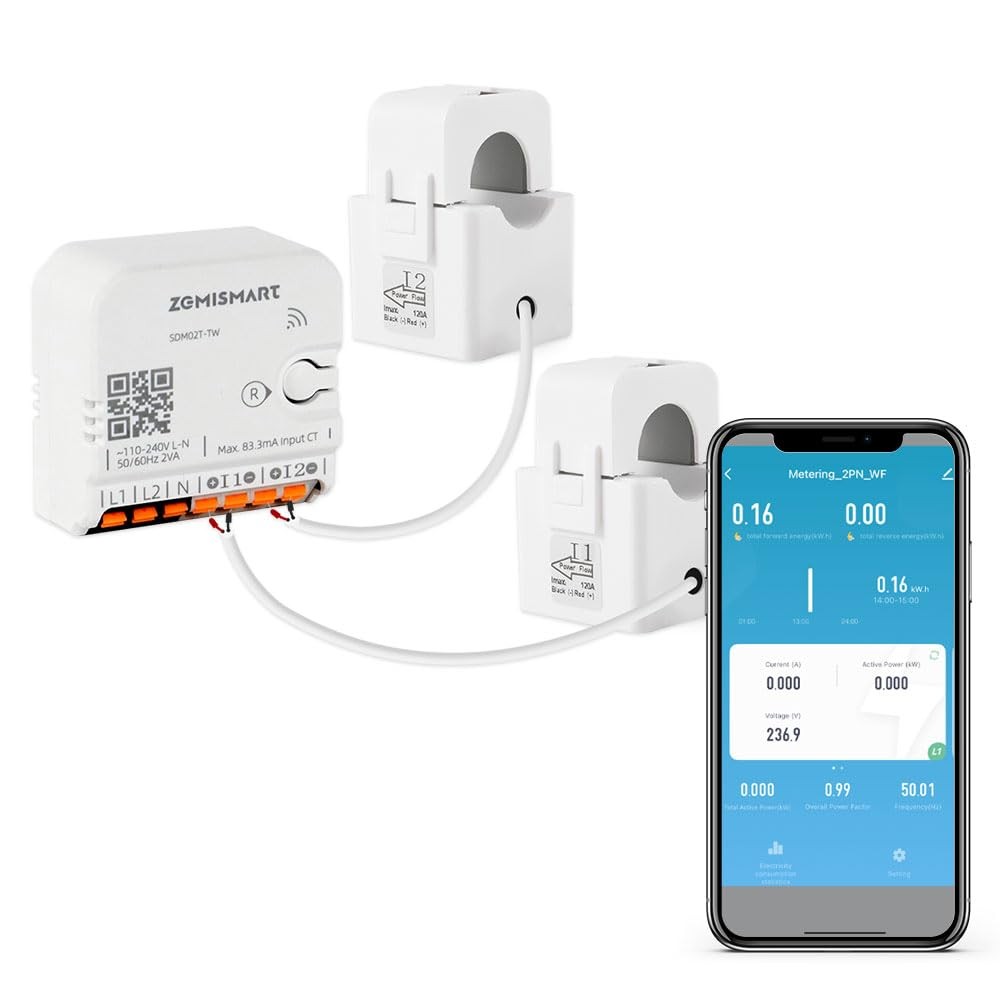
For a household, this monitor keeps the focus on live usage. The two 120A current transformers use a split-core design that avoids complex wiring. It tracks voltage, current, power, and total energy, and the configurable reporting intervals help keep the data feed stable. Because it supports bi-directional monitoring, it fits neatly into a solar or battery storage setup, and the Smart Life app gives you real-time analysis and home automation integration. At $61.34, it is the less expensive option in this pairing. The limitation is that it is not built for the facility-grade power-quality diagnostics, communication ports, and custom analysis that the Schneider PM8000 provides. For everyday answers about energy consumption, that is usually enough.
Final Choice by Use Case
Choose the Blindsmart Smart Home Energy Monitor if you want live usage data in an app, solar/battery monitoring, and a straightforward home installation. Choose the Schneider PowerLogic PM8000 (METSEPM8240) if you need power-quality insights, revenue-grade accuracy, and the flexibility to connect to facility systems. The two meters are not really rivals; they are answers to different energy management questions.