Choosing a power meter for energy management means weighing how much power-quality visibility you need against what you want to spend. The Schneider PowerLogic PM8000 (model METSEPM8240) and the GE PQMII-T20-C-A both handle core measurements like voltage, current, frequency, and total harmonic distortion, but they sit at very different price points and feature levels. One is a new meter with a rich graphical interface and advanced diagnostics; the other is a used, straightforward meter with analog outputs and a backlit display.
Quick Verdict
For a new, all-in-one power quality meter with an integrated color display, web interface, and revenue-grade accuracy, the Schneider PowerLogic PM8000 is the stronger choice. For a lower-cost meter that still provides essential power-quality readings and includes analog transducer outputs for integration, the GE PQMII-T20-C-A is a smart pick.
Comparison Table
| Product | Listed Price | Price Bar | Condition | Highlights |
|---|---|---|---|---|
| Schneider PowerLogic PM8000 (METSEPM8240) | USD 1,720.00 | New | Integrated display, web interface, power-quality analysis, disturbance direction detection | |
| GE PQMII-T20-C-A | USD 649.99 | Used | 8A @ 250VAC relay outputs, 4-20 mA analog outputs, four digital/logic inputs, RS485 Modbus RTU |
Where Each Product Wins
Where the Schneider PowerLogic PM8000 Wins
The Schneider unit is built for operators who want a modern, new power meter. Its integrated color graphical display and web interface make it easy to review power-quality data without additional software. The onboard power-quality analysis and patented disturbance direction detection provide insight into where and when issues occur, which can be valuable for troubleshooting sensitive equipment.
Where the GE PQMII-T20-C-A Wins
The GE PQMII-T20-C-A's big advantage is its listed price. At $649.99, it is much lower than the Schneider meter's $1,720.00, yet still delivers the core measurements needed for basic energy management. The included T20 option provides three 4-20 mA analog outputs, and the C option adds four programmable digital/logic inputs. RS485 Modbus RTU makes it simple to connect to existing monitoring systems.
Product Notes
Schneider PowerLogic PM8000 (METSEPM8240)
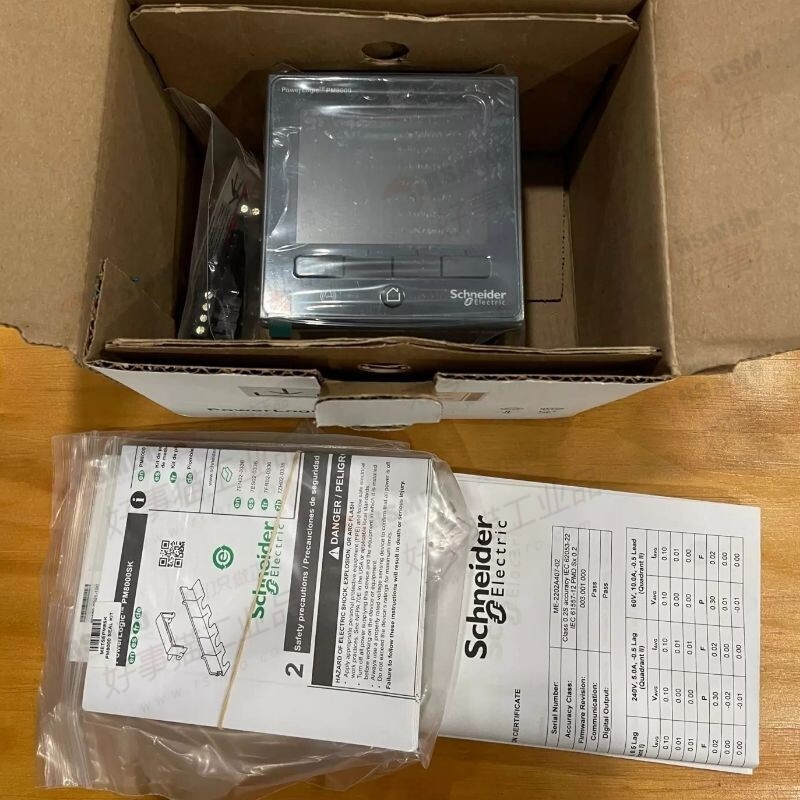
If you want to avoid the hassle of sourcing a used unit, the Schneider PowerLogic PM8000 arrives as new equipment. The integrated display is large and graphical, and the web interface allows you to check power quality from any browser. With revenue-grade accuracy and modular ION technology, it can adapt to a range of applications, from basic metering to detailed power-quality analysis. The main limitation is price: at $1,720.00, it is over a thousand dollars more than the GE unit, which may be hard to justify if you only need basic readings.
GE PQMII-T20-C-A
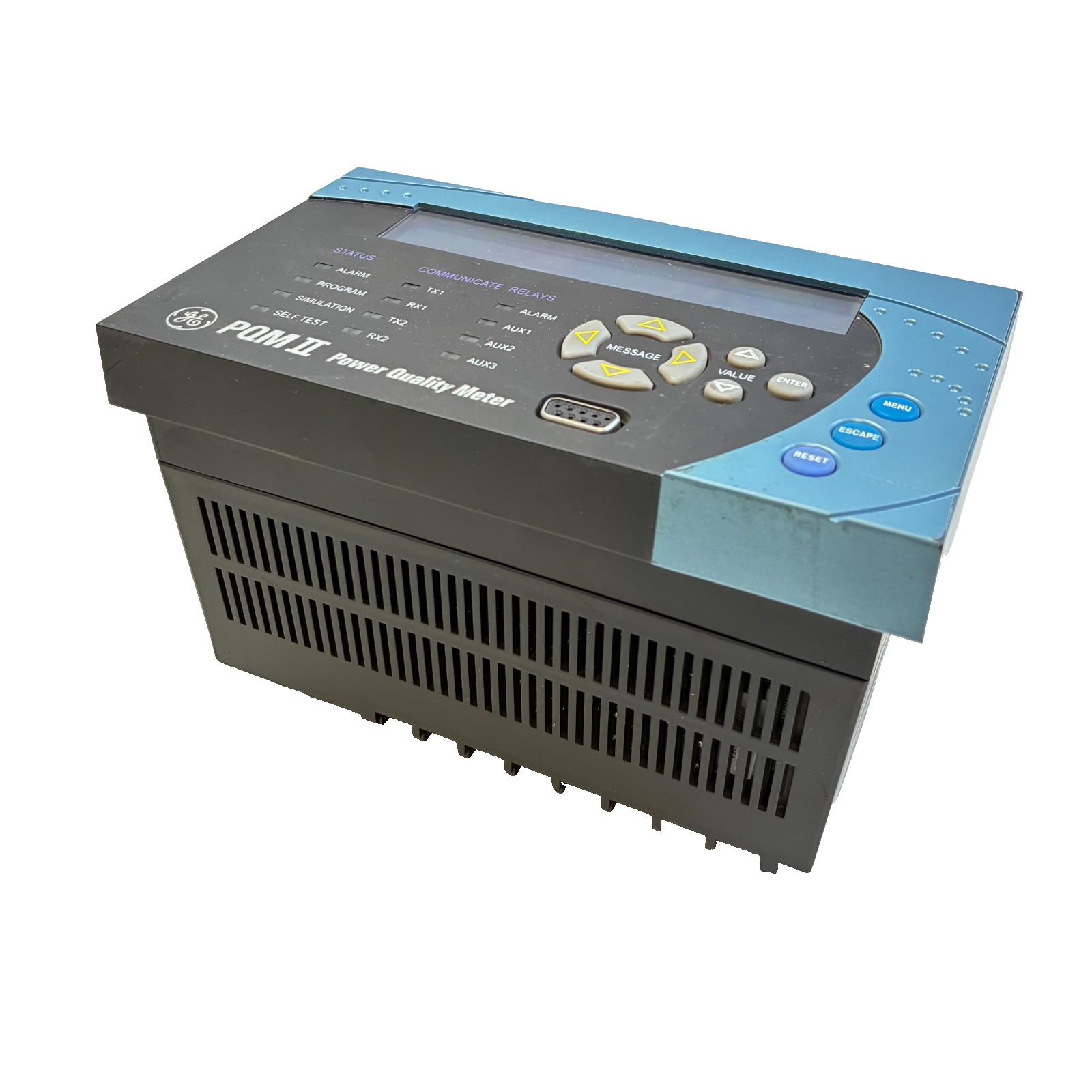
The GE PQMII-T20-C-A is a straightforward workhorse that covers the essentials. This used unit is described as fully functional and includes three 4-20 mA analog transducer outputs and four digital/logic control inputs, making it a good candidate for direct integration with industrial control panels. The backlit 40-character LCD is simple but readable, and the RS485 Modbus RTU port handles data communication. The main trade-off is that it is a used product, and its display lacks the graphical richness of the Schneider meter. For $649.99, it offers solid functionality for cost-conscious energy management projects.
Final Choice by Use Case
Choose the Schneider PowerLogic PM8000 when you need a new meter with advanced power-quality diagnostics, a graphical interface, and the ability to adapt as your monitoring needs grow. The web interface and revenue-grade accuracy make it well suited for facilities that want deeper visibility into complex power issues.
Choose the GE PQMII-T20-C-A when your budget is smaller and you need a reliable power quality meter with analog outputs and Modbus RTU. The lower listed price and practical control inputs make it a good fit for retrofits and basic energy management tasks.