Choosing the right charge controller is the part of a solar balance-of-system (BOS) that decides how much panel power actually reaches your battery bank. Two 100A MPPT controllers here take different paths: the $109.99 100A/60A/40A/30A MPPT Solar Charger Controller is positioned for RVs, marine use, and off-grid solar builds, while the $151.99 5200W 100A MPPT Solar Charge Controller targets agriculture/farming, automotive, home/garden, and mobile power station setups. The $42 gap between them is about input headroom and intended use, not raw charging capability.
Quick verdict
If your panels live on a vehicle, boat, or off-grid site and you want flexible current ratings with remote monitoring, the lower-priced 100A/60A/40A/30A MPPT controller is the easier call. If your panels feed a stationary home, farm, workshop, or mobile power bank with higher PV voltage, the pricier 5200W model is the one that leaves room to grow.
At a glance
| Consideration | 100A/60A/40A/30A MPPT Controller | 5200W 100A MPPT Controller |
|---|---|---|
| Price | $109.99 | $151.99 |
| Charging mode | MPPT | MPPT |
| Current type | DC | DC |
| Battery voltage range | 12V/24V/36V/48V | 12V/24V/36V/48V |
| Highlighted applications | RV, marine, off-grid solar systems | Agriculture/farming, automotive, home/garden |
| Distinct extras | APP monitoring, RS485 Modbus integration | 250V max PV input, 5200W rating, LCD display |
Where each controller wins
The 100A/60A/40A/30A model wins on flexibility and price. It carries multiple current ratings, so you can size it to a smaller 12V/24V RV or marine battery bank, and its remote monitoring extras fit a system you want to check from a distance. The 5200W model wins on input headroom. It is rated for high PV input voltage and a bigger power ceiling, which matters when you run more solar panels in series.
100A/60A/40A/30A MPPT Solar Charger Controller
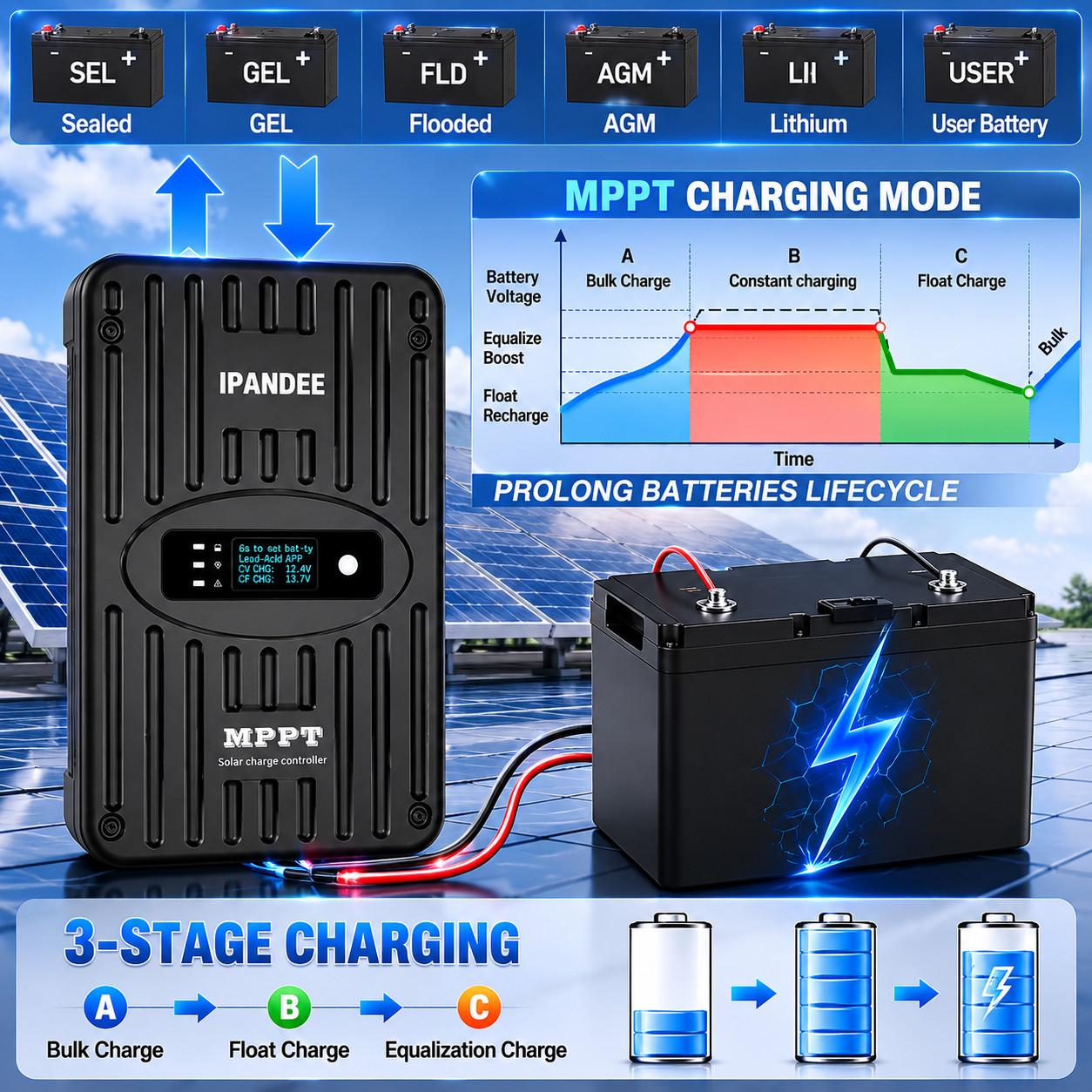
This is the controller to pick when your solar gear moves. It pairs MPPT charging with a 100A/60A/40A/30A current-rating lineup and a 12V/24V/36V/48V battery range, so you can size it to a modest RV, marine, or off-grid build without buying extra input capacity. The feature set also adds app monitoring and RS485 Modbus integration, which makes it easier to keep an eye on charging from a campsite or dock. The trade-off is that the 5200W model is the one carrying the higher PV input ceiling; if your array pushes higher voltage, this lower-cost option will feel limited. For a 12V/24V mobile setup, that limit is rarely a problem.
5200W 100A MPPT Solar Charge Controller
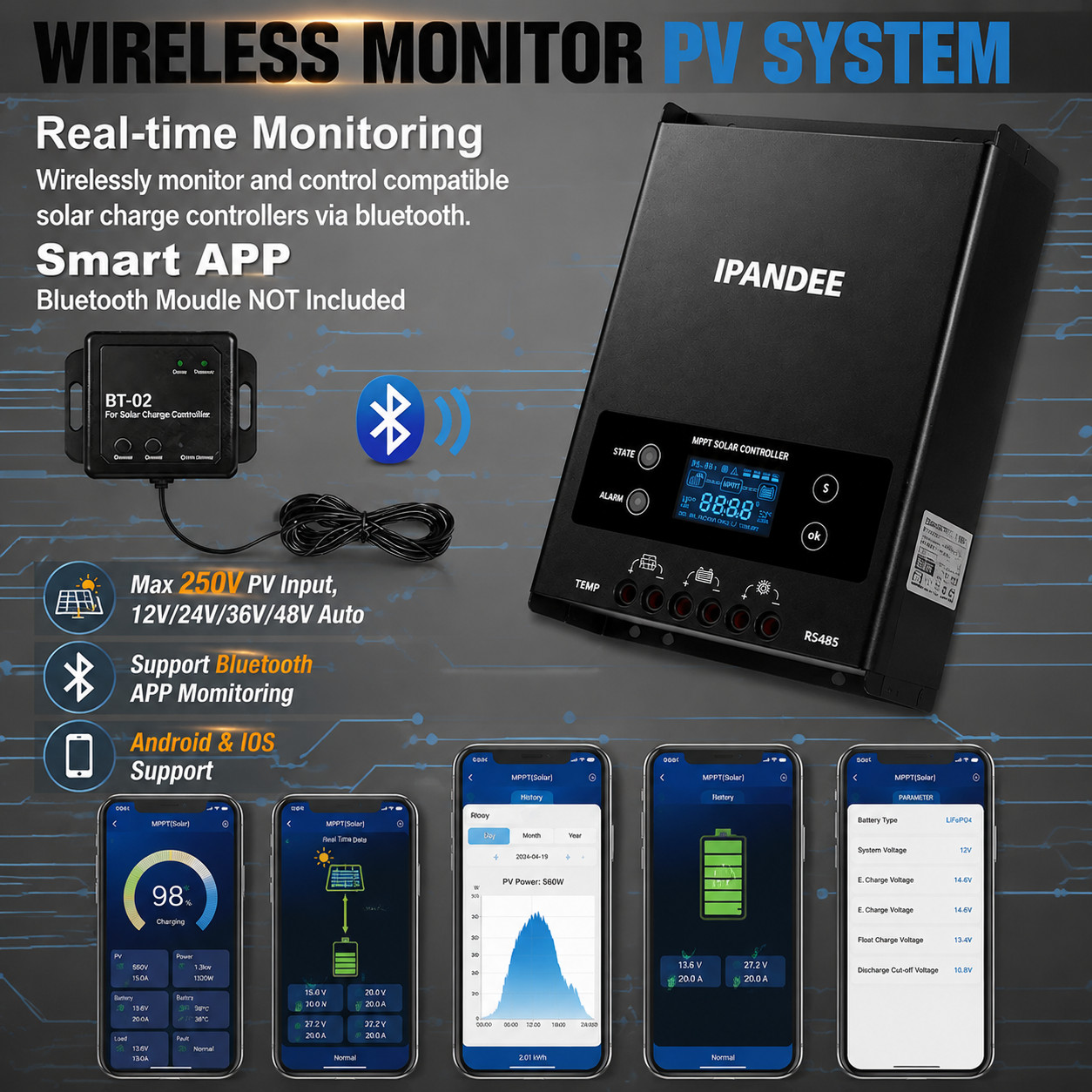
The 5200W controller is the power-system builder's pick. It keeps MPPT charging and adds a 250V max PV input with a 5200W ceiling, which means you can feed it from a larger high-voltage solar array. Its compatible battery list covers lead-acid and lithium types, including FLD, LiFePO4, SLD, Gel, and AGM, so it works with a broad mix of storage chemistries. It is labeled for agriculture/farming, automotive, home/garden, and mobile power stations, and the LCD display gives you on-device status without needing a phone. The limitation is that you are paying for input headroom; if your solar array stays small and low-voltage, the lower-cost controller would do the same daily job.
Final choice by use case
Pick the 100A/60A/40A/30A MPPT Solar Charger Controller when you are outfitting a 12V/24V RV, boat, or off-grid cabin and want flexible current ratings plus remote monitoring. Pick the 5200W 100A MPPT Solar Charge Controller when you are building a larger 12V/24V/36V/48V home, farm, workshop, or mobile power bank and need the higher PV input ceiling to match a high-voltage array. Both use MPPT; the decision is how much panel voltage you intend to throw at them.